

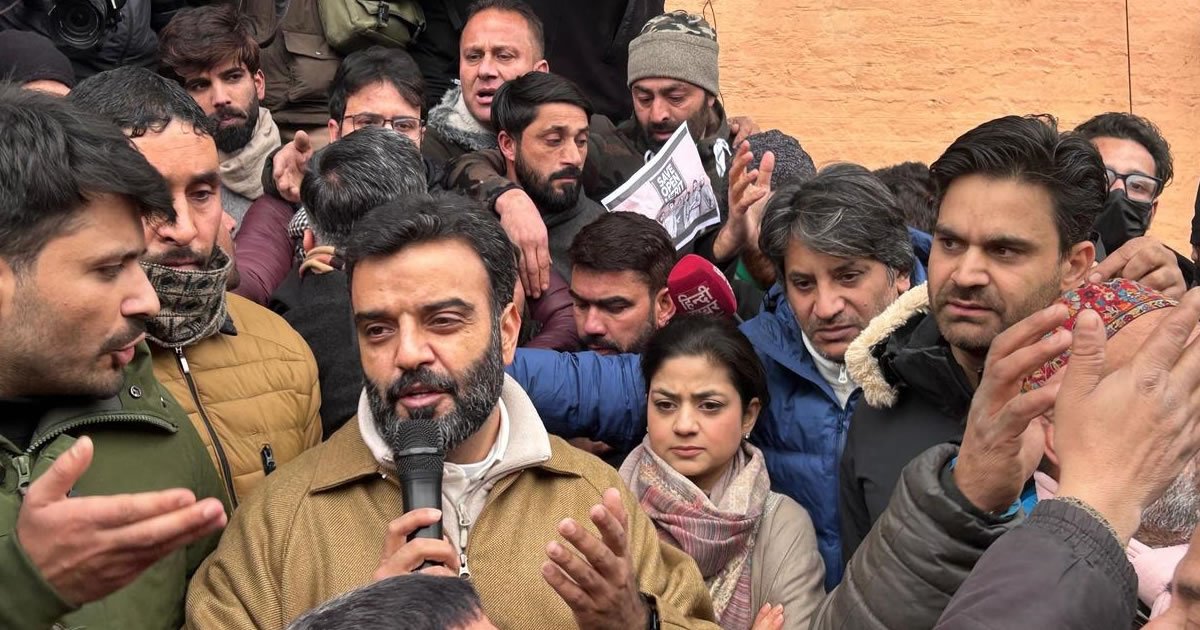
Inside Jammu & Kashmir’s Reservation Crisis For thousands of aspirants studying late into the night across the Valley and beyond, one question lingers, What remains of open merit if it is reduced to a statistic? For now, the answer remains unsettled, suspended between legislative intent and lived reality.
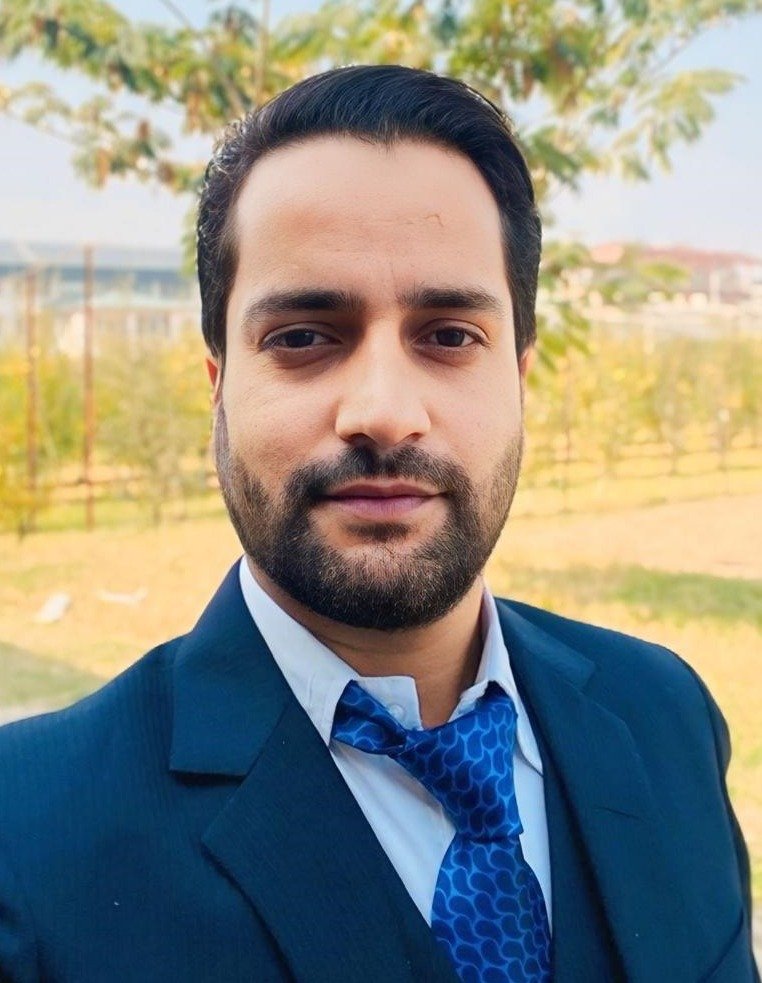
Dr Umer Iqbal
Srinagar / Jammu: In the corridors of power in Jammu & Kashmir, a policy intended to correct historical inequities has ignited one of the most contentious debates in recent memory. What began as a recalibration of reservation quotas has spiralled into a full-blown crisis of legitimacy, raising questions about fairness, constitutional values, and the very definition of merit.
At the heart of the controversy lies a stark reality, Open Merit (OM), once the bedrock of competitive entry into government jobs and professional education, has been squeezed to a fraction of opportunities in a region where approximately 69% of the population falls in the general category, according to demographic estimates tied to reservation debates.
From 50% to 40% and Less After the Rules Bite
Under the post-2019 reservation framework, vertical quotas for reserved categories now account for roughly 60% of all seats, leaving only 40% for general category (Open Merit) candidates, a shift many experts say does not reflect demographic realities.
These vertical reservations are broken down as follows:
• Scheduled Tribes (ST): 20%
• Scheduled Castes (SC): 8%
• Residents of Backward Areas (RBA): 10%
• Other Backward Classes (OBC): 8%
• Actual Line of Control/International Border residents (ALC/IB): 4%
• Economically Weaker Sections (EWS): 10%
Horizontal reservations layered over these quotas claim additional shares:
• 4% for Persons with Disabilities (PWD)
• 3% for children of defence personnel
• 1% for children of paramilitary/police personnel
• 2% for sports proficiency
As many reserved-category candidates also qualify under OM, they often occupy open seats while retaining reserved entitlements, further shrinking the practical space available for general-category aspirants.
The Numbers on the Ground
Government recruitment figures underline the impact. In a recent police constable recruitment drive with 1,815 vacancies, only 728 posts (40%) were set aside for OM candidates. Similarly, in one batch of 480 medical officer posts, just 192 (40%) were available to open merit applicants.
For higher competitive exams like the Jammu & Kashmir Administrative Service (JKAS), the pattern persists, out of 71 selectees, only 29 (40%) came from OM ranks.
Medical students report an even sharper decline. Under the revised NEET-PG reservation framework, the effective OM share in postgraduate seats dropped from 38.5% to 26.6%, translating to only 78 seats out of 293.
“Open Merit Is Being Reduced to Mere Percentage”
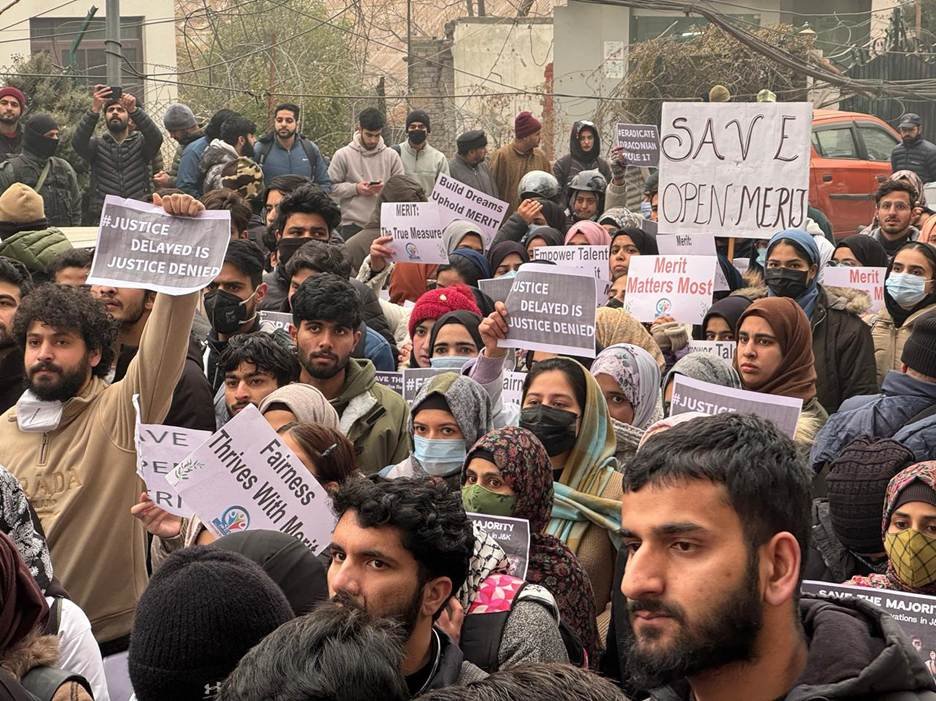
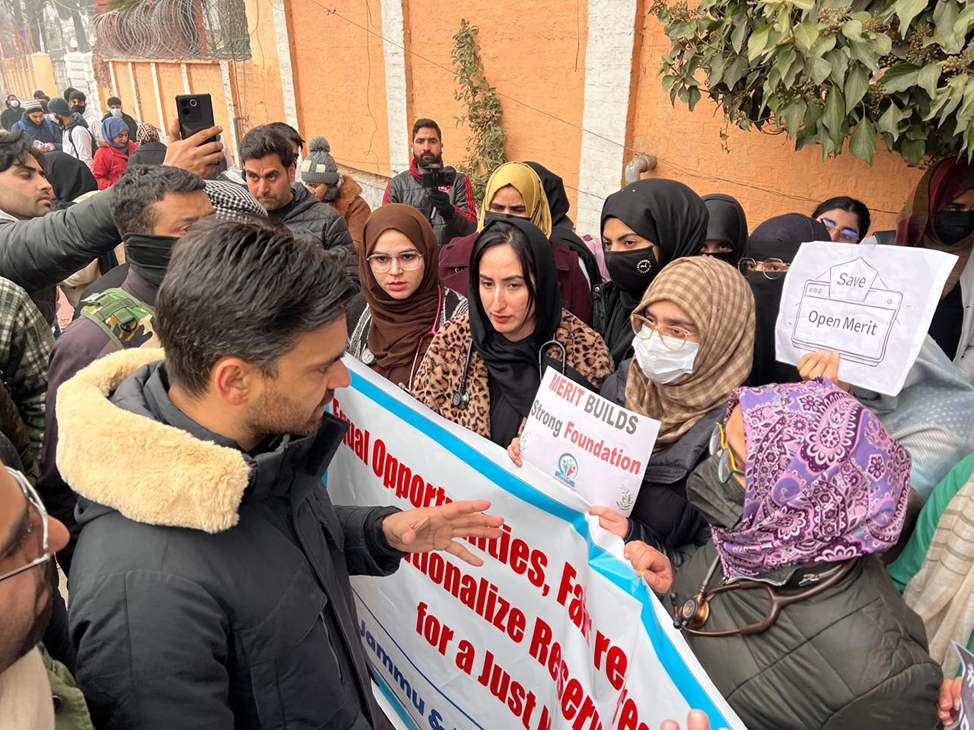
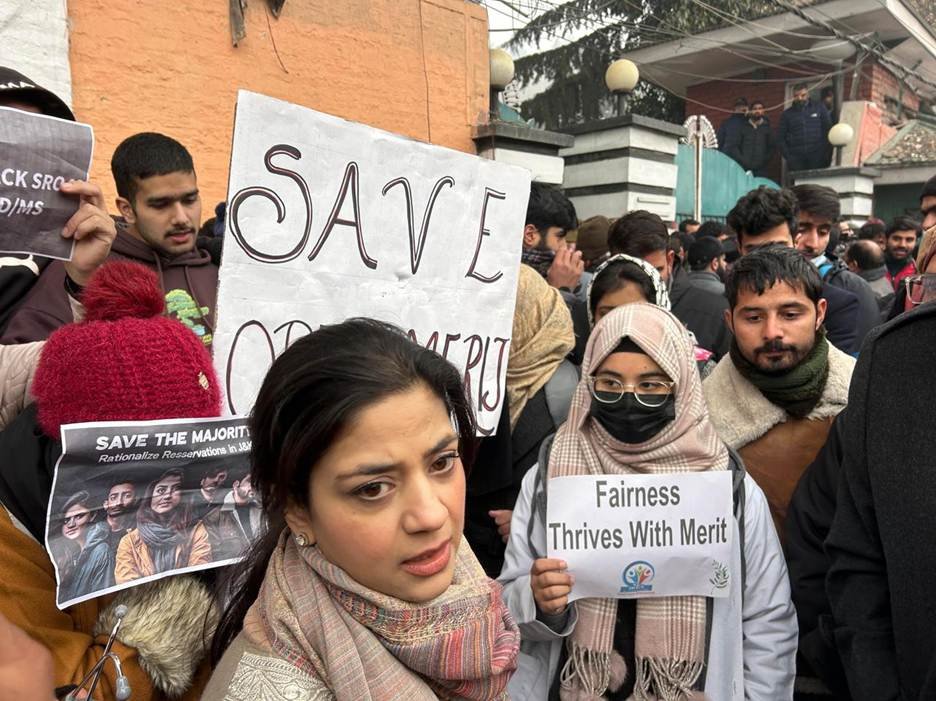
On campuses and streets, frustration has increasingly turned into mobilisation. The Jammu & Kashmir Open Merit Students Association (OMSA) has repeatedly warned that open merit is being eroded into what it calls “mere percentage figures,.” with students from general background left to fight over a shrinking fraction of opportunities while the majority of seats are locked behind multiple layers of quotas.
“In practice, the benefits of reservation are disproportionately cornered by urbanised, affluent elites, recycled within the same families, generation after generation, while the truly marginalised continue to rot in the shadows of rural backwardness, excluded even from the policies meant for their upliftment.” said Ummer Keel, who studied MBA at London University. “It is about being forced into a system where hard-earned degrees mean almost nothing. When nearly 70% of the population contends for less than 40% of opportunities, meritocracy collapses.” He added.
Politics, Policy and Protests
The government response has been cautious. In December 2025, the J&K Cabinet approved a revised policy to increase the general category quota to 50% by reducing EWS and RBA shares, but the document remains unnotified and awaits approval from Lieutenant Governor Manoj Sinha.
Peoples Democratic Party (PDP) MLA Waheed Ur Rehman Parra has been among the sharpest critics, calling the reservation framework “draconian” and “politically motivated,” and arguing that it undermines merit while discriminating against the majority.
Parra has actively supported student protests against the current quota system. He advocates for urgent, transparent rationalisation based on population proportion. He demanded the immediate release of the cabinet sub-committee report and urged rationalisation based on population proportions. In December 2025, Parra accused the Omar Abdullah-led government of showing “zero intent” to resolve the reservation issue, leaving youth in uncertainty. Citing data that over 85% of various reservation certificates (SC, ST, EWS, ALC) are issued in Jammu, compared to much lower share in Kashmir, he warned of a widening regional imbalance.
Calling the PSC results, where only 40% of candidates were selected on open merit despite a 70% largely unreserved population, a “grave breach of fairness,” Parra also criticised proposed revisions to the Resident of Backward Area category, alleging they could dilute Kashmiri representation.
Even within the ruling National Conference, dissent is visible. Member of Parliament Aga Syed Ruhullah Mehdi publicly urged Chief Minister Omar Abdullah to address open merit grievances, warning he could join student protests if concerns remain unresolved.
Ruhullah’s public stance created a rift within the National Conference. While the NC cabinet approved a revised framework in December 2025 (reducing EWS and RBA quotas to increase Open Merit slots), Ruhullah slammed the government for “inaction” and “betrayal,” leading to a public rebuttal from CM Omar Abdullah and other party leaders.Ruhullah argues that the current reservation framework lacks accountability and does not reflect the actual population proportions of various categories in the region.
Pertinent to mention that on December 28, 2025, both Waheed Parra and Aga Syed Ruhullah were placed under house arrested to prevent them from leading a planned sit-in protest outside the Chief Minister’s residence in Srinagar.
Chief Minister Omar Abdullah, however, has defended the administration’s efforts, stating that the government has made “every effort to rationalise the policy” and accusing critics of “creating chaos” for political gains.
Education Minister Sakina Itoo echoed this position, saying the cabinet has already acted and that the file is awaiting the Lieutenant Governor’s approval, while criticising Ruhullah for “creating confusion” among youth.
Striking a more conciliatory tone, National Conference leader Tanvir Sadiq acknowledged that students have a “legitimate democratic right” to protest and assured that the government would not abandon them.
Opposition Voices Intensify Pressure
Former Chief Minister Mehbooba Mufti emphasised that reservations must be “equitable and not discriminatory,” while condemning the house arrest of leaders during student demonstrations.
Peoples Conference MLA Sajad Gani Lone has called the policy a major source of discord and demanded immediate legislative intervention.
PDP spokesperson Iltija Mufti described the current system as “affirmative marginalisation,” arguing that it shuts out meritorious candidates.
Meanwhile, J&K Students Association president Ummar Jamal said that “70% reservation for 30% of the population is arbitrary” and violates the right to equality under Article 14.
Student leaders, including national chairperson Mushtaq Habeeb, have called for a “people-centric reform process,” while the Open Merit Students Association has submitted a draft Reservation (Amendment) Bill, 2025 proposing a 60% cap for open merit.
Not everyone agrees. Former minister and RBA advocate Aijaz Ahmad Khan warned that reducing the RBA quota would “push an entire generation into frustration” in underdeveloped regions such as the Chenab Valley.
Former BJP J&K president Ravinder Raina defended the inclusion of new OBC categories as aligned with “sabkasaath, sabka vikas,” arguing it extends social justice to previously excluded groups.
Regional Imbalances Add Fuel to the Fire
Official data indicates that between April 2023 and March 2025, 67,112 SC certificates were issued in Jammu, while Kashmir recorded none, with ST certificates similarly skewed towards Jammu. What might otherwise have remained a policy debate has increasingly evolved into a narrative shaped by identity and representation.
The issue has also reached the courts, where petitioners argue that cumulative reservations breach constitutional limits and discriminate against the general category without adequate quantitative backing.
Critics maintain that policy tweaks without transparent data and public consultation will not resolve the structural imbalance. They point particularly to provisions such as Rule 17 of the Reservation Rules (2004–05), which allows reserved-category candidates selected under open merit to revert their seats to reserved pools, a mechanism many believe quietly erodes the nominal OM share.
As threat of protests mount and political pressure increases, the government faces a defining choice, retain a quota architecture that many believe marginalises the majority, or reform it in a way that restores faith in merit, equity, and constitutional fairness.
For thousands of aspirants studying late into the night across the Valley and beyond, one question lingers, What remains of open merit if it is reduced to a statistic? For now, the answer remains unsettled, suspended