

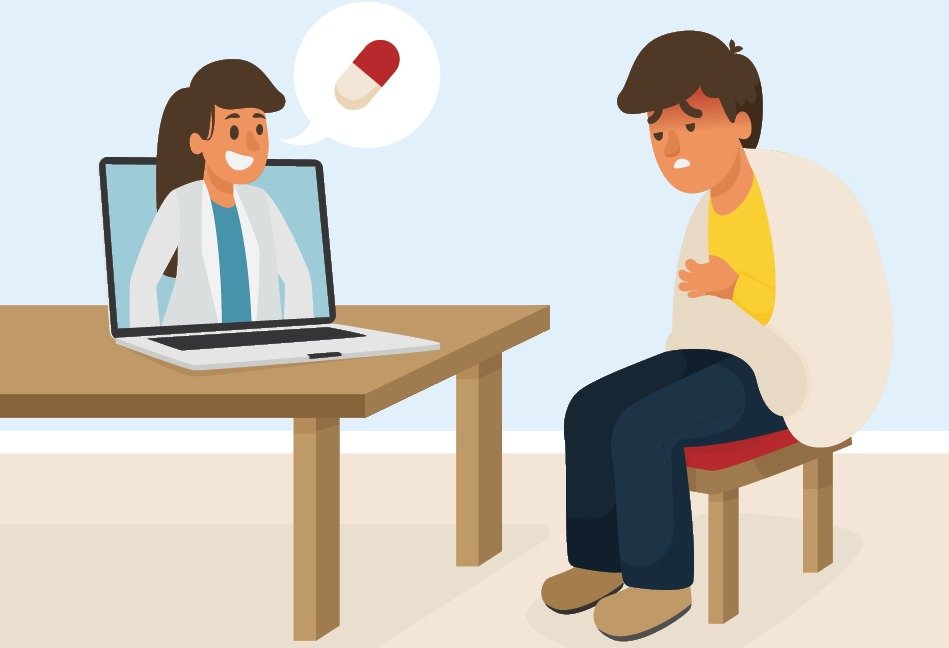
Ideal doctor–patient relationship consists of six Cs: Choice, competence, communication, compassion, continuity, and (no) conflict of interest”
Sajjad Bazaz
International Journal of Community Medicine and Public Health has defined the doctor-patient relationship as “a consensual relationship in which the patient knowingly seeks the physician’s assistance and in which the physician knowingly accepts the person as a patient. Quoting Emanuel and Dubler, the Journal has suggested that the ideal doctor–patient relationship consists of the six C‟s: Choice, competence, communication, compassion, continuity, and (no) conflict of interest.
If we slightly peep into the past, we find no questions were raised about this noble service. A doctor would always remain in commanding position while dealing with the patients and patients or his attendants would never dare to argue with them. There would never be an iota of doubt on the integrity and treatment capability of a doctor.
Why has the trust in doctor-patient relationship faded away to such miserable levels? This is a million dollar question, especially in the context of our own hospitals. Ask any junior doctor, senior resident or a doctor who is discharging duties as registrar in the hospital, they in one voice say that patients hardly trust them and their treatment capabilities. “If we find a patient with minor ailment, we prescribe treatment and ask him to go home. But most of the patients lose cool, thinking that we have not shown interest in his ailment. At the same time, when we find a patient seriously sick, we prescribe medicine as per the protocol of his ailment. This time the patient calls us agent of Pharma companies for prescribing medicines which are not available in hospital and are a bit expensive. In both situations we are at the receiving end,” a group of doctors while describing their plight narrated this.
We have many times come across attendants manhandling a doctor if the patient is asked to be in a queue for consultation or the medico’s treatment fails to provide a relief to the patients. A common thread in such incidents is that the doctors (JRs/SRs/Registrars) at the operational front have been the victims as the consultants or head of departments (HoDs) very rarely come across the patients in hospital chambers for public. Here I don’t think it would be unjust to blame these senior medicos for the kind of deterioration we have been witnessing in doctor-patient relationship. Most of the times, these consultants/HoDs are busy in striking deals with Pharma companies to run a product across patients. This aspect of these senior doctors is not hidden and many times fingers were raised at them for acting as medico marketers – an extended arm of pharmaceutical companies.
Generally speaking, this behaviour of senior medicos who are responsible for running a human saving institute have been actually responsible to shake the trust factor in doctor-patient relationship. Patients have been forced to doubt the treatment protocol of such medicos. Since these senior medicos are not in direct contact with mass patients, the doctors down the line like JR/SRs and Registrars who are mostly out of touch from such deals are left to face the fury of public for none of their faults.
It’s a common notion in public that in the name of curing kidney pain, stomach pain, gall bladder disorder etc. some of the money-minded doctors perform surgery when such disorders are normally treated with oral medication. The style of functioning of most of the doctors in the valley which includes some leading doctors reflects the opposite of Hippocrates’ oath. They seem to have vowed to prescribe unnecessary medicines and tests to the patients; prescribe lethal drugs, like anti-retroviral, chemotherapy, or give ECT to their patients and frighten them with unnecessary comments, opinions or advice. These group of doctors don’t believe what Hippocrate said, “Let diet be your medicine” and it never comes to their mind to prescribe fresh fruits, vegetables and good diet to their patients, rather than tonics, syrups, synthetic multi-vitamins, specially to children.
Take the case of spurious drugs. It’s a huge concern confronting us on health front. Our doctors’ community has been very vocal on spurious drugs flooding our hospitals and markets. They have been blaming administrative authorities for allowing a spurious drug to enter into the J&K markets. But who is responsible to make these drugs to reach to the patient? Obviously, it’s this breed of ‘holy men’ playing a key role in spreading this menace. They are influenced to prescribe these spurious drugs. So they are one among key players to legalise the entry of these drugs into the markets and even into the government institutions like hospitals and dispensaries. Here the doctors as marketing agents of Pharma companies act more as business functionaries.
Precisely, our ‘second God’ at higher level is simply a profit earning entrepreneur! Bribing doctors by the pharmaceutical companies directly or indirectly to prescribe their respective brand of drugs is an ages old worldwide phenomenon. But in our state it has now reached an alarming proportion, jeopardising patients’ interest, seriously more than ever before. This unethical drug promotion has emerged a serious threat for our society.
To conclude, let me again quote from the pages of International Journal of Community Medicine and Public Health. The journal has summed up the current doctor-patient relationship scenario as: “In last decade doctor patient relationship has shown a great dip. The forces of increasing economic aspirations, stress levels, frustration due to urbanisation, and high levels of competition, distorted and disturbed religious, and cultural values are adding to the intolerance among the masses. This has also led to the sense of distrust toward the medical fraternity. A study suggested that nearly 75% of medical personnel in India have faced some sort of workplace violence. This study concluded that the 50% violent incident took place in the Intensive Care Unit of hospitals, and in 70% of cases, the relatives of the patients were actively involved. Now a day‟s a general feeling of mistrust against medical fraternity is prevalent, doctors are considered as traitor corrupt and money minded.”
Meanwhile, patients and their attendants have to show greatest regard and honour for doctors who are tirelessly working on the operational front. Let they be given threat-free environment to treat their patients. This is only for the benefit of society at large. And doctors on the forefront need lessons on mass communication skills to stay safe, while as those at the backend responsible for deterioration in doctor-patient relationship need to be dealt with sternly.
Medical Inflation
It’s eating up patients’ financial resources
Do you ever wonder how your family would survive if saddled with expense from an accident or long-term illness? What if you had to undergo expensive medical treatment? Are you sufficiently positioned to take on burgeoning medical treatment expenses?
These are a few serious questions which everyone of us need to think about. A serious and life-threatening illness turns the situation traumatic and everything else you are worrying about in life suddenly becomes unimportant. The only thing that could make it worst is managing the expenses of treatment of illness. Fear looms large that the expenses will leave you personally responsible for huge bills that could wipe out all your life time savings.
Tremendous advances in medical technology and war on deadly diseases through new medicines have been a boon. The world of medical science celebrates when they invade a deadly human consuming disease by inventing dependable treatment protocol. But the benefits of the inventions in medical sciences hardly percolate to the grass root level where populations are at higher risk to contract any disease. Today, it’s a common sight to see most people unable to afford even conventional treatments in government hospitals where treatment doses are available at subsidised prices.
Rising inflation, uncertain income and employment prospects, and the spectre of medical emergencies have become order of the day, bringing host of miseries to the households. In the given scenario, the sharp price rise is acting as a termite on the incomes and savings of the households, pushing them to the wall.
Amid this scenario, among other things, it’s the steep hike in cost of medicines which has direct bearing on the health of people. The cost of medicines is eating up a major portion of the domestic budgets and the impact has been devastating on people’s ability to obtain health care and pay for it.
There is evidence collected by the World Health Organisation (WHO) and the World Bank revealing that the pandemic is likely to halt two decades of global progress towards Universal Health Coverage. To be precise, the evidence serves as a warning that growing poverty, falling incomes, and tighter fiscal constraints faced by the governments would be some of the major factors to make the financial hardships more intense in the coming times. And the uncontrolled price rise of medicines will worsen the situation as there would be patients who would be condemned to death for their lack of financial resources to bear the cost of treatment.
Specifically speaking, it’s medical inflation that outpaces general inflation as medical expenses are sky high. Elaborate medical treatment expenses could eat into your savings meant for the future. So your financial position strikes an imbalance. These financial imbalances, which are basically risks, need to be taken care of by managing them. A simple way of managing these risks is transfer of risks.
How to transfer the risk? Getting a health insurance cover seems to be an obvious choice. Basically, by taking an insurance policy, we transfer the risk, so that in case of any incident we are not at loss.
Health Insurance is an insurance against loss due to ill health or hospitalisations. It safeguards your savings from getting washed out in case of any unplanned illness, surgery or hospitalisation and getting prepared for unexpected expenses.