


It’s incredible. But true. India winning the 2024 Men’s T20 World Cup final wearing a jersey was designed by a self-taught Kashmiri designer, Aaquib Wani, who has already got himself into the Forbes 30-under-30 list under the Design category. He has several significant milestones of his decade-long career as a professional designer.
By virtue of his innovative design patterns, Aaquib Wani, a chatty, warm, and having almost child-like-attitude, is today considered a name in celebrity designers. His Instagram profile showcases the work the celebrity designer has done with the who’s who of the country – from Virat Kohli, Rohit Sharma and Nita Ambani to Ranveer Singh, Ritu Kumar, and Ananya Panday.
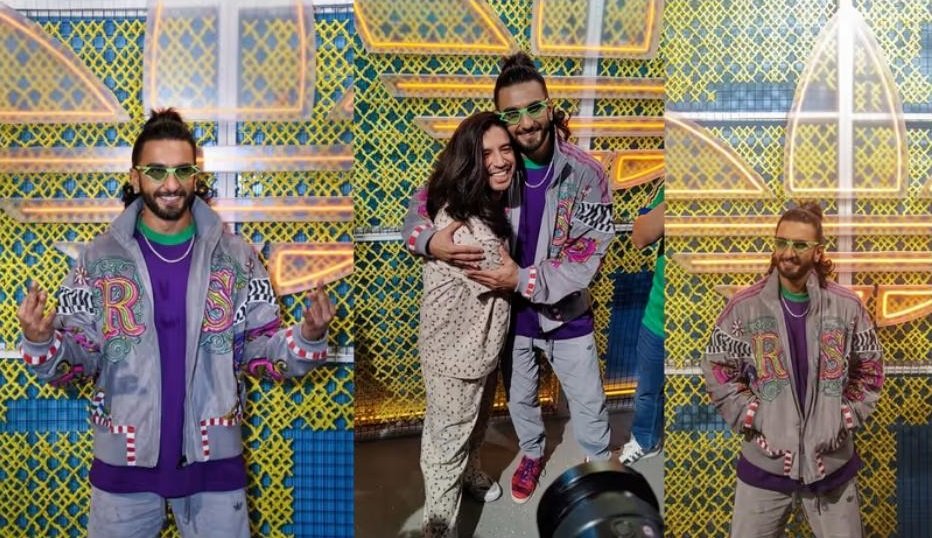
Aaquib runs the New Delhi-based studio Aaquib Wani Design. A pioneer in creating immersive experiences across the fashion, art, hospitality and music industries, he has curated installations for several events including Lollapalooza India, Serendipity Arts Festival, and Bacardi NH7 Weekender.
He has worked with brands such as Apple Inc (for the Beats India launch), PVR, Levi’s, MG Motors, Nestle, Budweiser, Superdry, and Coca Cola. He has collaborated with Adidas to design the official kits for the Indian cricket team and worked closely with Nita Ambani for the National History Museum and the weddings of her children Isha and Akash Ambani. India’s Olympic jersey is also his work.
Failures and Successes
Before making it big, Aaquib had scripted story of failures on a few occasion, including failing in 11th standard twice. He also didn’t get into a design school to pursue a professional degree.
Born and raised in Kashmir, Aaquib was first inspired by the flair of the self-taught Kashmiri artisans who created shawls and carpets in intricate designs. His father was also in the business of Kashmiri arts and crafts; so it was natural for him to turn to design.
The ‘self-taught’ theory stayed with him throughout school when he picked up everything besides his academic books – especially pencils and notebooks to replicate the carpets’ designs. He also worked on his school’s annual day preparations, attended music classes, and learned to play the guitar to be a part of the school orchestra.
In 11th standard, Aaquib was doing pretty much everything but studying. And when the results came in, he scored just 47 marks, out of 500.
The following year, he tried again.
“When you have to study the same set of books again, and have the same syllabus, you think you can probably pass with flying colours… So music became an outlet for me,” he says.
To his surprise, and to his parent’s surprise, he failed again!
But school had to be completed, and Aaquib’s parents got him admitted to another school for 12th standard. This time, he managed to pass, though he had no intentions of joining college.
Leveraging on his self-taught guitar lessons, Aaquib started teaching the instrument to children to make money. Eventually, he formed a band, Phobia, with friends and started touring across cities. It was then that he started making artwork for the band—this marked the beginning of his design career.
In 2009, Aaquib got a bit of hand-holding in design through his internship as a graphic designer at Rock Street Journal. Four years later, he was promoted to the role of art director at the magazine, before he switched gears to work under contemporary designer Sumant Jayakrishnan.
Under Jayakrishnan’s guidance, he worked on vast projects including music festivals, weddings, and exhibitions. After five years with Jayakrishnan, he decided to start working on his own.
In 2018, he started Aaquib Wani Design.
He believes the design that comes out of India is at par with where the world is headed.
Preserving Traditional Art Forms
After a decade in the design industry, Aaquib continues to look back and at the grass-roots for inspiration. He say, “The crafts of India is where a lot of our projects’ inspiration come from. We don’t need to open up Pinterest for inspiration, it’s right in our backyard!”
Aaquib is also passionate about preserving the traditional art forms across the country. He collaborates with the local artists and craftsmen and produces a design which has a contemporary touch and retains the art form at the same time.
For him It all started in 2018, with a jacket. He got it painted by a local painter and it grabbed the eye-balls. This led to the hand-painted wearable campaign.
As part of this drive to create sustainable wearables customised to the likes of each individual, Aaquib employs the skill and labour of these talented craftsmen who despite all adversity, refuse to let the nation’s proud art-forms perish.
He wanted people to wear this traditional art and not forget it in some abandoned corner of their home. According to him, these pieces have exotic art-styles ranging from intricate Kashmiri Aari work, to Madhubani and Pattachitra..
He is currently collaborating with paper-mache artists for this campaign.
“I feel I am someone who can bridge the gap between the people and the artists. Take for instance, everyone has a paper mache jewelry box but not a paper mache jacket,” he said.
(As Told to Times Link)