

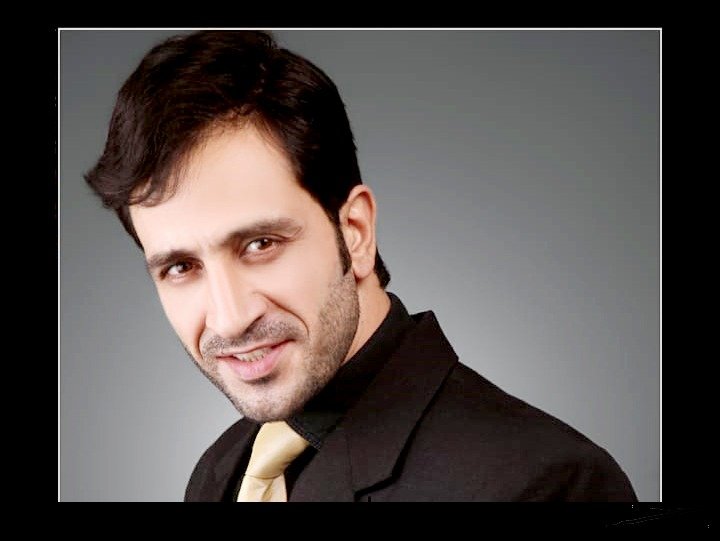
Mir Sarwar: An Ambassador of Kashmiri Talent in Indian Cinema
Hailing from a historical place in Srinagar, Pandrethan, which has its connection to Lal Ded, Habba Khatoon and Mehjoor, Mir Sarwar, a Kashmiri born actor, has successfully scripted (and continues to script) his career in Indian cinema as an actor, director and producer. Known for his powerful performances in the films like Bajrangi Bhaijaan (2015) , Dishoom (2016) , Jolly LLB 2 (2017), Mir Sarwar is among the Kashmiri pool of talent who have set an example outside their home State of Jammu and Kashmir. He has turned heads through his performances not only in Bollywood films, but his work has won accolades in the South film industry. Critics and masses have appreciated his performances on the big screen. He has also been part of several theatre plays in Hindi, Urdu , Kashmiri and English. He started his career in 1999 in New Delhi as a model; switched to theatre afterwards to nourish his acting skills and was part of several National School of Drama workshops. Mir is trained in Martial Arts and is a National Medallist in KickBoxing, Wu-Shu & Muay Thai. This helps him to do his own stunts and fight sequences in the films. Moreover he is an award-winning photographer and has also won an award for the play he directed.
TIMES LINK found Mir Sarwar an inspirational story for marking his indelible footprints in the Indian cinema. His journey into the world of cinema is a beacon light and worth emulating to build a successful career in the film world away from home. In an exclusive interview with
Jazim Bazaz, Sarwar talked about his journey and other issues confronting the Kashmiri artists who are struggling to make a career in the tinsel world, especially Bollywood.
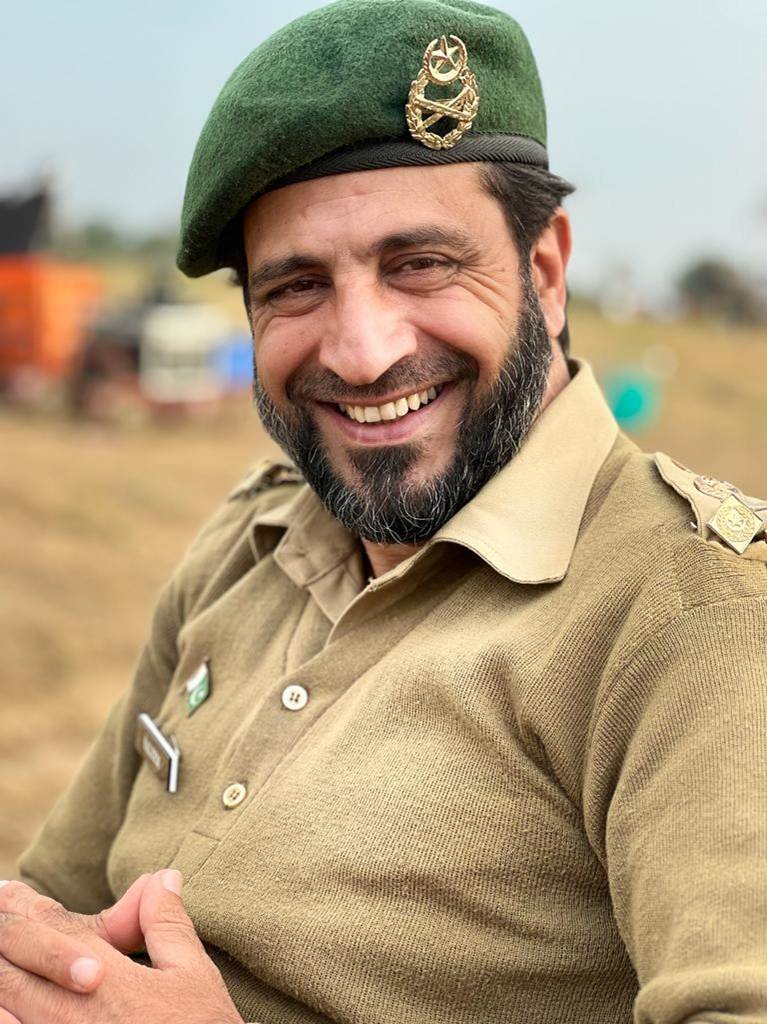
EXCERPTS OF THE CONVERSATION
JAZIM BAZAZ: Tell us about your early life and when did you develop an urge for joining cinema?
MIR SARWAR: I hail from Srinagar, Kashmir. There’s a historical place called Pandrethan, that’s where I reside and it has its connections with Lal Ded, Habba Khatoon and Mehjoor.
I remember that my childhood was active and there was a stage when being expressive / vocal about your opinion or point of view was considered as a misbehaviour. In this kind of atmosphere, I became so shy that I used to hesitate to raise my hands in my classroom or used to shiver when I was asked any questions.
It was in my growing up years that I realised that I am an ambivert. I mingled with like-minded people and it worked for me as far as gaining confidence is concerned.
Let me tell you sports did play an important role in that and I started training kids in martial arts in my locality as well. At that point of time, I had no idea that I would be joining the film industry. Though I used to imagine that there’s an audience who are cheering for me, I took it as just another thought which comes to us.
When I got a national medal in Kickboxing in Cuttack 1997 and it was on all the leading newspapers and KHEL AUR KHILADI TV programme way back in 1997. Getting this kind of publicity in the media took me back to those childhood days when I used to imagine myself as a hero.
During my modelling days in New Delhi in 1999 and being on the ramp, I did experience the same childhood feelings of being a hero reverberating again. However when I did my first play JULIUS CAESAR KE AAKHRI SAAT DIN in 2002 with Mr Bapi Bose in Delhi, I got a new level of satisfaction and made me confident that I belong to the world of cinema. That play was a turning point for me.
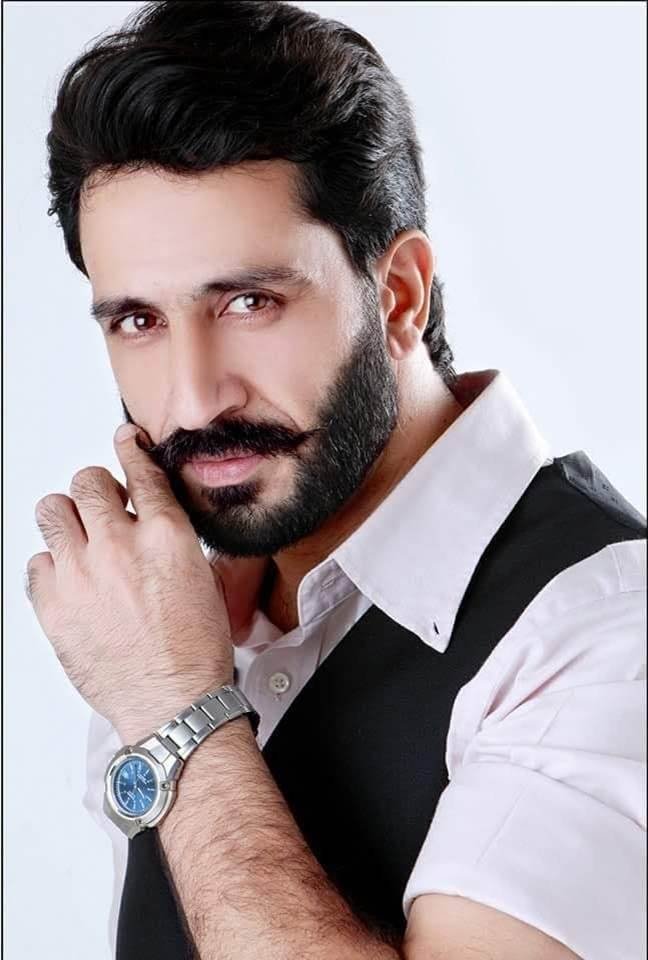
JAZIM BAZAZ: Since you come from a business and orthodox family, how did your family react to your career path in cinema?
MIR SARWAR: It was not easy. Let me tell you that I was deeply ingrained in religious teaching and was among the best students in the religious class. I used to teach kids of my age and even those who were older to me. My uncle, who was my teacher, always thought that I would become a religious scholar and even started writing my name as Molvi Mohammad Sarwar Mir. I was the youngest Muazin in the local masjid as well. I was always ready with the answers in any majlis.
Besides, I was expected to join the family business after completing my education. My family was running a business under the name and style of SAFDAR MOTORS. It was a renowned name in the valley as my late father Haji Mohammad Safdar Mir was known as Dr Ali Jan of cars.
But when I joined the modelling field, my father was the first person to support me. I remember when I did my first Music video in 2000-01 which had one sequence of a mandir as well, some people came to my uncle to complain about the same. I didn’t go home for almost 6 months after that.
Later on, when I decided to join acting full-time, many people complained about it. My father just gave one answer that if Dilip Kumar ( Yousuf Khan), Naushad, Mehmood etc can be part of the film industry in spite of being Muslims, why can’t my son. That was a big relief.
However this journey was not that easy. But having a backing from my father did make it easier though I had to earn my livelihood on my own by doing marketing jobs. I used to spend some of my salary on theatre.
JAZIM BAZAZ: Tell us your first step on a media platform. Do you remember the break you were given?
MIR SARWAR: My first assignment was a shoot for a yoga website in 1999. The requirement for that was a model with six pack abs with a flexible body to do all the asanas. My sports background helped me to get picked for the job. After that I did a lot of ramp shows with the renowned people in Delhi.
I also did many print shoots with a lot of magazines and newspapers like HT CITY, DELHI TIMES etc. I did many ads during that time along with many music albums.
There was one shoot where models were required for a film shoot in a party sequence of a film. I refused but when I came to know that Naseeruddin Shah is one of the actors then I instantly agreed and went to the shoot. It was in some dark house in Gurgaon. When I entered the film set, I was mesmerised by the environment and that’s the day I decided that I will have to be part of this world.
It was a song sequence of the film MONSOON WEDDING by Mira Nair. So I can say that I was a junior artist in that film.
JAZIM BAZAZ: Akh daleel loolitch was the first Kashmir film where you played as hero. How did you get the role? Was it through an audition or somebody had recommended you?
MIR SARWAR: I was doing a National School of Drama workshop in 2003 with Mr MK Raina. That workshop transformed me and got closer to Kashmir, it’s tradition, culture and language. In this workshop Arshid Mushtaq met me and offered an anchoring assignment for some DD Kashir programme.
I did two more workshops with NSD with Raina Sir and in 2004 the play SU YEE was prepared in the workshop. I was involved with the process from the beginning as I knew Hindi, Urdu, Kashmiri and English languages which was essential as the original WAITING FOR GODOT was in English and it was translated/ adapted in Kashmiri. I acted in the play as well and was the assistant director as well. Arshid Mushtaq directed the play.
After the third NSD workshop in 2005, he offered me a film AKH DALEEL LOOLECH where I met the legendary actor Mr Tariq Javed who was one of the producers as well.
JAZIM BAZAZ: You chose your career in film/cinema at a time when cinema was considered as an abuse in Kashmir. It was totally banned. What made you so confident that you would be successful in this career?
MIR SARWAR: When I did theatre, that’s when I decided to take it as a profession even after knowing its uncertainty. I closed all the options then and there. I got a government job under sports quota, for winning the WuShu National medal in 2001. But I didn’t join and the option was available till 2005. I didn’t even join my family business.
Down the line, I knew I had all the prerequisites to be an actor and I wanted to give it a try rather than saying that I could have done it. I strongly believe that if you work hard and have pure intentions then Almighty helps you in a way that a person can’t even imagine. When a hard working person gets an opportunity that’s called LUCK.
One more thing which I want to mention is that I always liked giving directions whether it was in sports or otherwise in life. I used to tell people how to do it and some people gave me the nickname of a DIRECTOR. Whether it was in a positive or negative way, that habit helped me throughout my career.
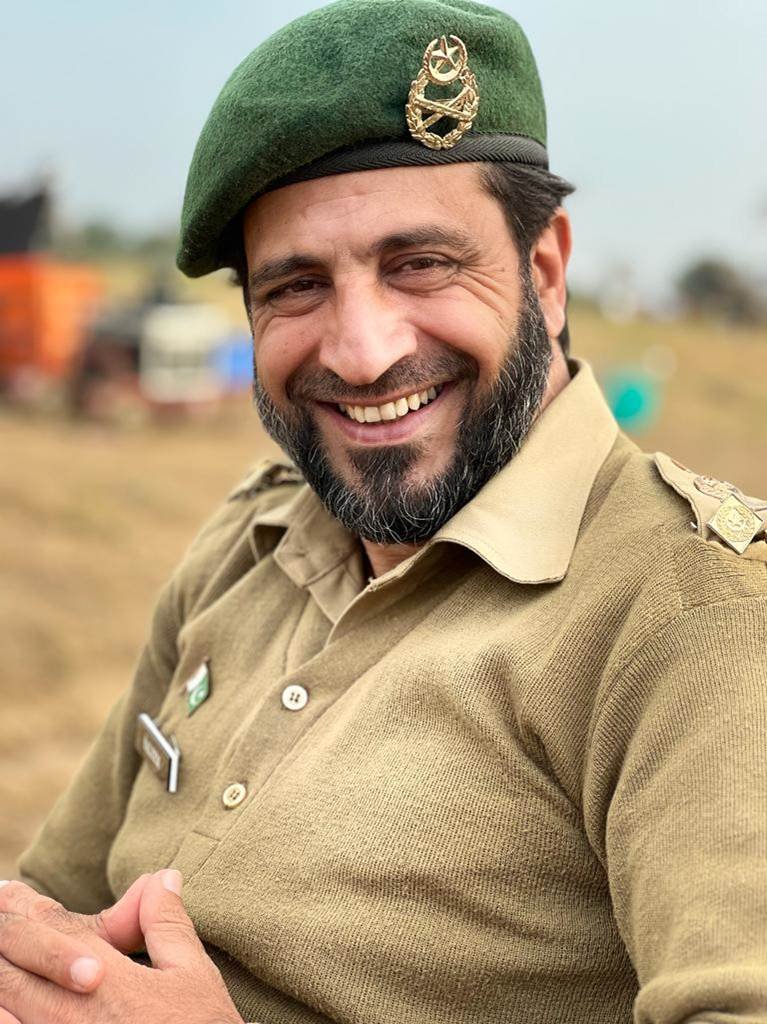
JAZIM BAZAZ: We have heard about your passion for kickboxing and martial arts. Tell us about your capabilities as a sportsman. Why didn’t you carry sports as a career?
MIR SARWAR: Initially, I was thinking about making the sports my career and getting settled in Kashmir. But the horizon broadened. Then I realised there’s more which can be done.
In the year 1994 bodybuilding was fascinating young people and people wanted to work on their physique. Salman Khan did play a big role in that passion. I remember going to Bakshi stadium and there were many young boys. All the boys were made to do an enormous warm up routine on the very first day of the training. We couldn’t walk properly as it was so difficult. However, me and my friend Zahoor were among the four boys selected.
After a few days we were made to do squats for 50/60 kgs and everyone except me stopped at 60. I was asked to do 70 and then 80 kgs squats which I did and I was the first to get selected for weight lifting. At that time, we didn’t know the difference. Recently I came to know that an extremely difficult warm up was to check who is serious and will stay back.
Later I realised it’s the martial arts which I am inclined towards as I used to practice with my brother Iqbal after watching Bruce Lee movies. So I went to the indoor stadium. Only Judo classes were going on and at that time we didn’t know the difference. I practiced very hard and got my first Gold medal in the Kashmir level tournament in 1996.
During that period Taekwondo was getting popular and Late Farooq Ahmad Mir had done a course in Patiala. He started training kids after Judo class and I was the only one who knew how to do a round kick, which is considered as one of the difficult kicks. Then I played Kickboxing, Wushu, Muay Thai as well and got many National medals in all the styles.
My last National Gold medal was in 2005 in Muay Thai in Bangalore. Moreover I was the first trainer/coach of Karate who had done a NIS certificate course in Sports Authority of India, Manipur centre in 2003. This Manipur trip is the reason for switching off my career because I fell sick ( Malaria) during the exams at the end of the course. But I used to have medicine at night and give my exams during the day. That was difficult, but I was still among the top 3 players in every section. Because of health reasons I went back to Srinagar and took classes, organised some tournaments.
One day when I went to the Greater Kashmir office to give the news of my tournament results.
I saw a piece of paper in the news section containing an advertisement. It mentioned NSD at the top and I became curious. I read the theatre workshop is taking place in Srinagar.
I wrote down the details and went to the hotel next day in Rajbagh and that’s where I met Mr MK Raina. In the evening I saw the list and my name was on top of the selected candidates.
JAZIM BAZAZ: Somewhere I read that your skills in the field of sports are lending you huge support in your career building in cinema. Tell us about this. You don’t use duplicates in fight scenes in movies, tell us some interesting anecdotes about it.
MIR SARWAR: That’s absolutely right. My sports background really helped me a lot. As I always say that whatever we learn and practice surely pays off and in my case it did help me in the action sequences of the films.
My experience of harness rope stunting was in Phantom directed by Mr Kabir Khan in 2013-14. After that I did the stunts in several films and web series. The Shershah film was among the most difficult ones and the lead actor Sidharth Malhotra was surprised to see that.
JAZIM BAZAZ: How do you see the future of cinema in Kashmir?
MIR SARWAR: It has a bright future as the new filmmakers especially the young ones are trying to make something exceptional. We have tried to make some films from the last decade or so.
Moreover when we are making films on our own then only we can show the authentic stories.
That’s when the people will accept it wholeheartedly because right now I see some gaps from the audience point of view.
It’s an audience who can make the difference. If we look at South India, they stick to their culture and their audience is loyal.
Most of the people do complain that good serials are being missed but nobody is ready to take an initiative to make a film collectively, no matter how big or small it is.
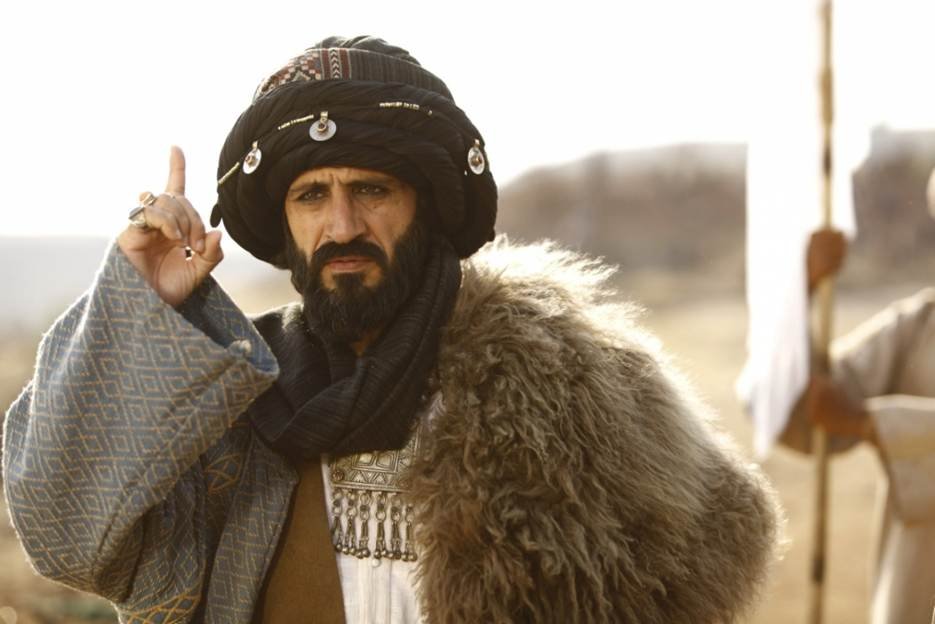
JAZIM BAZAZ: Share some anecdotes about your working with super stars like Salman Khan etc. A rare moment in Bajrangi Bhaijan?
MIR SARWAR: It was really an amazing experience to work with Salman Khan. He has a tough image but he is a child at heart. I have seen him on the set as well as at the events where he maintains that aura.
But I remember when we had a pack up party for Bajrangi Bhaijan at his farm house, he was completely different. Fun loving, life of the party. He challenged everyone present at the party to do a somersault dive in the pool. Kabir Sir’s dive was amazing.
At one point he pointed in my direction to jump, I looked around and realised there was nobody else except me there. I took off my shoes and dived with my clothes on. Everyone clapped and one co actor said it was great. I whispered in his ears that it’s the first time I have done such a somersault dive. Again that sports background helped.
JAZIM BAZAZ: Would you like to share more anecdotes of your journey in Bollywood so far, both ups and downs?
MIR SARWAR: It was not a smooth ride I must say. As I said earlier I left all the opportunities to get into acting full-time which had its repercussions. I remember at one point of time, it was about survival and I had to do whatever roles I could crack through auditions. I used to live in a small room in a building which had hundreds of small flats. It was so crowded and noisy but I passed that phase where I used to have one meal a day.
Alhamdulillah things changed and I started getting roles by the recommendation of my director’s.
I followed the formula of visibility.
Kitna dikhoge utna bikoge.
It helped me to become a known face throughout the country. Whenever I travel, people do recognise me. However at times they don’t know the name but the face is familiar.
I remember while giving autographs to dozens of small kids in Jodhpur. Someone asked me “Don’t you get bored or irritated by this.
I told him that’s what we wanted and we have attracted the same in life.
JAZIM BAZAZ: Many Kashmiri actors have tried their luck in Bollywood, but didn’t get success. You are an exceptional case. What’s the basic mantra for marking a successful career in the tinsel world?
MIR SARWAR: Many Kashmiri actors are part of the film industry. Whoever survived is because of their talent and discipline. It’s not easy to survive in Mumbai. One has to adapt to ways of work culture and upgrade skills to be relevant in this fast changing world.
JAZIM BAZAZ: Your idol in your field of profession?
MIR SARWAR: My biggest inspiration was my father and he still is. I always say, a part of mine died with him and a part of him is alive in me.
I have an immense respect for all the directors I have worked with till now. They have all worked so hard to reach where they are now. I am learning the craft everyday and the goal is to make films in the Kashmiri language, so that we can tell our normal stories to the world in the most authentic way. We don’t have to make political films, there are so many human interest stories and social issues which we can highlight in our films.
JAZIM BAZAZ:Any regrets?
MIR SARWAR: It was my decision to choose this field but at times my family has to suffer because of this. My wife and daughter live alone whenever I am on the shoot and she has a school. I was on the shoot the very next day of my wedding. I had to travel for a shoot to Manali just two days before my daughter was born. I couldn’t spend more time with her during the first year. These are things which do hurt.
One more thing which I think could have made the difference was to stick to the lead roles only but I couldn’t do that because of many reasons.
JAZIM BAZAZ: Message to young and budding artists who want to make a career in the film industry as an actor, producer and director?
MIR SARWAR: My message to the young actors and filmmakers is to learn the craft. If it’s possible then study in any college , university and make a difference. If that’s not possible then rely on something else while working on your skills. Don’t compromise on your education. Watch many movies. Read good books. Do take care of your health – physical and mental health. Don’t be afraid of failure in life. You should be passionate about the craft then only you make it. Have patience and at last be persistent.
As I always say, find that USP (unique selling point) of yours and work on that. That will reduce your competition. We are products and we should know how to sell ourselves.
For actors my advice would be to join a theatre group in your hometown. If there’s no option left then take your phone and start making your own videos by saying the lines of any play. Record your voice and listen to the same. If you are doing a movie scene then don’t copy that actor, do it your way not like a mimicry.
Watching good world cinema, reading interesting books and practicing whatever skill you want to develop will make all the difference.
Lastly, we don’t only need actors in Kashmir. First of all we need good writers, directors , cinematographers, sound designers, editors, Art directors, production designers, costume designers, Hair and Make up department, choreographers, musicians, lyricists, singers and all other departments of filmmaking. That’s when we can actually make a difference and will be able to create our own film industry to show Kashmir the way it should be presented to the world with its soul intact.