


Prof Upendra Kaul
The landscape of cardiac sciences in 2025 has moved beyond mere “management” toward precision, regeneration, and prevention. These developments are fundamentally changing patient outcomes by reducing hospital stays, minimizing surgical trauma, and tailoring treatments to individual genetic profiles.
Metabolic Cardiology and focus on weight management improving the heart health has been one of the most significant shifts. Glucagon-Like Peptide -1 receptor agonists (GLP-1) with two molecules Semaglutide and Tirzepatide are now recognized as core cardiovascular treatments. The recent data shows they reduce the risk of major adverse events which includes death also by roughly 20-30% in patients with obesity, heart failure and both diabetics and non-diabetics.
A great news for persons of our South Asian ethnicity with very high triglyceride levels. There has been a “Triglyceride Revolution” with new drugs like Olezarsen and DR10624 (a triple-receptor agonist) which leads to 60% reduction in triglycerides, with nearly 90% achieving targets. This leads to a substantial reduction in liver fats benefitting those with fatty liver and Non-alcoholic Steatohepatitis besides improving lipid profile. All this provides a new option for patients with very high triglycerides by reducing risks of pancreatitis and cardiovascular disease.
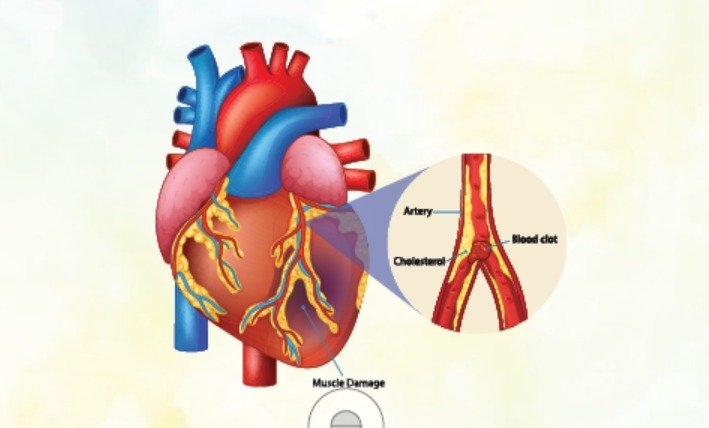
In the field of treatment for coronary artery blockages, drug coated balloons as the sole strategy instead of caging the arteries with drug eluting stents. “SELUTION DeNovo” trial suggests that for many patients, a “leave-nothing-behind” approach—using a balloon to deliver medicine to a blocked artery instead of a permanent metal stent—is just as effective and reduces long-term complications. This along with more data is a revolutionizing development. The need for blood thinners (anti-platelet drugs) is much less which is especially important for those with high bleeding risk. So, less metal and less medicine.
Replacement of diseased heart valves without opening the chest has become a well-known procedure for aortic valve. Transcatheter Aortic Valve Replacement (TAVR) which was generally reserved for the very old persons with several co-morbidities has become an established method even for low surgical patients. This means recovery after the procedure within days and not months as with surgical replacements. What is very exciting is the innovations in T-TEER (Transcatheter Edge-to-Edge Repair) which were being done only for selected cases of mitral valve regurgitation are now successfully treating the “forgotten” tricuspid valve without open-heart surgery.
Artificial Intelligence: The New Diagnostic Standard
AI is no longer a futuristic concept; it is now an active bedside tool improving diagnostic accuracy of a commonly test like echocardiography. Here is how it revolutionizes:
EchoNet & PanEcho:
EchoNet is a collection of publicly available datasets for computer vision research in cardiology, primarily developed at Stanford University Hospital. These AI algorithms can now interpret echocardiograms (ultrasounds of the heart) with higher accuracy than human specialists, identifying subtle signs of heart failure and related problems that were previously missed, particularly in women. These datasets have been instrumental in fostering research and development of AI models for specific, single-view echocardiography tasks.
PanEcho is a more recent and advanced AI system, specifically a view-agnostic, multi-task deep learning model, developed by researchers at the Yale-New Haven Health System (YNHHS). It was trained on over one million echocardiogram videos to address the limitations of prior single-task, single-view models like the initial EchoNet algorithms. Thisleads to more comprehensive interpretation, multi-view capability and highly accurate and robustinterpretation. An echocardiography test as is done today with these applications would not only be diagnostic for that day but can like an astrologer predict the possibilities of abnormalities to be expected during follow up.
Wearable Early Warning: New smartwatches integrated with AI can now detect structural heart issues (like a weakening heart muscle) with up to 86% sensitivity before a patient even feels a symptom.
Regenerative & Genomic Medicine
We are entering an era where heart damage might be reversible. Cardiac Regeneration: In 2025, researchers successfully used stem cells to re-engineer damaged heart tissue at the cellular level, offering hope for patients with “end-stage” heart failure who previously had no options.
Finally, a Single-Dose Gene Therapy: VERVE-101 and VERVE-102 are an experimental gene therapy developed by Verve Therapeutics, a wholly owned subsidiary of Eli Lilly and Company. It has developed a new class of genetic medicines for cardiovascular diseaseswhich havedemonstratedthat a single injection can permanently lower “bad” LDL cholesterol by over 50% by editing a gene in the liver using RNA technology which potentially eliminates the need for daily pills for lowering cholesterol.
Tail Piece:
In 2025, cardiology has reached a transformative “tipping point” where genetic engineering and artificial intelligence are moving from theory into standard clinical practice. The field has been revolutionized by the emergence of gene-editing injections, which offer a potential “one-and-done” cure for high cholesterol and triglycerides. The wonders of weight reducing drugs (GLP-1 and triple-agonist drugs) for not only improving the quality but also prolonging life in diabetics and obese people is a reality. Drug eluting balloons are ready to replace stents and even tricuspid valve is amenable to non-surgical repair. Finally, AI integrated echocardiography can now predict future cardiac events.
(Prof Upendra Kaul, MD DM, is recipient of Padma shri and Dr B C Roy Award. He is Dean Academics and Research, Batra Hospital and Medical Research Centre and Founder Director Gauri Kaul Foundation)