

Dr Umer Iqbal
The rhythmic thwack-thwack of rice bundles being threshed against wooden logs, a sound that has defined the Kashmiri autumn for centuries is fading into a haunting, metallic silence. In the village of Pulwama, South Kashmir, Mohd Amin Ganai stands at the edge of what used to be a shimmering emerald sea of Shali (paddy). Today, the ground is a patchwork of silver-roofed poly-houses and the rigid, wire-supported rows of high-density apple orchards.
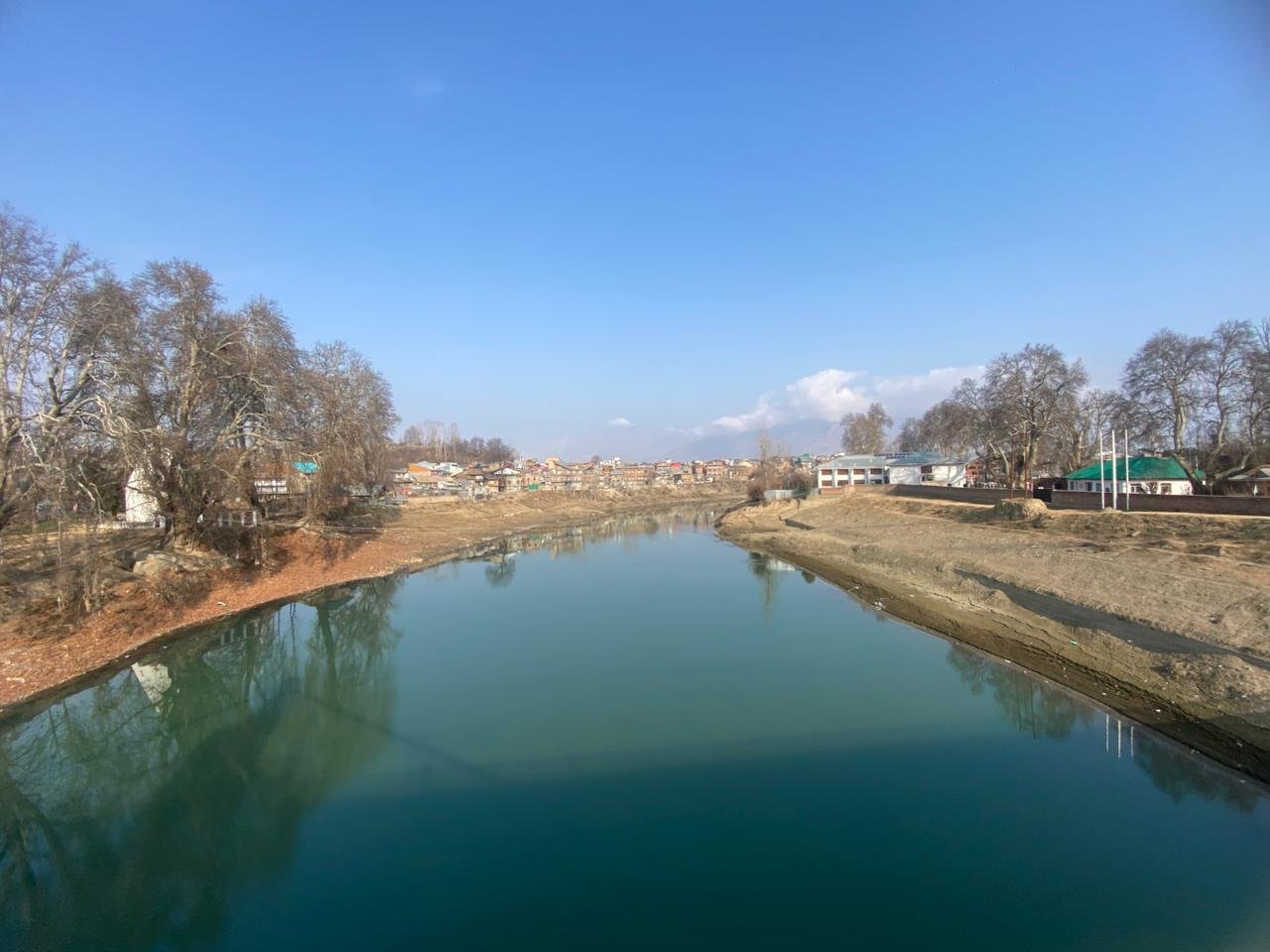
“The Jhelum has grown thin,” Amin says, his voice as dry as the cracked earth beneath his feet. “My grandfather used to say the river was our mother. If the mother is thirsty, how can she feed her children?”
As we enter 2026, the climate paradox of Kashmir has reached its tipping point. While the peaks of the Pir Panjal still wear their white crowns, the glaciers that feed the valley, like the Kolahoi, have receded to record lows. The winters are increasingly “snow-less,” and the spring rains have become erratic. For a crop like rice, which requires its feet to be submerged in water for months, the math simply no longer adds up.
According to recent agricultural data, thousands of hectares of paddy land in the valley have been converted to other uses in the last three years alone. This “Great Drying” is not just a meteorological event; it is a profound economic and cultural migration.
The Rise of the “Plastic Farm”
Where the rice once swayed, the “Poly-house Revolution” has taken over. These high-tech, climate-controlled tents allow farmers to grow high-value vegetables and flowers regardless of the erratic weather outside.
“I make three times the profit on vegetables and fruits than I ever did on rice,” explains 28-year-old Ishfaq, who recently quit a job in the city to manage his family’s new high-density orchard. “Paddy was about survival. This is about business. We can’t eat tradition if we are broke.”
The shift is logical. High-density apple trees require nearly 70% less water than paddy and offer a much higher return on investment. The government’s subsidies for “Climate-Smart Agriculture” have accelerated this transition, turning the once-sprawling wetlands into a grid of industrial-looking orchards.
But beneath the economic success lies a profound cultural grief. In Kashmir, rice is not merely a carbohydrate; it is the center of the social universe. Experts called it Loss of the “Kashmiri Soul”
Historically, the Leth (the communal act of planting rice) was the valley’s primary social glue. Neighbour’s worked in each other’s fields, sharing salt tea (Noon Chai) and singing folk songs that celebrated the mud and the rain. With the transition to fenced, private orchards, that communal spirit is dissolving into individual ownership.
Furthermore, there is the question of food security. As the valley stops growing its own rice, it becomes entirely dependent on imports from the plains of Punjab. The “Kashmiri Mushkbudji”, the fragrant heritage rice that once perfumed entire villages is becoming a luxury item for the elite, rather than a staple for the masses.
The transition isn’t without its own perils. The massive conversion to apple orchards is leading to a heavy reliance on pesticides. Furthermore, the loss of wetlands means that when the rains do come in short, violent bursts, the natural sponges of the earth are gone. Experts warn that by removing the paddy fields, Kashmir is trading its long-term flood protection for short-term profit.
As the sun begins to set over the valley, Mohammad Amin points to a group of young children playing in the shade of a poly-house. They have never seen a bullock pull a plow through the mud. To them, the “Paddy” is a story told by elders, like a legend of a lost city.
Kashmir in 2026 is wealthier, perhaps, but it is quieter. The ducks that once paddled in the flooded fields have flown away. The songs of the Leth are silent. The valley is trading its heritage for a harvest that can survive a warming world.
“We will have money to buy rice from the market,” Amin sighs, looking at the plastic-covered horizon. “But it will never taste like the rice we grew with our own water.”
(Dr. Umar Iqbal is Editor at Straight Talk Communications)