


Muhammad Younis Bhat (Zahid)
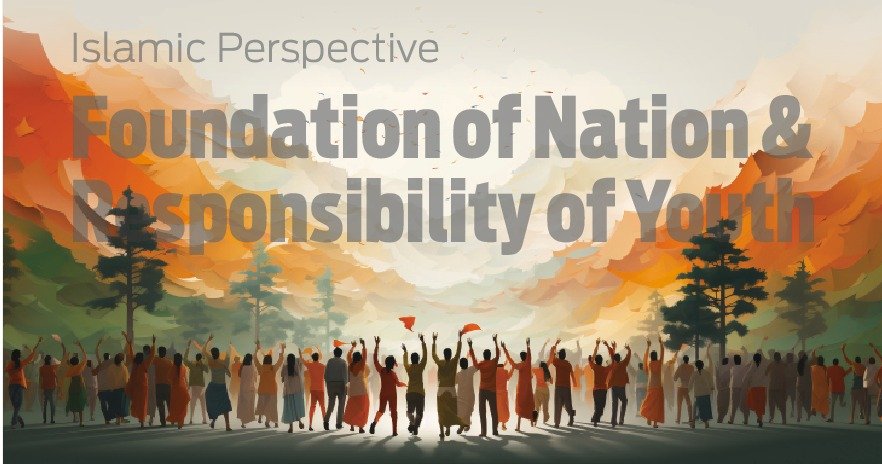
The real strength of a nation does not lie merely in its roads, buildings, wealth, institutions, military power, or political systems. The true strength of every nation lies in its youth.
Young people are the builders of the future, the carriers of ideas, the guardians of moral character, and the most powerful force of transformation in any society.
If the youth of a nation are faithful, morally upright, intellectually aware, disciplined, courageous, purposeful, and connected to Allah, then that nation cannot remain weak, directionless, or humiliated for long. But if its youth become trapped in moral decay, spiritual emptiness, purposelessness, addiction, dishonesty, selfishness, screen dependency, and distance from Allah, then no law, no development, and no government can save that nation from inner collapse.
It is an undeniable truth that the rise and fall of nations are deeply tied to the rise and fall of their youth. Islam does not view youth merely as an age bracket. Islam sees youth as a period of strength, trust, accountability, sacrifice, purity, ambition, courage, and leadership. That is why every major transformation in Islamic history was carried on the shoulders of young believers.
Today, one of the greatest needs of our society is the moral, intellectual, spiritual, and emotional reform of youth. If the youth are reformed, homes will be reformed. If homes are reformed, society will be reformed. And if society is reformed, the nation can once again move toward dignity, purpose, and success.
What Is the Foundation of a Nation?
Many people assume that the foundation of a nation lies inwealth, politics, military strength, economic power, or large population.
But Islam teaches us that the true foundation of a nation is built upon faith, character, knowledge, justice and morally sound younger generation
A nation may possess money, resources, and influence, but if it lacks integrity, moral discipline, and God-consciousness, then it may appear strong on the outside while being dangerously hollow on the inside.
The Qur’an repeatedly reminds humanity that real change begins not from outside structures, but from inside the human being.
Allah says:
“Indeed, Allah will not change the condition of a people until they change what is within themselves.”(Surah Ar-Ra’d 13:11)
This verse is one of the strongest foundations of this entire discussion. The destiny of a nation is not shaped only in offices, institutions, and assemblies. It is shaped in the hearts, minds, and morals of its people especially its youth.
Youth — The Most Precious Asset of a Nation
Youth is the stage of life in which a person possesses energy, ambition, imagination, learning ability,courage,and the capacity to move quickly toward either greatness or destruction.
That is why youth is both the age of construction, andthe age of possible collapse.
If a young person connects with the mosque, he gains spiritual grounding; the book, he gains intellectual strength; a higher purpose, he gains direction; and Allah, he becomes a blessing for society.
But if a young person becomes a slave toego, social media, lust, comparison, toxic entertainment, and a life detached from faith, then he can become a danger not only to himself, but also to his family, his society, and his nation.
It is therefore correct to say:“Youth are not merely a part of the nation — they determine its direction.”
The Position of Youth in Islam
Islam has always honored youth with dignity, trust, leadership, and responsibility.
When we study Islamic history, we find that many of the greatest personalities were young when they carried immense responsibility:
Ali ibn Abi Talib (RA) was young,
Usamah ibn Zayd (RA) was young,
Abdullah ibn Abbas (RA) was young,
Mu’adh ibn Jabal (RA) was young,
the People of the Cave (Ashab al-Kahf) were youth,
Prophet Ibrahim (AS) challenged falsehood in his youth, and Prophet Yusuf (AS) displayed purity and moral strength in his youth.
This shows that Islam does not treat youth as a period of uncontrolled indulgence. It treats youth as a period of trust and accountability.
The Prophet Muhammad ﷺ said:
“A person’s feet will not move on the Day of Judgment until he is asked about five things… and about his youth and how he spent it.”
(Tirmidhi)
This hadith makes it clear that youth is not only a blessing — it is also a responsibility for which one will be questioned.
Youth Is Not Just an Age —
It Is a Trust
Many young people imagine that youth is the time forunlimited freedom, pleasure without discipline, and enjoyment without responsibility.
But in reality, youth is the age of decisions. The habits, beliefs, friendships, and disciplines formed in youth shape the entire future of a person.
The one who learns in youth topray regularly, value knowledge, guard his character, avoid harmful company, and honor his parents, is likely to live with dignity and peace later in life.
But the one who wastes youth inimmorality, addiction,arrogance,lying, rebellion, lust, and aimlessness, often enters later life with regret, emptiness, and spiritual damage.
That is why Islam presents youth as one of the greatest opportunities to earn the pleasure of Allah.
The Prophet ﷺ said:
“There are seven whom Allah will shade under His shade on the Day when there is no shade but His… among them is a young person who grew up in the worship of Allah.”
(Bukhari & Muslim)
This is one of the highest honors a young believer can aspire to.
One of the Greatest Tragedies of Our Time: The Absence of Spiritual and Moral Upbringing
One of the most painful realities of our time is that many parents work day and night like machines. They strive to provide their children with good homes, good schools, good clothes, good food, and worldly opportunities.
But sadly, what many children need the most is often pushed to the background. In other words, we are feeding the body while leaving the soul starving. This is one of the greatest reasons why so many young people appear “successful” externally while collapsing internally.
Today, many parents ask:“Will my child become a doctor, engineer, officer, or businessman?”
But far fewer ask:“Will my child become a good human being?”
If education does not build character, if progress does not build humanity, and if success does not produce fear of Allah, then such success may become a burden rather than a blessing.
The Forces That Weaken
Youth from Within
One of the greatest dangers facing youth today is not only what attacks them from outside, but what begins to destroy them from within. A young person’s first battle is often not with the world — it is with the self.
Among the greatest internal forces that weaken youth are:
Hatred: It darkens the heart, narrows the mind, and poisons relationships.
Fear: Misplaced fear prevents a person from standing for truth, admitting mistakes, and taking courageous action.
Lying: It hollows out character. A liar may gain temporary advantage, but loses trust and dignity.
Jealousy: It distracts a person from self-growth and traps him in bitterness.
Uncontrolled Anger: It damages judgment, peace, relationships, and moral balance.
Lust and Desire: When desire becomes the master, discipline, focus, and purpose begin to die.
Aimlessness: A life without direction often drifts into distraction, addiction, moral confusion, and despair.
Spiritual Neglect: Distance from prayer, Qur’an, remembrance of Allah, and moral awareness slowly poisons the soul.
These are not small weaknesses. They are silent enemies that can ruin the future of an entire generation if left unchecked.
The Qualities That Elevate Youth
Just as some qualities destroy youth, there are also qualities that elevate them and make them valuable to their nation and their faith.
Love: It softens the heart and teaches mercy, compassion, and sincerity.
Respect: A young person who respects parents, teachers, elders, women, scholars, and society earns honor in return.
Reflection and Analysis: Not every trend, opinion, attraction, or crowd deserves to be followed. Thoughtful youth learn to think before acting.
Wisdom: Education alone is not enough. Wisdom is the ability to know what to say, when to say it, how to say it, and when silence is better.
Humility: Arrogance blinds a person; humility keeps him teachable and respected.
Honesty: It is one of the finest ornaments of youth. Intelligence without honesty can become dangerous.
Courage: Real courage is not aggression. It is the ability to stand for truth, admit wrong, and choose the right path despite pressure.
God-Consciousness: A young person who fears Allah is far more likely to respect moral limits and the rights of others.
These are the qualities that raise a young person from being ordinary to becoming a source of guidance and strength for others.
What Is the Real Spiritual Battle?
One of the deepest truths young people must understand is that the greatest battle is not always outside them — it is often inside them.
The real battle of youth today is not only againstpoverty,social pressure,politics,or external enemies, but also against the ego, inner weakness, uncontrolled desires, bad habits, wasted time, and spiritual emptiness.
Islam gives great importance to the purification of the self.
A young person who learns to control his gaze, tongue, time, emotions, habits,and his intentions, can go on to achieve greatness both in this world and in the Hereafter.
The greatest victories are often won first within the heart.
When Allah Commands, Even the Impossible Surrenders
One of the greatest lessons the Qur’an teaches young people never define your future only by what your eyes can see.
The Qur’an bears witness that it was the sea that could not drown, the fire that could not burn, the mountain whose height could not save, the fish that could not digest, the infant who spoke from the cradle, the sleeping people who rose again after centuries, and the moon that split by the command of Allah.
These are not just sacred stories to be admired from a distance. They are lessons meant to reshape the way a believer thinks.
They teach us one timeless truth:
When Allah commands, the word “impossible” loses its meaning.
That is why a young person must never say:
“My condition can never change.”
“There is no way forward for me.”
“I can never rise again.”
“This is too difficult for me.”
Instead, he should learn to say:
“O my Lord, make it easy for me. Open a way for me. Grant me strength, patience, and success.”
Then after making that prayer, he must strive, work hard, remain sincere, and place his trust in Allah.
Because when a person truly hands over his affair to Allah, doors begin to open that the mind could never have imagined.
The Mind Calculates But Allah Is Not Limited by Calculations
The world often says the situation is too difficult, the resources are too few, the opportunities are gone, the time has passed, and success is too far away.
Then fear whispers:“You will never make it.”
But faith says:“If Allah wills, anything is possible.”
The mind calculates, circumstances frighten, and people discourage but when Allah’s command arrives, even causes and conditions become subject to His will.
Then the sea that drowns becomes a path, the fire that burns becomes cool and safe, the hardship that breaks a person becomes the very thing that refines him, and the darkness that terrifies becomes the place from which light begins to emerge.
This is not an invitation to laziness. It is an invitation to hope with effort.
Islam does not teach passive dreaming. It teaches dua with discipline, faith with action, hope with hard work, and trust with responsibility.
That is the mindset that builds nations.
Many young people do not fail because they lack ability. They fail because they lose inner belief, spiritual stamina, and hope in Allah before they truly begin.
In Moments of Fear, Do Not Complain Make Dua
When life brings fear, setbacks, closed doors, loneliness, disappointment, pressure, or uncertainty, the believer does not surrender to panic.
He turns to Allah.
In moments of fear, do not complain make Du’a.
In moments of weakness, do not quit hold on to courage.
In moments of despair, do not surrender to logic alone hold on to certainty.
Because the truth is nothing is difficult for Allah. The real difficulty often lies only in the limits of our own thinking.
A generation that loses the habit of Du’a becomes emotionally weak even if it appears socially active.
But a generation that keeps its connection with Allah alive can survive storms that would otherwise destroy it.