

Kashmir, given its geopolitical sensitivity, was understandably a priority for such an initiative. Yuva Vani served as a constructive channel for youthful energy, offering an alternative to aimlessness by fostering creativity and cultural engagement.
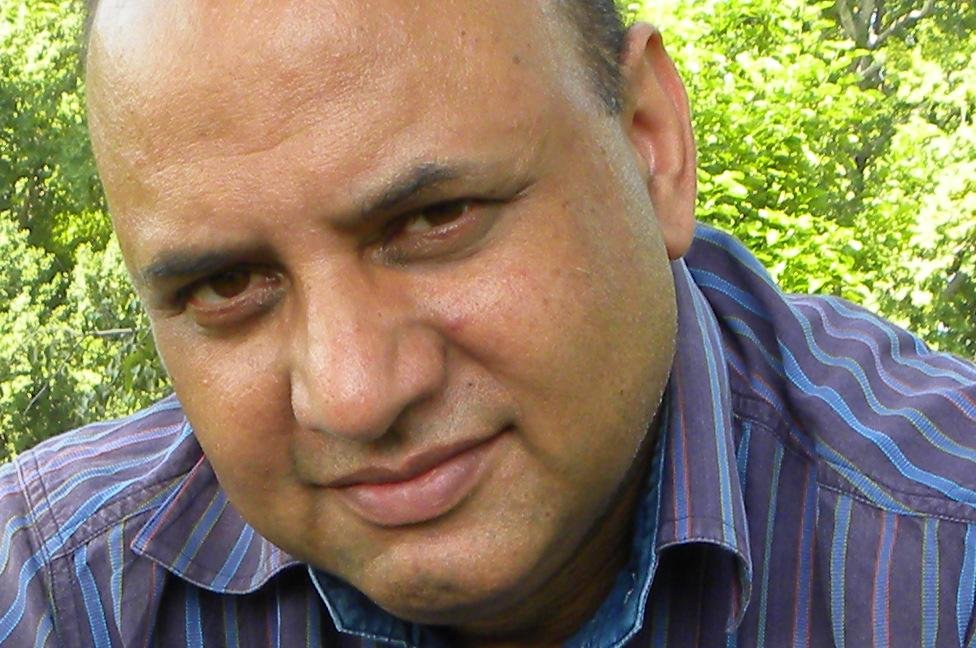
Zahoor Zahid
On the morning of July 21, 1969, a quiet yet transformative experiment took shape at All India Radio, Delhi. It was called Yuva Vani, literally, “the voice of the youth.” At a time when broadcasting was largely formal and top-down, this initiative broke convention. It handed over the microphone to young people, inviting them not merely to listen, but to create, question, and express.
Yuva Vani was more than just a radio service; it was a cultural movement. Designed as a dedicated youth platform, it encouraged participation across genres, debates, interviews, music, drama, and literary discussions. It gave aspiring writers, speakers, and performers an opportunity to engage with a wider audience, while also nurturing confidence, creativity, and critical thinking. Implicit in its design was a deeper vision: to involve young citizens in the process of nation-building through dialogue and artistic expression.
By the mid -1970s, this vibrant initiative reached the valleys of Kashmir. Before the launch of a dedicated youth service, Radio Kashmir had already been airing youth-oriented programs on its main station, notably at 8:30 in the morning. These programs, under the stewardship of the late Abdul Ahad Farhad, had gained considerable popularity. Yet, their scope was limited.
The introduction of Yuva Vani as a separate four-hour broadcast changed everything. The response from the youth of the valley was overwhelming. Participation surged as the channel opened doors to a variety of formats and genres. Among these, music and dramatic productions stood out as particularly beloved. Dramatic clubs began to flourish across the length and breadth of Kashmir, bringing together young minds eager to experiment with storytelling and performance.
For many, this was not merely a hobby- it was a calling. A significant number of participants would go on to build careers in broadcasting, journalism, acting and the arts, tracing their beginnings back to those formative days at Yuva Vani.
For me, the story of Yuva Vani is also deeply personal. It was my late cousin, Farooq Afaq, who first introduced me to the Yuva Vani service at Radio Kashmir Srinagar. That visit remains etched in memory, not just as an introduction to a radio station, but as an entry into a world of possibility.
It was there that I met Lassa Koul, the Programme Executive in charge of Yuva Vani. He was a striking personality – tall, handsome, with brown hair, and an unmistakable aura of quiet authority. Yet, what truly set him apart was his humility and gentleness. Soft-spoken and approachable, he created an environment where young participants felt encouraged rather than intimidated.
Under his guidance, Yuva Vani became a space of learning and transformation. It was not merely about broadcasting; it was about training young minds, refining their ability to write, to speak, and to think. It instilled values, discipline, and a deep appreciation for one’s cultural roots.
Then came Naheed Taj Qurashie from Delhi – a lady of grace and impeccable etiquette, with a profound command over Urdu. She was instrumental in teaching many of us the nuances of the language and its proper usage in broadcasting. Under her stewardship, several popular presentation programmes were introduced- Sher-o-Nagma, Nagma-o-Tabassum, Mehrab-e-Ghazal, Aap Ne Likha Hai, and many more.
Auditions were conducted separately for Urdu and Kashmiri presentation programmes, and qualifying was no easy task. Pronunciation and accent had to be nearly flawless. Among the programme electives was our own Rukhsana Jabeen, a poetess and a brilliant intellectual, who never compromised on quality. Scripts were meticulously scrutinized before broadcast; as a result, the standard of programmes remained exceptionally high. Writing and presenting required immense effort, discipline, and dedication.
Late Obaid Siddiqee, who later moved to the BBC, also oversaw Urdu programmes for a considerable period. These were the stalwarts who shaped my understanding and presentation skills, mentors to whom I shall always remain deeply indebted.
A signature tune, rendered in the resonant voice of the celebrated poet and broadcaster Shuja Sultan, would gently rise over the airwaves, marking the beginning of the transmission. His stirring words, “Main kahan rukta hoon, arsh-o-farsh ki awaaz se” carried a sense of boundless spirit and quiet defiance, as if the voice itself refused to be confined by earth or sky.
The moment those lines were heard, one knew that something meaningful was about to unfold, a connection being forged between the unseen studio and countless listening hearts across Kashmir. It was not merely a beginning; it was an invocation, a call that transcended distance and circumstance, setting the tone for what followed.
Yuva-Vani service held a special place in the hearts of listeners, particularly for its immensely popular Kashmiri club songs. These songs were not merely entertaining, they were woven with satire, wit, and subtle social commentary. Lines like “Tailbel maalha khareedaro, Gaade ho chov ha, Gaade ha chov,”or “Lambay lambay hipiyon ke baal dekho, Jaananayeh ajab haal dekho,” and the playful “Chus bamatric pass, hasa paas hasa hai,” would instantly resonate with the youth and the common listener alike. Beneath their lighthearted tone, they often carried deeper messages about society, change, and human behavior.
The music itself was beautifully simple – unadorned yet deeply evocative. With the gentle strains of the harmonium and the rhythmic pulse of the tumbaknari, these songs came alive in a uniquely Kashmiri style. The lyrics were rich and expressive, and the singing carried an authenticity that no elaborate orchestration could replace. Together, they created a kind of magic that was both intimate and unforgettable.
The response from listeners was overwhelming. Letters poured in from every corner of Kashmir, so many that it became a challenge to accommodate them all within a single programme. The Yuva-Vani section would often be filled with heaps of letters, each one a testament to the programme’s reach and emotional connect. Many had to wait patiently for their turn to be acknowledged on air.
Such was the impact and success of Yuva-Vani – it was not just a service, but a vibrant cultural phenomenon that echoed in every household, capturing the voice, spirit, and aspirations of an entire generation.
Kashmir, given its geopolitical sensitivity, was understandably a priority for such an initiative. Yuva Vani served as a constructive channel for youthful energy, offering an alternative to aimlessness by fostering creativity and cultural engagement.
The impact was profound. Young people from across the valley participated with enthusiasm, bringing with them diverse perspectives and talents. The platform helped revive and reinterpret local culture and language, strengthening a sense of identity and belonging. At the same time, it introduced new trends in music and performance, blending tradition with modernity.
For our generation, Yuva Vani was not just a radio program – it was a way of life. It encouraged us to engage deeply with cultural activities, to collaborate, to express, and to grow.
The turning point came in the aftermath of the upheaval of the 1990s. An atmosphere of fear and uncertainty gripped society, and its impact was deeply felt within institutions like Radio. The vibrant presence of youth – once the lifeblood of programmes such as Yuva-Vani, began to fade. Young voices, which had earlier echoed with creativity, curiosity, and confidence, grew hesitant and eventually fell silent. Visiting the Radio station itself became an act weighed down by apprehension.
This period marked a profound shift in the social fabric of Kashmir. Priorities changed almost overnight. Where once there had been enthusiasm for artistic expression and intellectual engagement, there now emerged a climate of caution and withdrawal. The youth, who had been the torchbearers of innovation and cultural dialogue, found themselves navigating an entirely different reality, one that left little room for the carefree exchange of ideas that Yuva-Vani had once nurtured.
The decline, in truth, had begun subtly even before, but the events of the 1990s accelerated it irreversibly. Merit, which had once been the cornerstone of selection and presentation, gradually gave way to accommodation, of whoever was willing or able to step forward in those uncertain times. The rigorous standards, the discipline of language, the insistence on quality that stalwarts had upheld, began to erode.
What followed was not an abrupt end, but a slow and quiet fading. A service that had once brimmed with talent, originality, and youthful energy gradually lost its essence. Yuva-Vani, which had been a cultural heartbeat of a generation, could never truly be resurrected. Its decline was both gradual and inevitable – a poignant reflection of the troubled times that reshaped an entire society
However, like many visionary initiatives, Yuva Vani could not entirely withstand the passage of time. In May 2014, Prasar Bharati directed Radio Kashmir to close the Yuva Vani service. By then, the original spirit of the platform had already begun to fade. With fewer experienced broadcasters to carry forward its legacy, the purpose for which it was created had, to some extent, diminished.
Yet, its closure marked the end of an era. Despite its disappearance from the airwaves, Yuva Vani lives on in memory and in the lives it shaped. It was a rare and remarkable experiment in participatory media, one that trusted young people with responsibility and gave them the tools to articulate their thoughts and aspirations. It fostered creativity, built confidence, and connected individuals to their cultural heritage in meaningful ways.
For those of us who were part of it, Yuva Vani was more than a platform, it was a formative experience. It gave us a voice, and in doing so, helped us discover who we were.
In an age where youth engagement is often discussed but not always meaningfully implemented, the story of Yuva Vani serves as a reminder: sometimes, all it takes is a microphone, a little trust, and the courage to let young voices be heard.