


Umair Ashraf
Every day, millions of people understand something that could completely change their lives, yet only a handful are transformed by that understanding. A student knows that disciplined study shapes tomorrow’s opportunities. A smoker understands the dangers of tobacco. Someone living with obsessive thoughts recognizes that the fear is irrational. A person recovering from trauma knows the danger has passed. Patients often leave psychologists’ offices with greater clarity than when they entered, and psychiatrists help many regain emotional balance through treatment. Yet, days or weeks later, countless people quietly return to the very patterns they were determined to leave behind.
Perhaps the real mystery is not why people fail to understand.
Perhaps it is why understanding so rarely becomes a new way of living.
For decades, psychology has tried to answer this question through thoughts, behaviour and emotions. Psychiatry has approached it through neurochemistry and pharmacology. Philosophy has searched for answers in meaning, purpose and free will. Sociology reminds us that families, culture and society shape who we become. Each discipline explains an important part of the story. Yet all eventually arrive at the same unanswered question.
If people already know what is right, what finally persuades the brain to change?
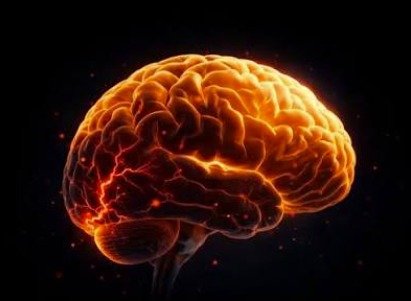
Modern neuroscience has explained the mechanics of learning with extraordinary precision. We understand neurotransmitters, receptors, ion channels and the remarkable molecular events that allow one experience to become a lasting memory. When the same neural pathway is repeatedly activated, calcium enters neurons through receptors such as NMDA. This activates intracellular signalling pathways involving molecules like CaMKII, PKC and CREB, eventually leading to protein synthesis, stronger synapses and long term potentiation. These biological events literally reshape the architecture of the brain.
Yet this elegant explanation quietly assumes something much deeper without fully answering it.
Why was one experience repeated enough to deserve biological investment while thousands of equally meaningful experiences simply disappeared?
The brain is not only a learning machine. It is also an economical one. Every lasting change carries an enormous biological cost. Proteins must be manufactured. Receptors redistributed. Dendritic spines remodelled. Entire neural networks gradually reorganized. Evolution could never have afforded a nervous system that permanently rebuilt itself after every lecture, every emotional conversation, every motivational speech or every good piece of advice. Before neuroplasticity begins, another decision must already have been made.
The brain must first decide whether something is important enough to justify changing itself.
Perhaps this hidden computation is where every discipline unexpectedly meets.
Knowledge alone does not appear to solve that problem. Most people already possess remarkable insight into the choices that would improve their lives. The difficulty seems to lie somewhere else. A medical student may genuinely dream of becoming an excellent physician while simultaneously assigning greater biological importance to distractions that provide effortless gratification. A patient may fully agree with every therapeutic insight discussed during counselling, yet emotionally familiar patterns continue to dominate behaviour. The intellect has accepted a new truth, while the nervous system quietly continues investing its biological resources elsewhere.
This observation should not be mistaken as a criticism of psychotherapy or psychiatry. A skilled psychologist does far more than offer advice. They identify distorted thinking, untangle unhealthy beliefs and provide healthier ways of interpreting reality. A psychiatrist may reduce anxiety, improve attention or soften emotional rigidity, creating conditions where healthier neural pathways become possible. These interventions are invaluable. Yet perhaps they all encounter the same biological boundary. No therapist, medication or motivational speaker can permanently assign importance on behalf of another person’s nervous system. That final computation appears to remain deeply personal.
The challenge has become even greater in the modern world. For most of human history, meaningful work competed mainly with physical fatigue or limited opportunity. Today it competes with an endless stream of immediately rewarding alternatives. Notifications, short videos, social approval, novelty and algorithmically designed entertainment continuously present the brain with effortless sources of reward. Individually they seem harmless. Together they reshape the landscape in which biological importance is assigned. Difficult work no longer competes with rest. It competes with hundreds of already reinforced neural pathways demanding almost no effort while offering immediate gratification.
Perhaps this is why insight often feels powerful inside a consulting room yet strangely fragile outside it. During therapy, healthier interpretations briefly become the brain’s dominant possibility. Different neural circuits become active. New perspectives emerge. But once everyday life resumes, those same circuits must compete with years of reinforced habits, emotional familiarity, uncertainty, fear and immediate rewards. Understanding survives. Importance often does not.
This may also explain why lasting psychological change differs fundamentally from procedural learning. Learning to ride a bicycle, type on a keyboard or tie a surgical knot eventually becomes automatic because the task itself remains relatively stable. Executive human life is different. Purpose changes. Identity changes. Relationships change. Meaning changes. Every decision emerges from a constantly changing emotional, social and biological context. The executive brain is not simply retrieving stored information. It is continuously renegotiating what deserves priority.
Perhaps we have therefore misunderstood the real challenge of human change. The question may not simply be whether an idea is true, nor whether we understand it intellectually. The deeper question may be whether the brain repeatedly concludes, across changing emotions, changing environments and changing stages of life, that one particular way of living deserves more biological investment than every competing alternative.
Only then does repeated neural activity become repeated biological commitment.
Only then do calcium signalling, gene transcription, protein synthesis and neuroplasticity begin to tell the rest of the story.
Perhaps this is why “not every insight deserves a synapse”.
Not because it lacked truth.
But because the brain never fully decided that it was worth becoming.
Until we understand how the human brain assigns enduring biological importance to one possibility over countless competing alternatives, the distance between understanding and becoming may remain one of the greatest unsolved mysteries of the human condition.
(The author is a Councellor,Member of ISSUP. Aims to bridge psychology with advanced biology & neuroscience towards public welfare.)