


Dr. Upendra Kaul
Persecution of Kashmiri Pandit (KP) community is not a story of the early nineties. Dr. Upendra Kaul, popularly known as U Kaul, who himself is a Kashmiri Pandit, traces the community’s history back to the first human settlements in the Valley over 4,000 years ago. Quoting historical evidence he has come across, Dr. Kaul says Kashmiri Pandits are Saraswat Brahmins, one of the oldest ethnic groups of the Indian subcontinent.
Even as he is a medical doctor by profession, Dr. Kaul’s love for his historical roots can be traced from his regular columns appearing in cross sections of regional and national media where he delves upon Kashmir’s culture, heritage, language etc.
He has been consistent in his opinion when it comes to deliberations on persecution of Kashmiri Pandits. TIMES LINK reproduces his take on the past, present and future of Kashmiri Pandits.
Dr. Upendra Kaul
Unfortunately, this highly educated and scholarly community was persecuted in history at least eight times between 1320 and 1990.
1320: It was Zulju, also known as Zul Qadir Khan, a Turco-Mongol invader who attacked in 1320 AD and wreaked devastation when he commanded the force that conquered Kashmir.
1389–1413: Sultan Sikandar, or Sikandar Butshikan, who was also known as the ‘iconoclast,’ destroyed massive temples like Martand and gave Hindus in the area the choice to convert, flee, or die.
1413–1420: Ali Shah, the son of Sikandar, continued his father’s policies with even more brutality, deploying guards to prevent Pandits from escaping so they could be forcibly converted.
1500s: Under Kaji Chak and Musa Raina, who were influenced by Shia missionary Mir Shams-ud-Din Iraqi, thousands were forcibly converted. Those who resisted were massacred on the holy day of Ashura, according to K.L. Bhan.
Late 1600s: Mughal ruler Aurangzeb’s governor, Iftikhar Khan, used extreme force to convert the community. This led the Pandits to seek help from the Sikh Guru Tegh Bahadur, who was eventually killed while protecting them.
1720s: During a period of Mughal decline, local fanatical leaders including the cleric Mullah Abdul Nabi imposed “jizya” or tax and banned Pandits from wearing turbans, shoes, or even riding horses.
1753-1819: Afghan Rule is widely considered the darkest era. Afghan governors would tie Pandits in pairs in grass sacks and drown them in Dal Lake. It was said that “a Pandit’s life was not worth the price of a hen.”
1989-1990: Modern militancy, the rise of Pakistan-sponsored insurgency and radical Islamism led to targeted killings and mosque announcements. This forced most of the community into exile.
Best Times For KPs
The Kashmiri Pandits’ best times are often associated with the reign of Lalitaditya Muktapida in the 8th century and later, the peaceful rule of Zain-ul-Abidin in the 15th century. The latter invited Pandits back after a period of persecution, earning him the title Budshah, the great king. During these eras, the community thrived as administrators, scholars, and spiritual leaders.
Life After Accession in 1947
After the accession of Jammu and Kashmir to India in 1947, Kashmiri Pandits and Muslims lived in harmony. However, an element of mistrust was there as Kashmiri Pandits were viewed with a bit of suspicion because of their religious identification with the majority community of mainland India. Pandits were, however, acknowledged as good teachers and professionals (many were doctors and bureaucrats). Interestingly in spite of being Hindus they were very good teachers of the Persian language and were also recognised as good interpreters of the Quran.
Painful Chapter in Modern History
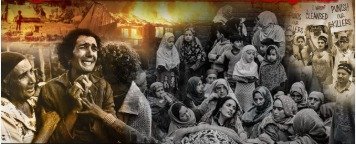
It all started in January 1990. As Islamic militancy surged in the Valley, fuelled by external support and internal radicalisation, the minority community was targeted with a campaign of terror. Slogans like “Raliv, galiv ya tchaliv (convert, die, or leave)” reverberated from loudspeakers of the mosques. Prominent community leaders were assassinated. These included Tika Lal Taploo, a lawyer and Bharatiya Janata Party leader, Lassa Kaul, station director of Srinagar Doordarshan, Satish Tikoo, a young social worker, Sarwanand Koul Premi, a poet, and his son, Girja Tikoo, a teacher, and Sarla Bhat, a young nurse.
Most of the Pandits fled their ancestral homes overnight, carrying little more than their house keys –many of which they still hold on to today as symbols of hope. They transitioned from the cool breezes of the Valley to the scorching heat of refugee camps in Jammu and Delhi, living in small rooms as their two- to three-storey houses lay empty.
Unsympathetic Jammuites
The migrants to Jammu were surprised to find that the local Hindu population there was also not sympathetic to them. They were blamed for price hikes of vegetables and mutton. Kashmiri Pandits were good consumers amidst the shortages there.
Bal Thackeray’s Exceptional Support
But successive governments at the centre did not do much for them. Bal Thackeray in Mumbai was the only prominent politician who made the effort to reserve seats for Kashmiri Pandit children in professional engineering colleges in Maharashtra in the 1990s.
Hard Realties
Despite being a central theme in Indian national discourse, the community often feels like a political pawn. Because their numbers are small and scattered, they do not constitute a decisive “vote bank” in Jammu and Kashmir. Scholar Alexander Evans estimated the total population of Kashmiri Pandits to have been around 160,000 to 170,000 prior to 1990. As of 2011 only an estimated 2,700-3,400 remained in the valley. It is worth noting that around 60,000 families are registered as migrants – a number which includes Sikhs and Muslim families also who re-settled in Jammu, the NCR and other neighbouring states.
While political parties use the Pandits’ plight to score points in national elections and mobilise voters in other states, the community points to a lack of concrete rehabilitation. Schemes for return often lacked the security guarantees and economic infrastructure needed for a dignified life back home. Even decades later very few perpetrators of the 1990 violence have been brought to justice, leading to a sense of systemic abandonment. Kashmiri Pandit organisations like Panun Kashmir had made demands for a separate homeland for the community in the southern part of Kashmir. These demands have never been taken seriously.
In spite of all these negatives the community is celebrated for its survival instincts since the days of Sikandar Butshikan. Deprived of land and homes, they doubled down on the one asset that couldn’t be taken away and that is education. Today, the Pandit diaspora is globally successful in medicine, technology, and academia. They can be found in all the major countries occupying prestigious chairs. During the regime of Indira Gandhi her top advisors had many Kashmiri Pandits – D.P. Dhar, T.N. Kaul, R.N. Kao, P.N. Haksar and P.N. Dhar. They were often called the ‘Paanch Pyare’, the coterie of five. The current foreign secretary Vikram Misri is a Kashmiri Pandit.
A silent crisis looms large
Some sociologists and community elders fear a demographic extinction later in this century. There is a threat of linguistic erosion as the younger generation, born outside the Valley, is rapidly losing the ability to speak Koshur (Kashmiri). As families scatter across the globe, the cohesive “village” structure that preserved their unique rituals like Herath and Shivratri is crumbling. High education and career focus, combined with the trauma of displacement, have led to a significant demographic decline. The population growth rate of Kashmiri Pandits has hit a low of 1.6%.
To conclude, let me reproduce a powerful statement of my late grandfather: ”A community that loses its language and its land loses its soul. We have survived eight exoduses, but the ninth – the exodus of our culture – may be the final one.” Here it merits a mention that there are opinions foreseeing extinction of Kashmir Pandit community by 2070.
(Upendra Kaul is founder-director of Gauri Kaul Foundation and a Kashmiri Pandit. A medical doctor, Kaul is a recipient of the Padma Shri and the Dr B.C. Roy Award. He is chairman of Cardiology and dean of Academics and Research at the Batra Hospital and Medical Research Center, New Delhi.)