

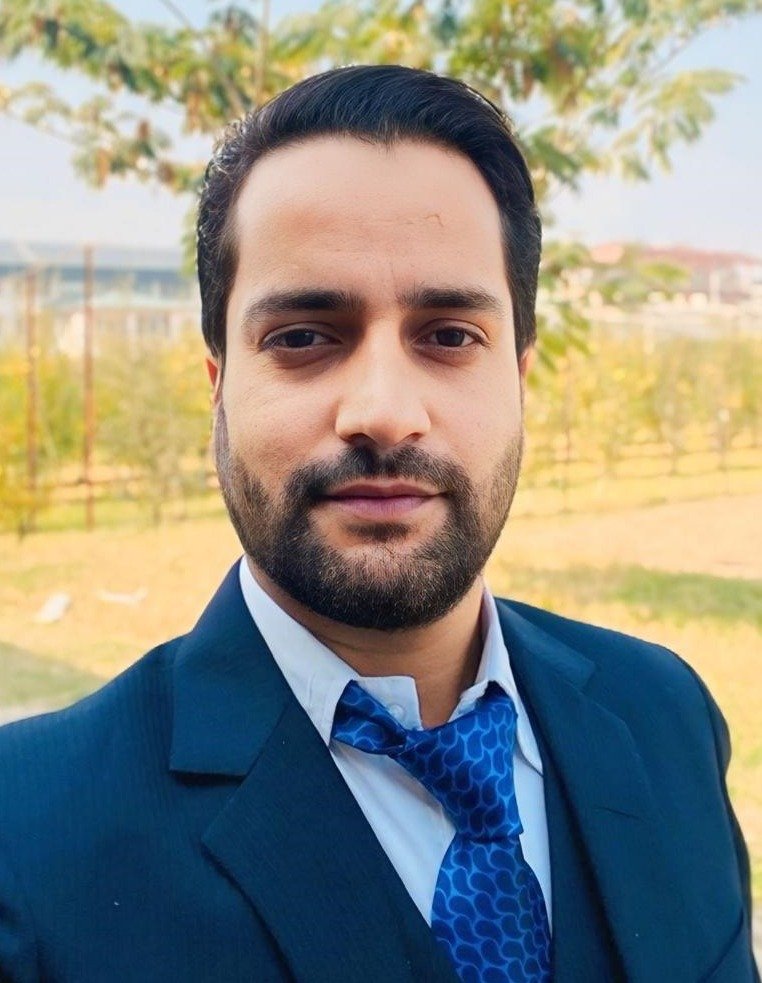
Dr Umer Iqbal
For decades, Jammu & Kashmir has borne the brunt of terrorism that not only claimed thousands of innocent lives but also left deep scars on families that were torn apart, both emotionally and economically. Behind each statistic lies a human story, children who grew up without parents, households that sank into debt, and dreams that slowly faded into silence. Today, however, a historic policy shift is offering these families not just a livelihood, but dignity, recognition, and a chance at rebuilding life.
In an unprecedented move, the Jammu & Kashmir administration, under Lieutenant Governor Manoj Sinha, has made the rehabilitation of terror victims and their families through jobs, a cornerstone of its outreach and justice agenda.
“This initiative,” said Mir Junaid, President of the Jammu and Kashmir Workers Party, “is not to be understood as one more decree among decrees, nor as a dry rectification entered into the ledgers of administration. No, that would be too simple, too shallow, and, in truth, unworthy of the suffering from which it has arisen. It is something graver. It is an attempt, however late, to speak honestly in a land long made weary by slogans, by evasions, by the endless abuse of language itself. For what had been offered to the afflicted all these years? Phrases, ceremonies, rehearsed lamentations. Meanwhile, the real victims, those whose dead lay not in metaphor but in memory, in blood, in the silence of ruined homes, were left to wrestle not only with grief, but with abandonment. And now, perhaps, there is the first trembling suggestion that the state has looked into the face of their suffering and not turned away.” Mir went on, and there was in his words not the confidence of a politician congratulating an institution, but the troubled urgency of a man who has looked too long at injustice and can no longer bear the ordinary lies by which men protect themselves from shame.
A Silent Tragedy Comes to Light
For long, countless families in Kashmir and Jammu carried the silent burden of loss. In villages, towns, and urban neighbourhoods, stories abounded of parents killed in ambushes or explosions, leaving young children to fend for themselves. Education, shelter, food, stability, everything became a struggle.
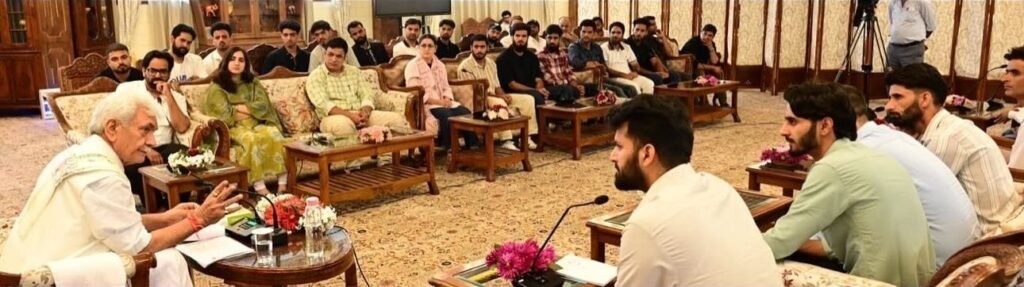
“Until recently, many of these families lived in a condition almost too bitter to name. They had already paid the price terror exacts in its most merciless currency. Fathers lost, sons buried, lives split forever into a before and an after, and yet even this was not the end of their ordeal. Poverty settled upon them like a second sentence. They endured want, humiliation, neglect. And while they struggled thus, there were others, overground workers (OGWs), sympathisers, those who fed upon the climate of fear, who lent their presence, their silence, or their labour to the machinery of terror, who, in too many cases, moved through society not only unpunished, but advantaged, accommodated, even absorbed into government service under previous regimes. Consider the moral obscenity of such a spectacle. The bereaved reduced to desperation, while the shadows that attended violence found protection and privilege. Is it any wonder that grief, under such conditions, curdles into something more terrible than grief? It becomes a wound to one’s faith in the very structure of justice. The new approach led by the Lieutenant Governor is therefore not merely concerned with order or security, though these are necessary. It seeks, rather, to reverse an old and terrible inversion, to restore dignity to those who suffered without surrender, and to affirm that their pain was not an inconvenience to history, but a truth demanding recognition, said Mir Junaid.
Jobs as Rehabilitation: Policy with Purpose
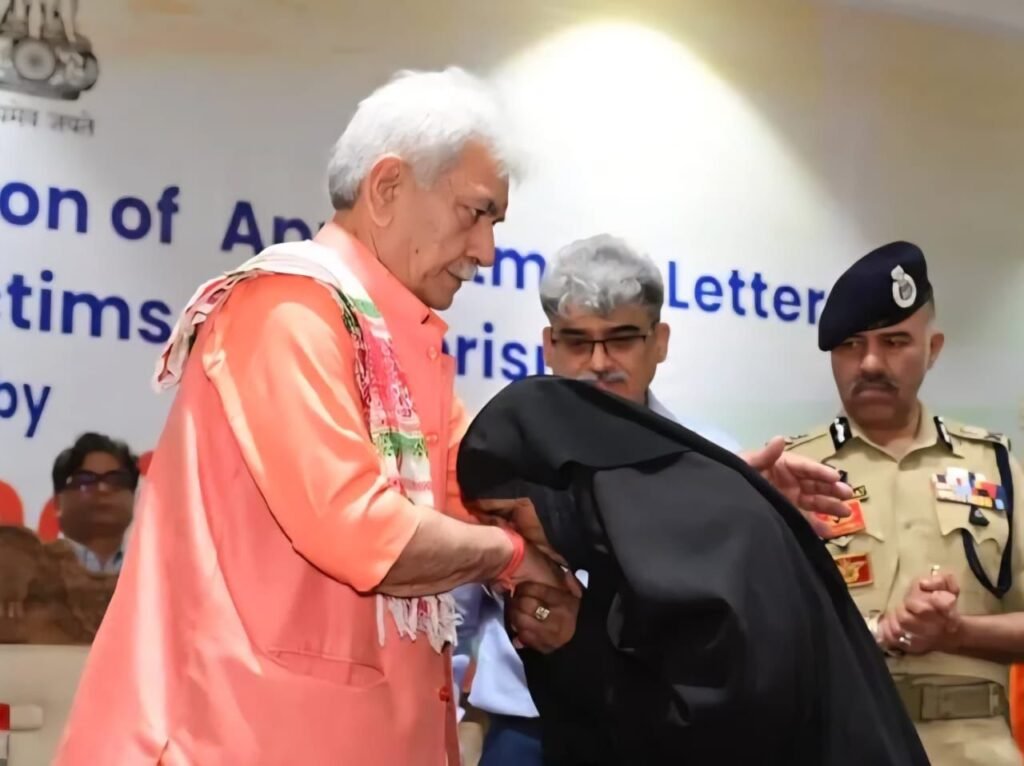
In the past year alone, the J&K administration has provided government jobs and employment support to a significant number of terror-affected families. At special ceremonies held across the Union Territory, appointment letters have been handed over to more than 200 next of kin (NoKs) of terror victims for government jobs, with 39 families from the Kashmir division and 41 families from the Jammu division receiving letters in December 2025 alone. According to official figures, over 200 government jobs have been distributed so far during the year to genuine terror victims’ relatives.
Beyond government jobs, 156 family members of terror victims have also been assisted with self-employment opportunities under key schemes such as Mission Yuva, the Holistic Agriculture Development Programme (HADP) and the Prime Minister’s Employment Generation Programme (PMEGP).
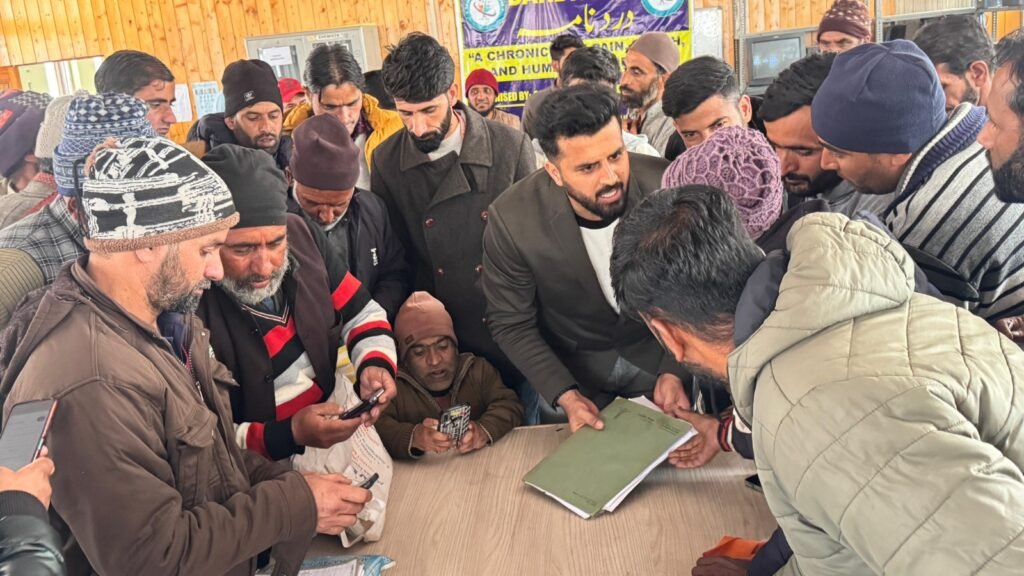
This multi-pronged employment initiative, a decisive shift in how the state addresses long-frozen grievances and deep-rooted economic exclusion. Jobs are no longer seen as mere welfare, but as the fulcrum of rehabilitation that restores dignity, social identity, and economic independence.
The Human Stories Behind the Numbers
Statistics often capture the scale of loss, but they rarely convey the depth of human experience that lies beneath. Across Jammu & Kashmir, behind every data point is a story of grief, resilience, and gradual recovery.
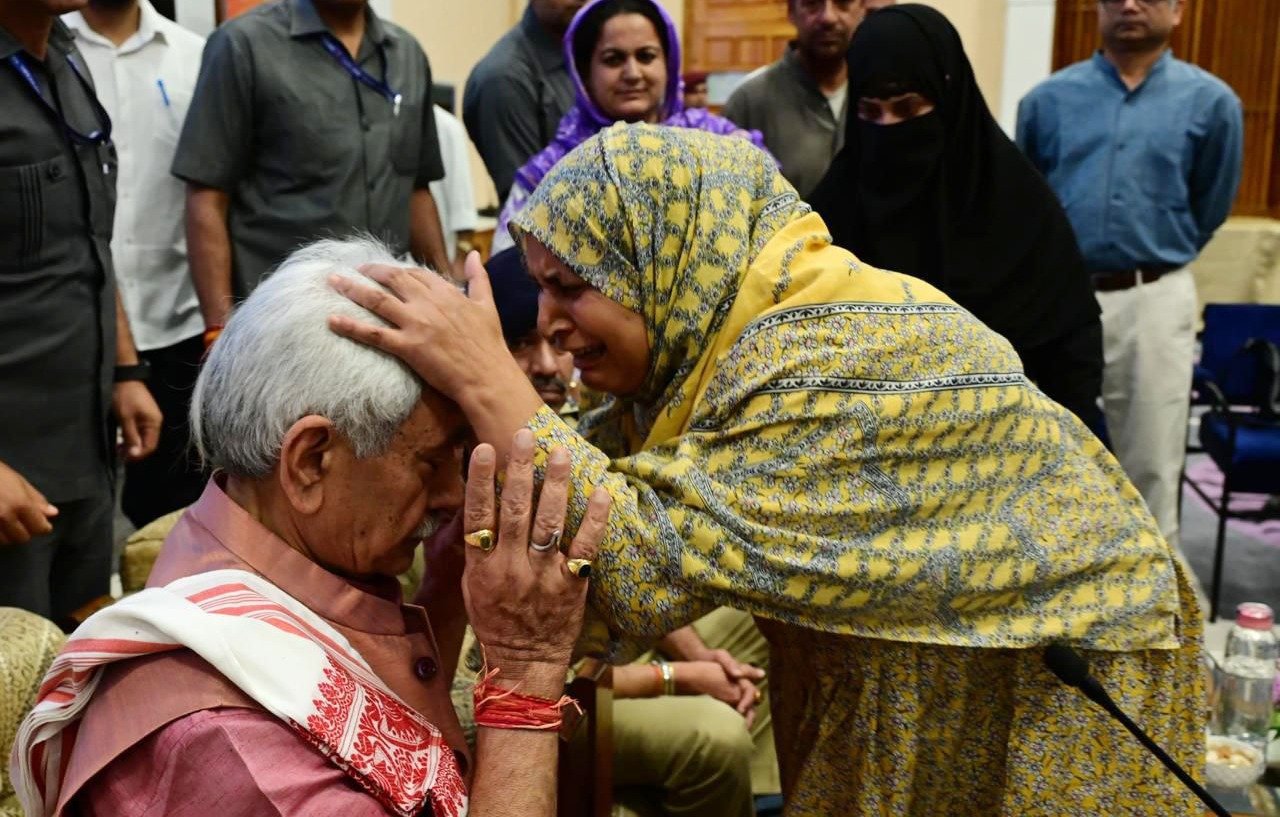
Consider the journey of Pakeeza Riyaz. As a minor, she lost her father, Riyaz Ahmed, to terrorism in Anantnag in 1999. The tragedy abruptly altered the course of her life, leaving her family in uncertainty and hardships. Despite immense challenges, Pakeeza persevered in her pursuit of education and stability. Nearly three decades later, the receipt of a government job letter marked a defining moment, strengthening not only her financial footing but also restoring a sense of dignity, belonging, and recognition.
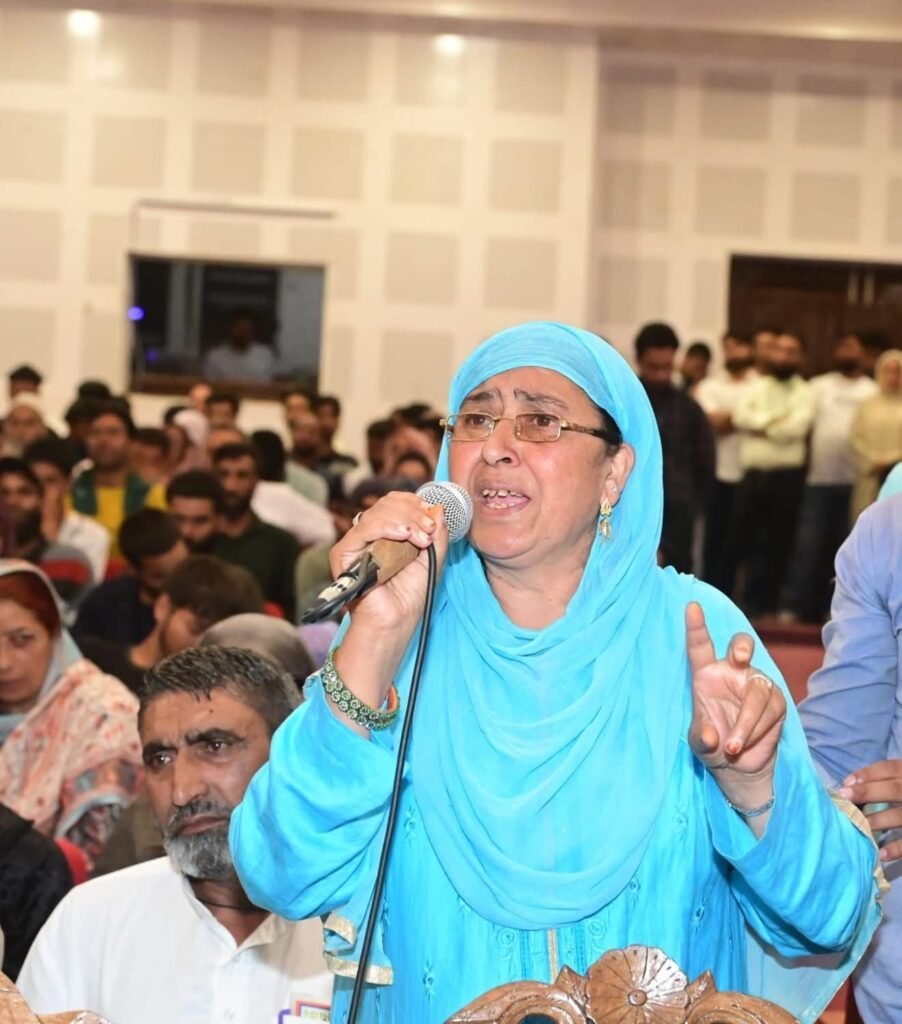
A similar path of endurance can be seen in the life of Fozy Jan of Qazigund, who lost both her father and grandfather in a brutal terrorist attack. The home that once resonated with warmth and laughter was overshadowed by silence and loss. Years later, when she received her appointment letter in a formal and respectful ceremony, it symbolized far more than employment. It offered closure, reaffirmed her family’s sacrifices, and opened the door to a renewed sense of hope.
In Hyderpora, Srinagar, Shaista’s story reflects the same quiet resilience. Her father, Abdul Rashid Ganai, was killed in 2000, leaving the family to shoulder emotional and financial strain. The government appointment she later received brought long-awaited economic stability and reassurance for the future, an acknowledgment of the hardships endured over the years.
For Ishtiyaq Ahmad, son of BSF personnel Altaf Hussain, who lost his life in a terrorist encounter nearly nineteen years ago, a government post represents both continuity and support. His appointment stands as a measure of sustained institutional backing for families who have carried the weight of sacrifice for decades.
Across the region, many such narratives unfold, stories of slow but determined recovery. “In these contexts, an appointment letter to a government post signifies far more than a livelihood. It becomes a formal affirmation of state recognition, justice, and solidarity with families whose lives were irrevocably altered by violence,” said Rather ilyas, a scholar of Media Studies.
The Lieutenant Governors Role:
The driving force behind this initiative is the Lieutenant Governor, Manoj Sinha, who pushed for an unequivocal stance on rehabilitating terror victims. Sinha has termed the provision of justice, jobs, and dignity to affected families as a top priority of his administration. He has repeatedly stressed that for too long, the pain and trauma of these families were ignored, and it is only now that their voices are being heard and their rights restored.
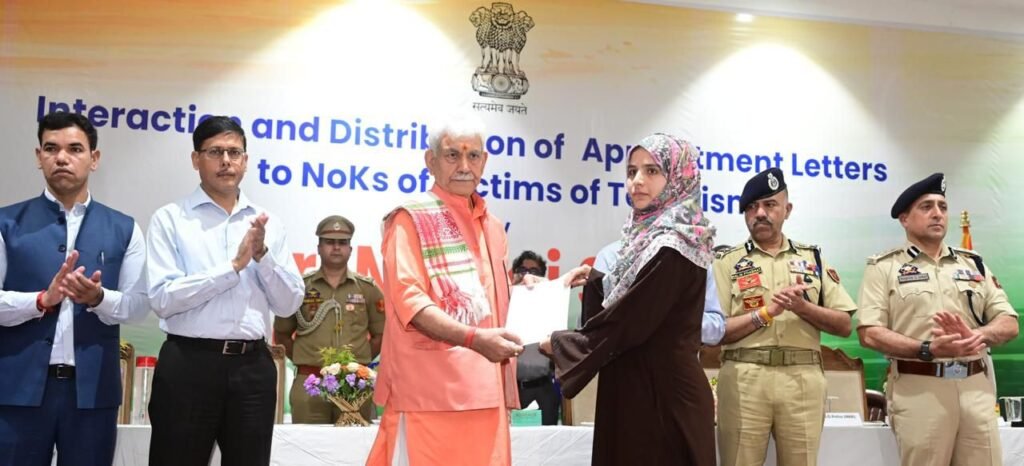
Sinha’s strategy extends beyond job distribution. He has also promised to return properties taken from victims’ families during years of conflict, ensure justice for unregistered cases, and pursue a zero-tolerance policy against terrorism and those who support it.
In his public addresses, the LG has invoked the stories of victims to highlight the moral imperative behind these measures, reinforcing that employment is not charity, it is justice. Analysts say that this vision carries symbolic weight, the state acknowledging victims not as passive recipients of aid, but as active citizens with rightful claims to opportunity.
A Watershed Moment: Policy Meets Principle
The momentum behind the rehabilitation process has also drawn public endorsement from prominent voices. In a strongly worded message on social media, political commentator Mir Junaid described the recent measures as “a watershed moment in justice.”

Referring to the decision of Lieutenant Governor Manoj Sinha to facilitate job appointments and the registration of FIRs for victims of Pakistan-sponsored terror, Mir termed the development a long-pending moral obligation finally translated into action. According to him, the initiative represents more than administrative reform, it is a principled acknowledgment of families who suffered immense personal loss yet refused to succumb to fear.
Mir also recalled raising a similar proposal in 2016 with then Union Home Minister Rajnath Singh, who now serves as India’s Defence Minister. He recounted receiving an early morning call in July 2017 that led to a high-level meeting in New Delhi. The consultation, he noted, brought together senior figures including National Security Advisor Ajit Doval, then Home Secretary Rajiv Gauba, Internal Security Secretary Rina Mitra, Intelligence Bureau Director Rajiv Jain, RAW Chief Anil Dhasmana, and senior bureaucrat Rajiv Mehrishi.
For nearly ninety minutes, Mir wrote, the group deliberated on what he described as the “deep structural wounds” inflicted on Jammu and Kashmir by decades of cross-border terrorism. That meeting, he suggested, marked the beginning of a sustained and serious dialogue focused not on political optics but on long-term institutional correction and justice for victims.
In his message, Mir framed the current policy outcomes as the fruition of that earlier vision, one he says was once dismissed as idealistic. He characterised the initiative as evidence that within the machinery of governance, conviction and conscience can converge to produce meaningful change.
Each FIR registered and each job letter issued, he emphasised, should not be viewed as a bureaucratic formality but as a tribute to those killed in acts of terror. Having personally engaged with affected families for years, Mir described the process as deeply emotional, stressing that what is unfolding today is not mere compensation, but a nation’s acknowledgment of sacrifice.
He extended gratitude to Prime Minister Narendra Modi, the Government of India, the Union Home Ministry, the Lieutenant Governor’s administration, the Jammu and Kashmir Police, and civil society organisations that stood by the victims.
“This is not just a policy win,” he concluded. “It is the triumph of memory over erasure, of dignity over despair.”
In the broader arc of Jammu and Kashmir’s evolving peace narrative, such endorsements reflect a growing perception among supporters that the convergence of political will, administrative action, and civil society advocacy is reshaping long-standing demands for justice into tangible outcomes.
The Role of Civil Society: Save Youth Save Future Foundation:
While the administration’s role in driving rehabilitation has been pivotal, the larger story of healing in Jammu and Kashmir is equally shaped by the sustained efforts of civil society. Among the organisations at the forefront is the Save Youth Save Future Foundation, led by noted human rights activist Wajahat Farooq Bhat.
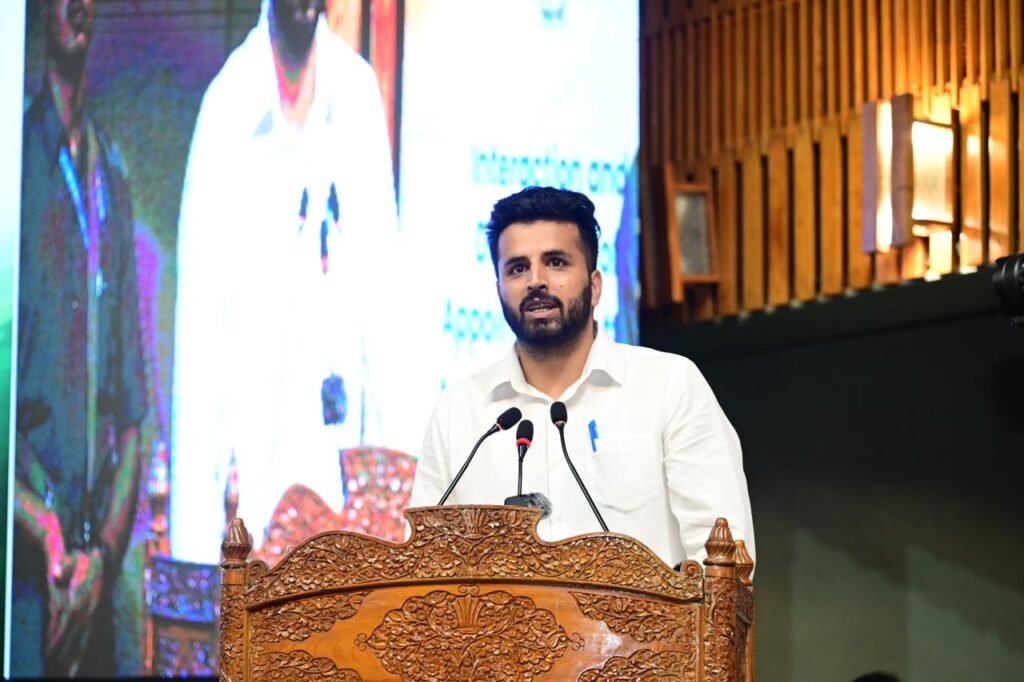
For years, Bhat and his team have worked closely with families affected by terrorism, many of whom endured not only personal loss but also social stigma and economic marginalisation. “Our mission has gone beyond advocacy as we focused on restoring dignity, ensuring institutional accountability, and reconnecting traumatised families with the broader social fabric,” said Wajahat Farooq Bhat.
He further added, “At public job distribution ceremonies organised under the leadership of Lieutenant Governor Manoj Sinha, we consistently articulated a powerful moral argument: that providing employment to the next of kin of terror victims is not merely a welfare measure, but a duty of the state. Such initiatives are essential not only for economic rehabilitation but also for rebuilding self-confidence and hope among families who have lived for decades under the shadow of fear and exclusion.”
Reflecting on the early days of the Foundation’s work, Bhat recalls that nearly 14,000 victims and affected individuals struggled with social alienation. Many were unfairly labelled, denied acceptance, and deprived of dignity within their own communities. Through coordinated efforts aligned with the administration’s rehabilitation initiative, the Foundation concentrated on three core objectives: securing employment opportunities for affected families, restoring social acceptance, and reclaiming their dignity.
Bhat further said that today, families who once hesitated to speak publicly about their loss are doing so without fear. Many have openly acknowledged that their loved ones were killed by Pakistan-sponsored terrorists, a shift that highlights what supporters describe as a renewed sense of security and belonging. For them, the peace process has translated into a reclaimed identity and a reaffirmation that this is their own country.
Reaching the Margins: Dardpora’s Story
The Foundation’s outreach has extended to some of the most remote and traumatised regions. Anika Nazir, President of the Women’s Wing of the organisation, took a focused intervention in Dardpora village in Kupwara district, a border area long marked by violence and loss. Often referred to as a “village of widows,” Dardpora stands as a stark reminder of the human cost of conflict.
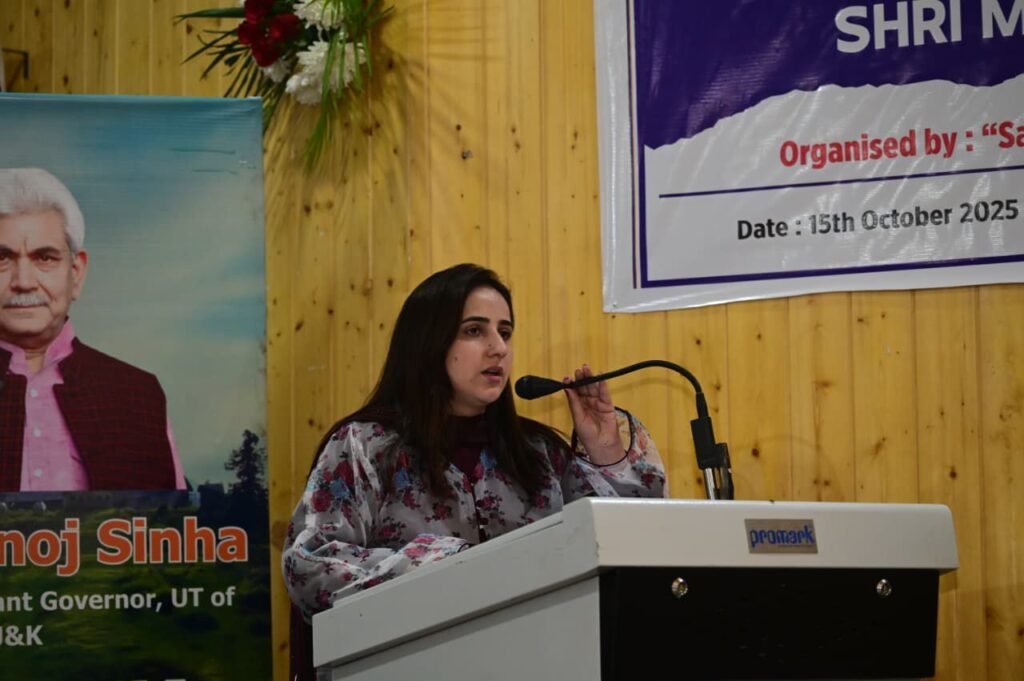
Anika spearheaded efforts to engage directly with the women of the village, listening to their stories, documenting their concerns, and ensuring their voices were amplified at the highest levels. Her sustained advocacy ultimately contributed to drawing administrative attention to the area, culminating in an official visit by the Lieutenant Governor to the village.For many residents, that visit symbolised long-awaited recognition.
From high-level advocacy to grassroots community outreach, the Save Youth Save Future Foundation has positioned itself as a bridge between policy and people. Its work illustrates how civil society can complement state-led initiatives, not as a parallel force, but as a collaborative partner that ensures rehabilitation policies reach those who have waited decades for justice, dignity, and acknowledgement.In the evolving narrative of peace and reconstruction in Jammu and Kashmir, the partnership between administration and civil society offers a compelling case study: one where healing is not only administered from above, but nurtured from within communities themselves.
A Change in Narrative: From Victims to Contributors
The rehabilitation of terror victims through jobs also symbolises a broader societal shift. Analysts say that for years, the narrative in Jammu & Kashmir was dominated by conflict, fear, and loss. Economic stagnation and lack of opportunities compounded frustration, especially among youth.In contrast, jobs for terror victims send a powerful message: that the state stands with genuine victims, not with those who propagated violence. This distinction is symbolic but significant, redefining who gets recognition and who gets blame, who gets support and who gets sidelined. More importantly, these measures invite victims to take part in rebuilding the Union Territory, as contributors to its growth and peace, rather than passive sufferers of circumstance.
Times Link spoke with several victims who are yet to benefit from these measures or have not received their appointment letters. They said that while the impact of these policies is undeniable, sustaining this progress requires continuous effort.According to them, employment outreach needs to be expanded so that more families, particularly those who have not yet been identified or whose applications are still pendingcan be reached. They also emphasised the need to strengthen community support structures to address trauma, mental health concerns, and challenges related to social integration.
They further noted that robust monitoring and transparency mechanisms are essential to ensure the fair and timely delivery of rehabilitation benefits.For many families, the journey from loss to livelihood has begun. But there are still miles to go before the echoes of fear are fully replaced by hope, and the legacy of terror gives way to a future defined by opportunity.
The initiative to provide jobs to terror victims represents more than economic rehabilitation. It is a healing process, a restoration of dignity, and an affirmation of shared humanity.When an appointment letter is handed over with respect, it speaks not only of employment, but of acknowledgement and justice. When a young woman from a bereaved family steps into government service, it signals not just a job won, but a life reclaimed.
This is the story of hope, resilience, and renewal, one job at a time.