

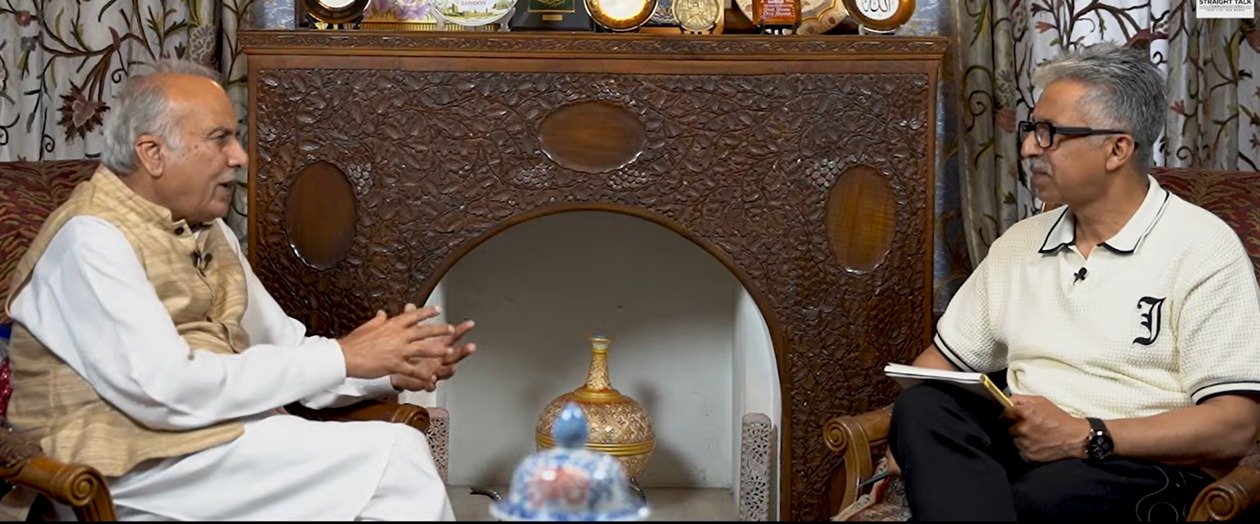
Justice (Rtd.) Hasnain Masoodi, MLA Pampore became Member of Parliament(MP) in 2019. Back in 2015, he stated that Article 370 was permanent. However, shortly after he was elected MP on an NC ticket, the Article was abrogated. In 2020, he challenged this in the Supreme Court.
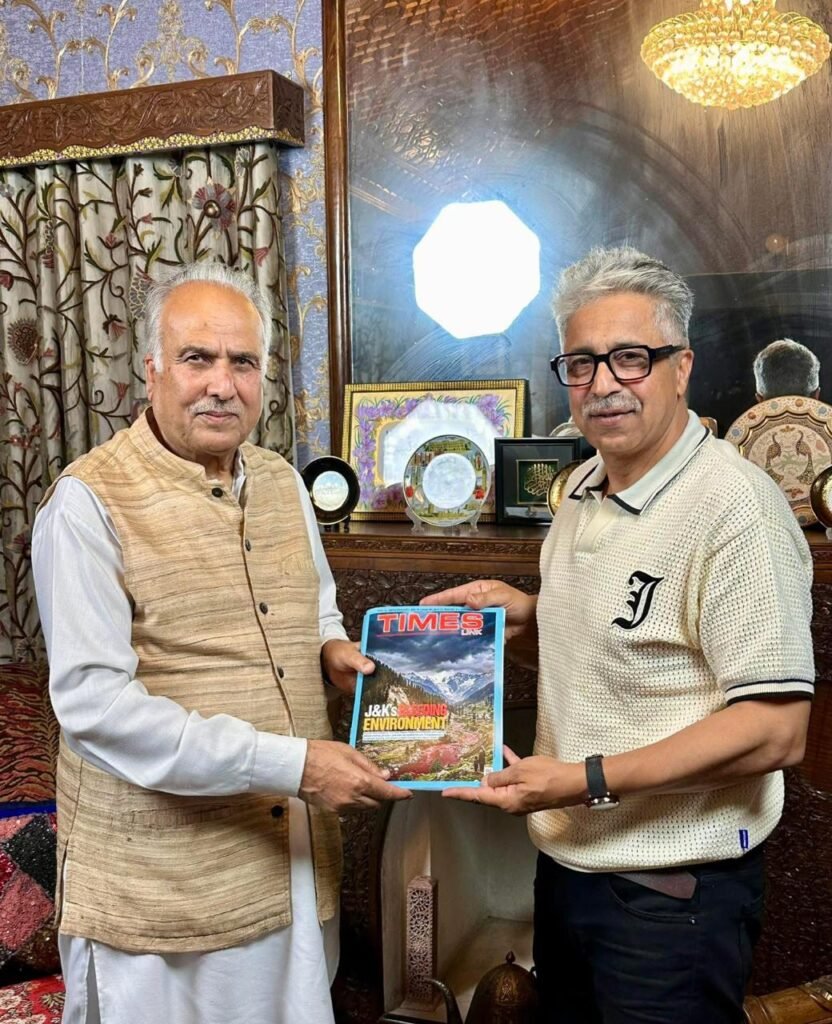
In an exclusive interview with Sajjad Bazaz, EDITOR, TIMES LINK, Justice (Rtd.) Hasnain Masoodi, said the Supreme Court gave a verdict that he believes was not in line with the spirit of the Constitution. Talking about downgrading of J&K as Union Territory, he said the central government cannot simply erase the history of a State. Article 3 of the Indian Constitution allows for the reorganization of States, but it does not grant the power to downgrade a historic State into two Union Territories (UTs).
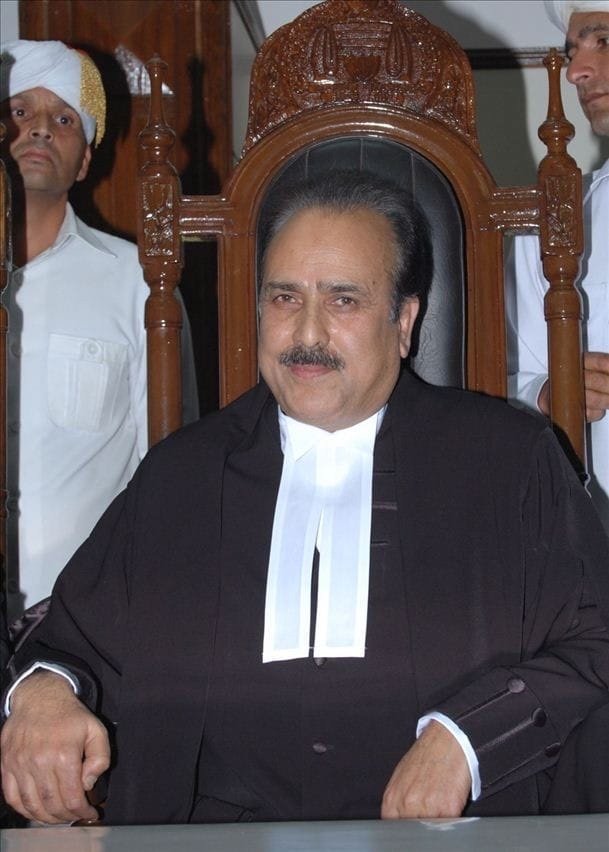
Here are the excerpts of the conversation:
SAJJAD BAZAZ: While you are well-known, we would love to hear about your personal journey, from being a practicing lawyer to becoming a lawmaker.
HASNAIN MASOODI: I earned my three-year law degree from Kashmir University. Shortly after, I joined the Bar Association and began my practice before transitioning into the judicial services. I have served for approximately 35 years in various capacities. My career included several key judicial administration roles, such as Principal Secretary to the Chief Justice, Registrar of the Jammu High Court, and Registrar Vigilance.
Eventually, I was elevated to the bench, serving as a District Judge in Srinagar, Budgam, and other districts, before being elevated to the High Court, where I served until 2016. From lawyer to judicial official and administrator, the challenges were constant and everywhere. During my time on the bench, many significant cases came before me involving personal law, Muslim laws, human rights, and civil liberties.
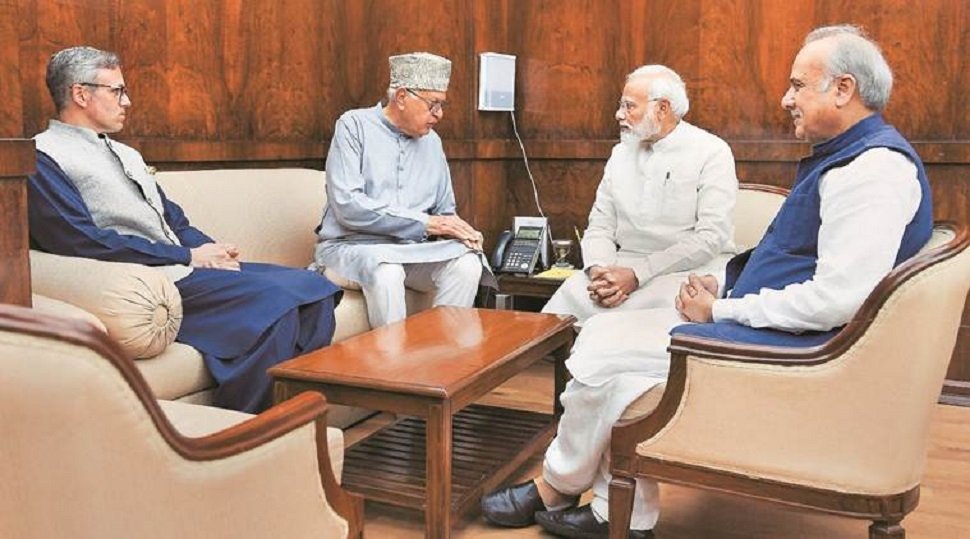
After 2016, I was given another assignment regarding child rights as the head of the State’s Juvenile Panel. You might be surprised to know that the Constitution of Jammu and Kashmir was unique in the entire subcontinent for enshrining the “Right to a Happy Childhood.” You will not find that specific language anywhere else in the region.
SAJJAD BAZAZ: That is a fascinating visionary concept. Was this idea present during the early days of our political formation?
HASNAIN MASOODI: Indeed. When the “New Kashmir” (Naya Kashmir) manifesto was drafted before decades, we were already dreaming of a structure that prioritized the rights of women and children. This vision was later reflected when we drafted our own Constitution. To realize this “Right to a Happy Childhood,” we needed a functional structure on the ground. Although we had the Juvenile Justice Act, the actual implementation framework was missing.
In 2017, that responsibility fell to me. Alongside two dedicated professors, one from Kashmir University, a lady professor and another from Jammu who was working with an NGO also, we established Child Welfare Committees (CWCs) and Juvenile Boards across all districts of Jammu and Kashmir. I requested retired IAS officers to head these committees to ensure professional oversight. It is pertinent to mention that children make up one-third of our population, yet their rights are rarely discussed because they do not have the power to vote. Since they aren’t a “vote bank,” the concern for their welfare is often secondary. My journey in this field continued until 2019.
SAJJAD BAZAZ: Then came the shift. Why did you choose to join the National Conference (NC)? There were certainly other political parties active at the time.
HASNAIN MASOODI: The National Conference has a deep history. Under its leadership, we fought the war for independence against individualistic governance and suffered greatly to end unjust taxes and forced labour. The NC’s legacy is built on pluralism and secularism.
If you look at the journey since 1938, the NC had a clear vision for Jammu and Kashmir. Their “Land to the Tiller” Act remains one of the most successful land reforms in the subcontinent. In other parts of the country, the Vadera (feudal) system often persisted, or reforms required massive compensation. In J&K, we transferred 34 lakh kanals of land to the common people without compensation, arguing that it was a correction of years of exploitation. This was upheld by both the J&K High Court and the Supreme Court. I was impressed by this clear social justice programme and the party’s commitment to autonomy and political participation. When I retired in 2016, I began writing columns and realized that the NC was the only party with the manifesto and history capable of addressing the complex challenges facing Jammu and Kashmir.
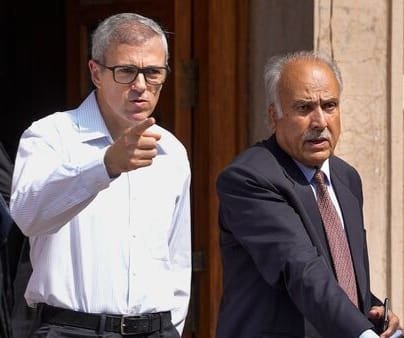
Mr.Omar Abdullah at Supreme Court of India during hearing of Article 370 petitions
SAJJAD BAZAZ: You became an MP in 2019. Back in 2015, I recall you stating that Article 370 was permanent. However, shortly after you were elected on an NC ticket, the Article was abrogated. In 2020, you challenged this in the Supreme Court. How do you view the abrogation of Article 370?
HASNAIN MASOODI: My stance has always been consistent with the law. Even the Supreme Court had previously noted that Article 370 had acquired a permanent status. The Constituent Assembly of J&K had the option to abrogate or amend it, but they chose to let it remain when the assembly concluded. Under Article 370 Clause (3), the President’s power to modify the article was contingent on the recommendation of that Constituent Assembly.
What happened on August 5, 2019, was an unconstitutional assault. Parliament has the power to amend many articles, but Article 370 was structured differently. We went to the Supreme Court because we believe the abrogation lacks legal validity.
SAJJAD BAZAZ: What is the current status of that legal battle?
HASNAIN MASOODI: The Supreme Court gave a verdict that I believe is not in line with the spirit of the Constitution. Beyond Article 370, we also challenged the disintegration of our State. The central government cannot simply erase the history of a State. Article 3 of the Indian Constitution allows for the reorganization of States, but it does not grant the power to downgrade a historic State into two Union Territories (UTs).
During the hearings, the Solicitor General stated that statehood would be restored soon, suggesting it wasn’t necessary to debate it further. Both the Prime Minister and Home Minister promised this on the floor of Parliament. Since they have not kept that promise, it has now become a constitutional obligation. Furthermore, Article 35A was a protective umbrella for jobs and land rights. Its removal has no legal validity in our eyes.
SAJJAD BAZAZ: In this scenario, do you honestly feel we can get Article 370 or statehood back?
HASNAIN MASOODI: In politics, there is no “end point.” Look at other regions; for instance, the government once denied autonomy to parts of the Northeast, yet later granted autonomous territories in Assam where even the Chief Minister cannot buy land in Bodo areas. Our political fight continues. We are not on the back foot. It is in the interest of the country to respect the aspirations of the people. What has changed since August 5? We have seen Jamia Masjid closed for long periods and leaders placed under house arrest. We have achieved nothing but loss.
SAJJAD BAZAZ: You were the coordinator of the People’sAlliance for Gupkar Declaration (PAGD), which many say has failed. It was formed to restore rights, why did it split?
HASNAIN MASOODI: In late July 2019, there were rumours everywhere. The atmosphere was one of total uncertainty. On the evening of August 4, political leaders, including Mehbooba Mufti, met at Dr. Farooq Abdullah’s residence. It was a historic moment where we declared that any assault on J&K’s integrity would be seen as aggression against the people.
The next day, our fears came true. Leaders were arrested. We stayed together for a while based on that declaration, but unfortunately, the alliance eventually split. However, I wouldn’t say the PAGD “failed.” The essence of that unity is still alive. The country cannot afford continued uncertainty in J&K. You cannot solve issues by lodging Kashmiris in outside jails or repeatedly using the PSA (Public Safety Act).
SAJJAD BAZAZ: Regarding arrests, the NC government reportedly formed a Human Rights Cell in 2025, which you head. What is its function?
HASNAIN MASOODI: While Dr. Farooq Abdullah announced the formation of a Human Rights Cell, it has not been fully operationalized yet. However, I have been vocal about these issues. For example, regarding the recent alleged fake encounter in Ganderbal, I have advocated for the “Right to a Decent Burial.” I also submitted a resolution in the assembly regarding youngsters from Kupwara, Baramulla, and other districts who are facing trials but are lodged in jails outside of J&K. This violates their “Right to a Fair Trial.” The Supreme Court has ruled that detainees have a right to access their relatives, which is impossible if they are thousands of miles away. Unfortunately, the resolution was not accepted.
SAJJAD BAZAZ: There was a recent statement regarding your call for an Alcohol Ban. Can you clarify your position?
HASNAIN MASOODI: We, our party, introduced a private member’s bill to ban alcohol because it is a massive social evil. It destroys families long before it destroys the drinker. In 2016, the PDP declined a ban, citing “freedom of choice” and “tourism revenue.” I believe we must find alternative revenue sources.
My focus is also on rehabilitation. I funded a de-addiction center in Tral through my MPLAD funds and tried to do the same in Pampore, though finding professionals to run them is a challenge. I even coined the slogan WADA (War Against Drug Addiction) in Anantnag. My statement was misrepresented; I am firmly for a complete ban to protect our society.
SAJJAD BAZAZ: After 35 years in the legal system, do you have any regrets or major challenges you’d like to share?
HASNAIN MASOODI: The biggest challenge is that everyone expects justice, but today the system is “clogged” and “jammed.” Justice delayed is justice denied. We need more lower courts and a heavy stress on Alternative Dispute Resolution (ADR). Historically, local Panchayats solved many issues; we need to regenerate that system to resolve cases in record time. Also, the government is the biggest litigant. The State needs to resolve its own disputes before they ever reach a courtroom to create a win-win situation for everyone.
SAJJAD BAZAZ: What is your message to the lawyers and judges currently working within this delayed system?
HASNAIN MASOODI: I believe law is a Godly profession. Judges and lawyers are the delivery mechanism for justice. They must realize the weight of this responsibility and work toward a system that is accessible and timely for the common citizen.