

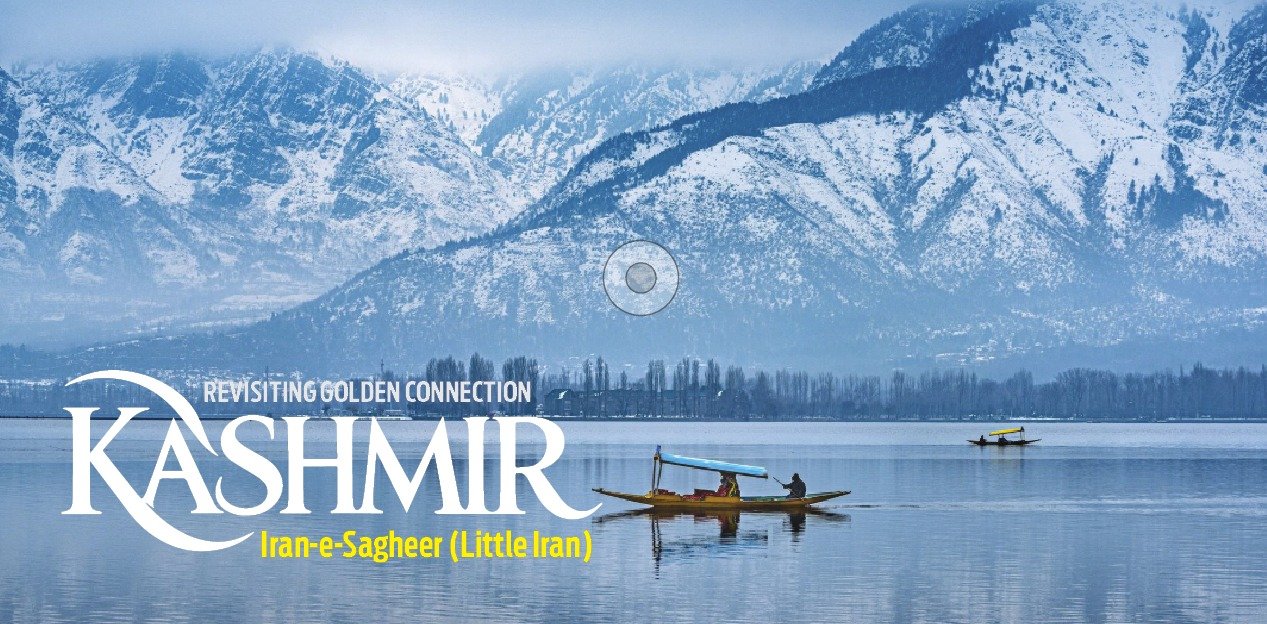
Kashmir, Iran-e-Sagheer (Little Iran)
“In our hearts a thousand suns are hidden;
If the veil lifts, the whole world would burn with their light.”
Ghāni Kashmiri
`در دل ما هزار خورشید نهان است
گر پرده بر افتد همه عالم بسوزد
Mir Majid Bashir (Advocate)
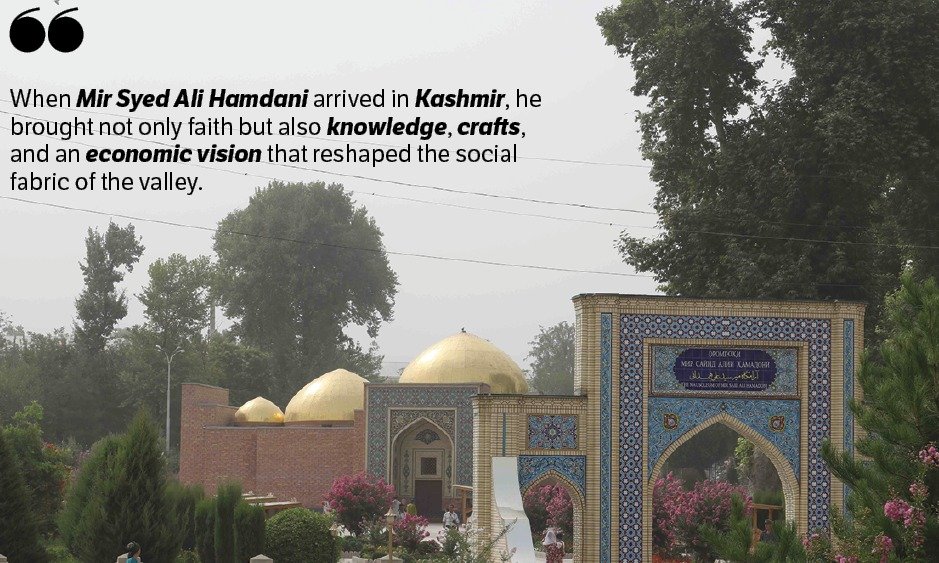
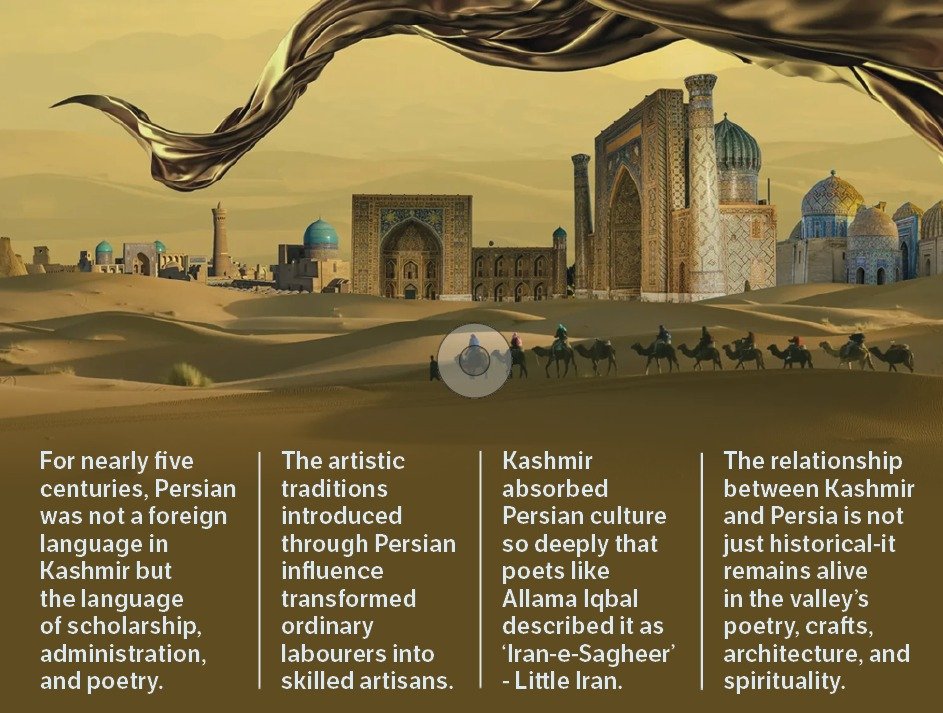
Kashmir has had a very deep connection with Persian (Iranian) culture, and many elements of daily life, language, religion and crafts still show that influence today. Much of this connection is associated with the arrival of Mir Syed Ali Hamdani (Shah-e-Hamdan) in the 14th century.
ISLAM, LANGUAGE AND POETRY
Many religious and everyday words used in Kashmir come from Persian or Persianized Arabic. For example: Peshah/Pesah – morning prayer (from Persian pesh meaning “before”), Digar – afternoon prayer (from Persian digar meaning “other / later”), Sham – evening Khuftan / Khufatan – night prayer (Persian khwāftan meaning “to sleep”), Namaz – Persian word for Islamic prayer (instead of Arabic Salat). These names for the five daily prayers were widely used in Persian-speaking regions like Iran, Central Asia, China and Afghanistan and were adopted in Kashmir as well. For several centuries (roughly 14th–19th century), Persian was the official language of administration and literature in Kashmir and thousands of Kashmiri scholars wrote poetry and books in Persian. Because of this strong cultural connection, poets like Allama Muhammad Iqbal RA even described Kashmir as “Iran-e-Sagheer” (Little Iran). While Muhammad Iqbal was born in Sialkot, his family was of Kashmiri origin, and he wrote his most profound philosophical poetry in Persian. He often wrote about the “Persian soul” of Kashmir.Famous Quote from Javid Nama, “Panja-e-Zulm-o-Sitam, Shisha-e-Dil-ra Shikast” (The hand of tyranny and oppression has broken the glass of the [Kashmiri] heart.) Famous Persian couplet, Gar firdous bar-rue zamin ast, ahmi asto hamin asto, hamin ast” (if there is a heaven on earth, it’s here it’s here, it’s here) signifying that Kashmir is paradise itself and describing the beauty of Kashmir, is attributed to Sufi poet Amir Khusrau and is also famously inscribed in the Diwan-i-Khas at the Red Fort in Delhi.
The influence of Persian (Farsi) poetry in Kashmir is very deep and shaped the intellectual and cultural life of the region for centuries. Because Persian was the official language of Kashmir for nearly 500 years, Kashmiri scholars, Sufis, and poets produced a large body of literature in Farsi. From the 14th century onward, Persian became the language of scholarship, administration, and poetry in Kashmir. Courts of the Sultans and later rulers encouraged Persian literature. Many Kashmiri poets wrote in the style of famous Persian poets such as Jalāl ad-DīnRūmī, Hafez, Saadi Shirazi and Ferdowsi. Their works were widely read in Kashmir’s madrasas and Sufi khanqahs. Many Kashmiri scholars became famous for writing poetry in Persian, including Mulla Tahir Ghani Kashmiri – considered one of the greatest Persian poets of Indian origin, Muhammad Tahir Ghani Kashmiri – known for refined ghazals and mystical themes, Shamas Faqir – whose works show Persian mystical influence. Their poetry often used Sufi symbolism, themes of love, divine union, nature, and spirituality. Even when poets wrote in the Kashmiri language, Persian literary style influenced them. For example Habba Khatoon, Mahjoor, Abdul Ahad Azad etc.
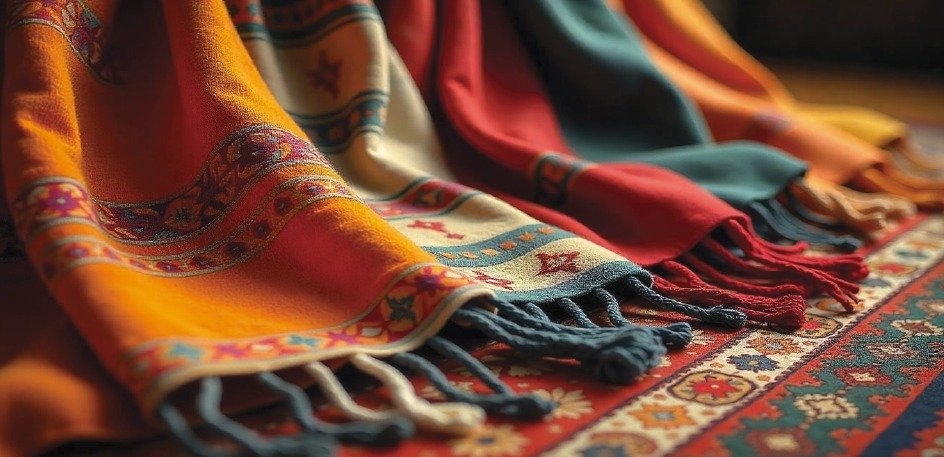
When Mir Syed Ali Hamdani visited Kashmir in the 1300s, he came with hundreds of followers, including artisans and scholars. They introduced Shawl weaving, Carpet weaving, Calligraphy, Paper-mâché. These crafts later became core elements of Kashmiri identity and economy. Along with spiritual teachings, Persian literature and poetry, they also introduced Sufi philosophical writings and book culture in Kashmir, which strengthened the Persian literary tradition in culture and traditions of Kashmir. The spread of Persian literary culture is strongly connected with Mir Syed Ali Hamdani. Kashmiris share many cultural similarities with Iran in Dress and crafts (shawls, carpets), Architecture of khanqahs and shrines. It is often said that Kashmir is the “Iran-e-Sagheer” (Little Iran) of the East. This deep-rooted connection isn’t just a coincidence; it’s a historical legacy sparked largely by the arrival of Mir Sayyid Ali Hamadani and other Sufi saints from Persia in the 14th century. Kashmir produced poets who were celebrated in the royal courts of Isfahan and Shiraz. Gani Kashmiri (Tahir Gani Kashmiri) is arguably the most famous Persian-language poet born in Kashmir. Even the great Persian masters looked up to him. His style was so refined that the famous Persian poet Saib Tabrizi travelled from Iran to Kashmir specifically to meet him. Gani used to leave his house door open when he was away and lock it when he was home. When asked why, he said, “The only thing of value in this house is me; when I am here, the house is worth locking. When I am gone, there is nothing to steal.” While Lalleshwari (Lall Ded) and Sheikh-ul-Alam (Nund Rishi) wrote primarily in Old Kashmiri, their work is the spiritual twin of Persian Sufi poetry (like Rumi or Attar).Their “Vakhs” and “Shruks” (poetic couplets) were later translated into Persian and studied by scholars as part of the broader Persianate Sufi canon. They used Persian metaphors of the “Rose and the Nightingale” (Gul-o-Bulbul) to describe the soul’s longing for God. Habba Khatoon, The “Nightingale of Kashmir, though she wrote in Kashmiri, her poetic form—the Lol (lyrical lyric)—is deeply influenced by the Persian Ghazal. Her husband, King Yusuf Shah Chak, was a massive patron of Persian culture. Her poetry laments her separation from him (after he was exiled to Bihar by Akbar), mirroring the “Poetry of Longing” (Firaq) found in classical Persian literature. Allama Iqbal’s was one of the most prominent voices to reinforce the idea that Kashmir is a “Little Iran” because of its spiritual and poetic heritage. In Kashmir, the most famous “poetry” is often experienced through Sufiana Mausiqi. This is classical music where the lyrics are almost entirely Persian verses by masters like Hafez Shirazi, Jami, Rumi. Even today, in many Kashmiri shrines, you will hear the local congregation chanting the Aurad-e-Fathia, a beautiful rhythmic litany in Persian compiled by Mir Sayyid Ali Hamadani. The beauty of this relationship is that for 500 years, a Kashmiri poet didn’t feel like they were using a “foreign” language when they wrote in Persian—they felt they were using the language of the heart.
ART, CRAFTSMAN AND CULTURE
Here is a breakdown of those cultural threads that tie the Valley to the Iranian plateau:
1. Dress and Crafts: (The Silk Road Influence)
The craftsmanship in Kashmir is essentially a living museum of Persian art. When Persian artisans migrated to the valley, they blended their techniques with local Himalayan materials. Pashmina & Shawls, the intricate Buta (paisley) motifs found on Kashmiri shawls are mirrors of Persian decorative patterns. Carpets, the hand-knotted silk carpets of Kashmir use the Persian knot (Senneh knot) rather than the Turkish variety. Paper Mache Known locally as Kar-e-Kalamdani, this art form was brought directly from Iran, traditionally used to decorate pen-cases and small boxes.
2. Architecture: (Khanqahs and Shrines)
While local Kashmiri architecture uses indigenous wood and stone, the spiritual layout is distinctly Persian. The Khanqah, the structure of the Khanqah-e-Moula in Srinagar reflects the Iranian tradition of communal spaces for Sufi gathering.Ornamentation with regard extensive use of wood carving and colourful lacquer work that mimics the geometric precision of Iranian tilework, adapted for a colder, timber-rich climate.
3. Sufi Culture and Rituals:
The Islam practiced in the valley is heavily flavouredby Sufism, which travelled through the Persian cultural sphere. The Rishi-Sufi Synthesis: of thereverence for shrines (Ziyarats) and the practice of Aurad-e-Fathia (a specific litany of prayers) are central to both regions. Veneration: of the deep emotional attachment to the “Ahl al-Bayt” (the family of the Prophet) is a significant commonality in the spiritual psyche of both Iranians and Kashmiris. Language and Poetry for centuries, Persian was the official language of the Kashmiri Court and the medium of high literature. Even today, the Kashmiri language is peppered with Persian loanwords Vocabulary. Terms for everyday items (like Darwaza for door or Chaman for garden) are identical. Legends like Lalleshwari and Sheikh-ul-Alam are often studied alongside Persian giants like Rumi and Hafez. The Ghazal remains a dominant poetic form in the valley. The “Sufiana Mausiqi” (Sufi classical music) of Kashmir uses the Santoor, an instrument that originated in ancient Persia and is still a staple of Iranian classical music today.
4. Cuisine:
(Wazwan) Kashmiri food is unique, the influence of the Persian palate is undeniable. Both cultures share a love for the Samovar (the tea kettle), though they use it differently, Kashmiris for Kahwa and Nun Chai, and Iranians for black tea. The heavy use of dried fruits, nuts, and aromatics like saffron (which both regions produce in world-class quality) points to a shared culinary DNA.
The introduction of Persian arts and crafts wasn’t just a stylistic choice, but it was a deliberate economic intervention. Before the 14th century, the Kashmiri peasantry was often at the mercy of harsh winters and exploitative feudal taxes. When Mir Sayyid Ali Hamadani (Shah-e-Hamadan) arrived from Persia, he didn’t just bring spiritual teachings; he brought a literal “army” of 700 followers, many of whom were master craftsmen. The architectural and artistic shift transformed the living conditions of the common people from Seasonal Poverty to Year-Round Industry The most significant impact was the creation of a winter economy. In the brutal Kashmiri winter, agriculture was impossible, leaving the population idle and impoverished. By teaching carpet weaving, shawl making, and wood carving, Hamadani provided a way for families to earn a living indoors during the snowbound months. This shifted the power dynamic, as peasants were no longer solely dependent on the land owned by the ruling elite. The Persian-style Khanqahs (hospices) and shrines served as more than just religious buildings; they were the first real social safety nets.These structures provided free food and shelter to the traveller and the destitute, bypassing the gatekeeping of the state. In a time of political exploitation, the Khanqah was a “free zone” where the commoner could find dignity and community regardless of their caste or status.
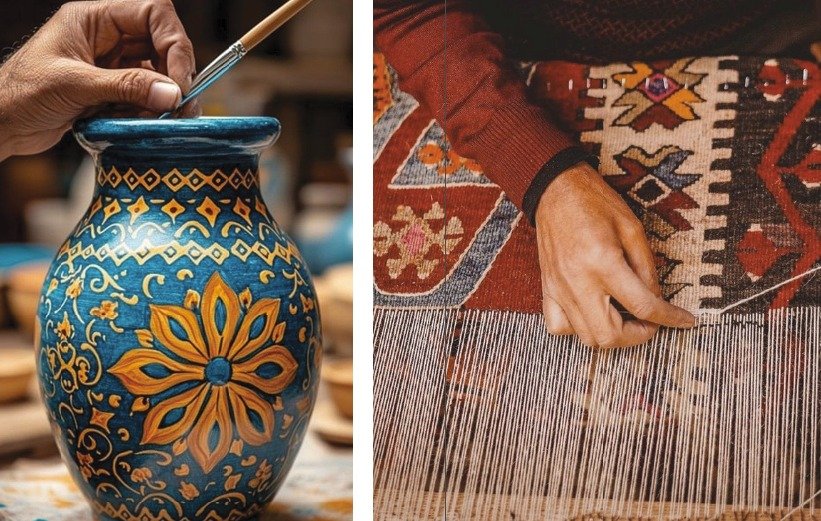
A commoner could become a Ustad (Master) through skill. This created a new middle class of artisans who had bargaining power with the rulers because their “luxury” products (like Pashmina) were in high demand internationally. By linking Kashmir to the Silk Road trade via Persian connections, the valley’s economy became global, making it harder for local rulers to completely isolate and squeeze the population. The Aesthetics of Resilience by the intricate artistic work, the Pinjrakari (lattice work) and Khatamband (geometric wooden ceilings), actually improved physical living conditions. The Persian-influenced wooden architecture was better suited for earthquake-prone Kashmir than heavy stone, and the double-layered wooden ceilings provided natural insulation against the cold. In a landscape of political turmoil, the creation of “Paradise on Earth” through gardens (Char Bagh) and beautiful interiors provided a psychological sanctuary for a population that had faced centuries of hardship. Paper Mache (Kar-e-Kalamdani) turned waste paper into high-value export goods. Wood Joinery (Khatam band) Provided insulation and aesthetic dignity to homes. Embroidery (Sozni) allowed for micro-income within the household. The artistic revolution essentially turned the “exploited laborer” into a skilled artisan. It gave the Kashmiri people a cultural capital that no ruler could easily take away.
SILK ROUTE (vital artery to economic upliftment)
The Silk Route was the “World Wide Web” of the ancient and medieval eras. For Kashmir and Iran, it wasn’t just a track for moving goods but it was a pipeline for revolutionary ideas, technologies, and social mobility. While rulers often tried to monopolize trade, the Silk Route provided a “sideways escape” for the common people to improve their lives through specialized labour.
1. Economic Diversification: The Birth of Export, before the Silk Route’s full integration, most people were subsistence farmers, if the crop failed, they starved. The route turned Saffron and Silk into global currencies. A small plot of land could suddenly generate enough wealth to sustain a family through the winter.
2. Standardization: Trade required reliable quality. This led to the creation of Guilds (Karkhanas), where standards for Pashmina and Persian carpets were set, giving artisans a collective voice against exploitative middlemen.
3. Technological Leapfrogging: The Silk Route acted as a conveyor belt for “Life Hacks” that improved daily survival.