

Are we treating brains or recycling theories…?s

Umair Ashraf
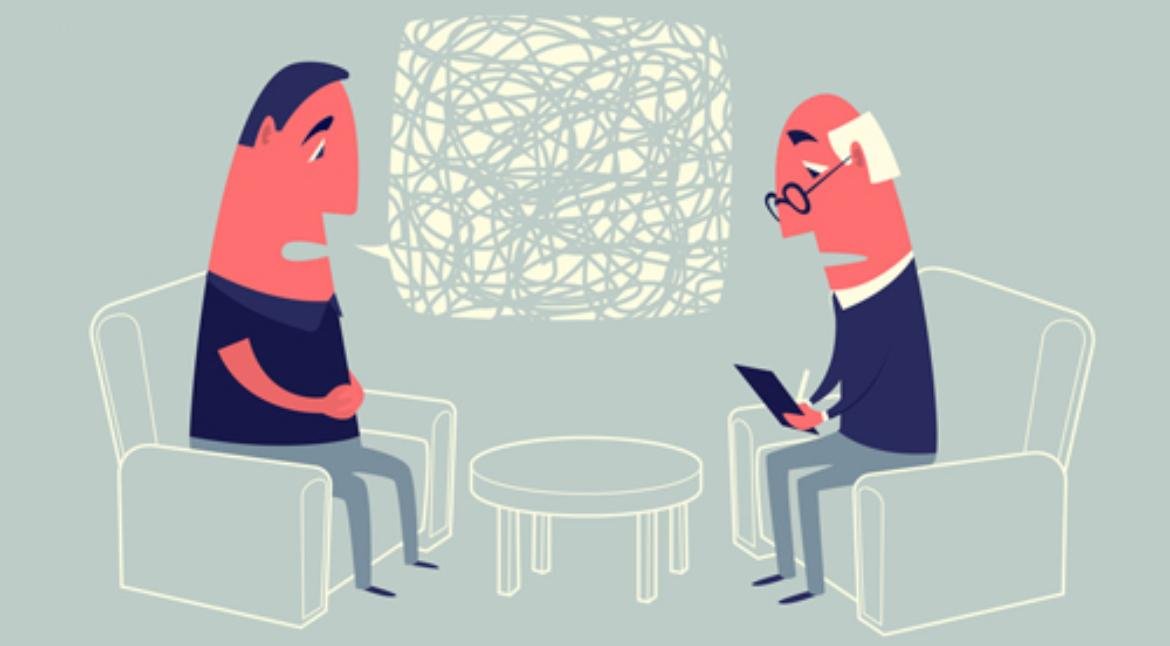
I say this from inside the room, not outside it. I sit across from people coming to me who have already seen four or five psychologists, sometimes more. They come with files, labels, DSM categories, past prescriptions, and a certain fatigue in their voice. This isn’t just from their symptoms but from the entire process itself. They’ve been explained, categorized, and sometimes even managed, but not truly understood Somewhere in that journey, something feels off—not completely wrong, but not quite right either. The system we are part of has its own logic. It lets us see multiple patients in a day, use known frameworks, and move from one session to another. It keeps things going. But when you pause and genuinely try to understand one person deeply—their biology, their history, their internal logic—it becomes more complicated.
One case can take days of thinking, observing, and reevaluating. It involves not just listening to their words but also understanding how their whole subjective system is functioning. This includes their sleep, digestion, medication history, emotional patterns, social environment, and even their subtle body reactions. That level of engagement is rarely possible in the current structure. Then we see the mismatch. A person gets placed into a diagnostic category, and from there, interventions follow. But what if that “depression” isn’t purely psychological? What if it stems from something else? A cardiac patient on long-term medication develops anxiety-like symptoms. A metabolic condition quietly affects mood regulation. A person bullied for years may show what looks like depressive cognition, but it’s actually learned helplessness—conditioned, repeated, internalized. These are not identical depressions, yet they are often treated through similar psychological approaches.
Uncertainty, social stress, rapid cultural changes, and increased exposure to substances are not trivial factors. When working with individuals dealing with drug use, for example, there is always a strong logic behind it.
Another aspect becomes clear in practice. Sometimes a person feels relief not from a structured intervention but from how they are spoken to. A soft tone, a female presence, a sense of being heard, a certain emotional connection-these factors work, at least temporarily. This raises an uncomfortable question: does the relief come from the intervention itself or from the human interaction surrounding it? Often, when that same person leaves the room, the effect fades. This means something deeper remains untouched. Here, the gap becomes clearer. Many techniques we rely on—grounding, breathing regulation, structured cognitive work—are not inherently wrong. But they are often applied too generally. Even something as basic as breathing isn’t neutral. It can increase sympathetic activation or reduce it, depending on how, when, and for whom it is used.
Neuroscience has already mapped much of this: autonomic responses, limbic-cortical interactions, patterns of signal propagation. Yet, in practice, these details are rarely tailored to the individual. There is a growing distance between what we know from advanced neuroscience and what is routinely practiced in psychological settings. Genetic differences, Polymorphism, environmental adjustments, cultural changes—all of these shape how people respond, feel, and regulate. What was seen as abnormal a century ago might be normal now. What was once rare is now common. The human context has changed, and this affects the brain’s patterns of adaptation.
The patients coming in today do not live in the world those theories were built for. Their biology, environment, and exposures are different. They seem to sense it too. That something is being done, but something is still missing.
In areas like Kashmir, this becomes even more evident. Uncertainty, social stress, rapid cultural changes, and increased exposure to substances are not trivial factors. When working with individuals dealing with drug use, for example, there is always a strong logic behind it. The reasons are charged emotionally, socially, and sometimes even economically. The path to that behavior is rarely random. Yet the interventions often fail to fully engage with that underlying logic. This leads to frequent relapse, not because the person is unwilling, but because the intervention did not address the real circuitry driving the behavior. It’s not about blaming psychologists. The system itself is structured to prioritize reach over depth
Degrees certify readiness, and from there, practice begins. Over time, methods become habitual. But the human system in front of us is not standard. It is layered—biological, psychological, social—all interacting continuously. To understand it well requires something closer to immersion than mere application. Sometimes, it feels like the role itself requires broader integration: psychology, psychiatry, neurology, and even a kind of awareness of how signals move and where they get reinforced or disrupted. Not in a surgical way, but conceptually. Where does this pattern come from? Which circuits are activated repeatedly? What maintains it? And what, realistically, can shift it? None of this fits neatly into a 45-minute session model. So the question remains. It’s not whether older theories were wrong—they were foundational and necessary for what came later—but whether sticking to them without adapting to current knowledge is enough anymore. The patients coming in today do not live in the world those theories were built for. Their biology, environment, and exposures are different. They seem to sense it too. That something is being done, but something is still missing.
A person bullied for years may show what looks like depressive cognition, but it’s actually learned helplessness—conditioned, repeated, internalized. These are not identical depressions, yet they are often treated through similar psychological approaches.
(The author is a Psychologist , Mental Health Advocate & Member of International Society of Substance Use Professionals.)