

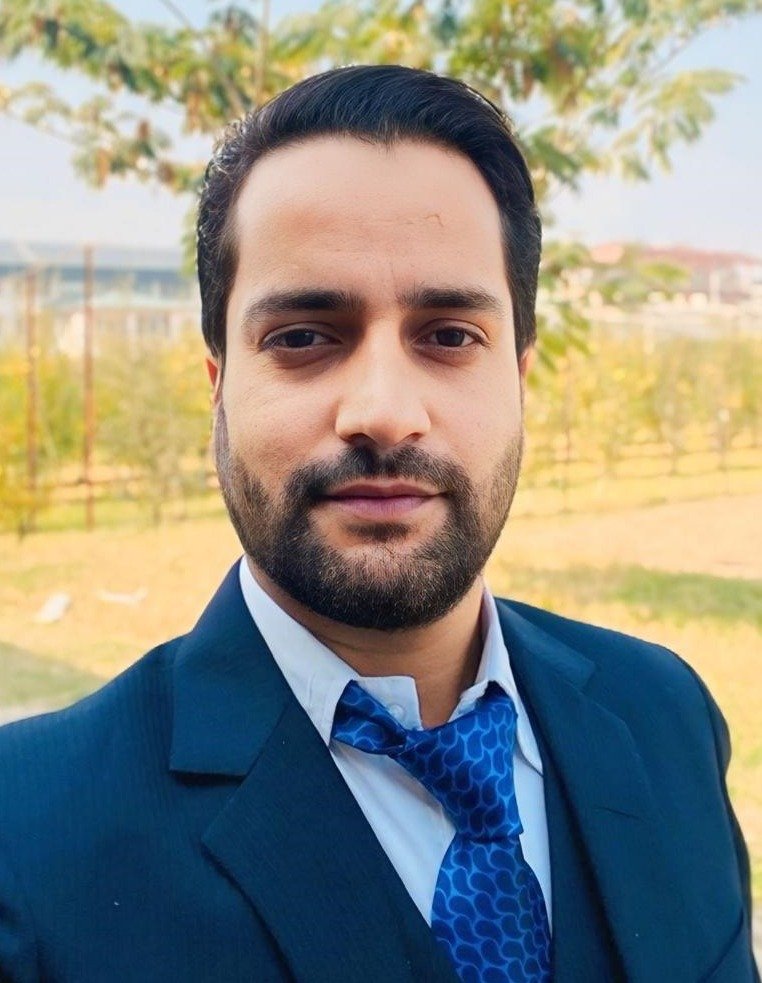
Dr Umer Iqbal
The mountains of Shopian do not merely hold the sky; they hold the secrets of the water that carves through them. The Dubjan Nallah is a vein of glacial runoff, a fast-moving, icy torrent that commands respect from every local who walks its banks. But in the cruel calculus of a late spring afternoon, the Nallah took something it could not return on its own: a three-year-old boy, Mohammad Hanzala of Tiken Pulwama.
What followed was not just a search operation; it was evidenceto the grit of a community and the extraordinary leadership of one man, Mehraj. In the records of regional journalism, stories of tragedy are common, but stories of tireless, selfless orchestration are rare. This is the account of the days when the waters of Dubjan met the immovable will of a man determined to bring a father his son.
The Torrent and the Tragedy
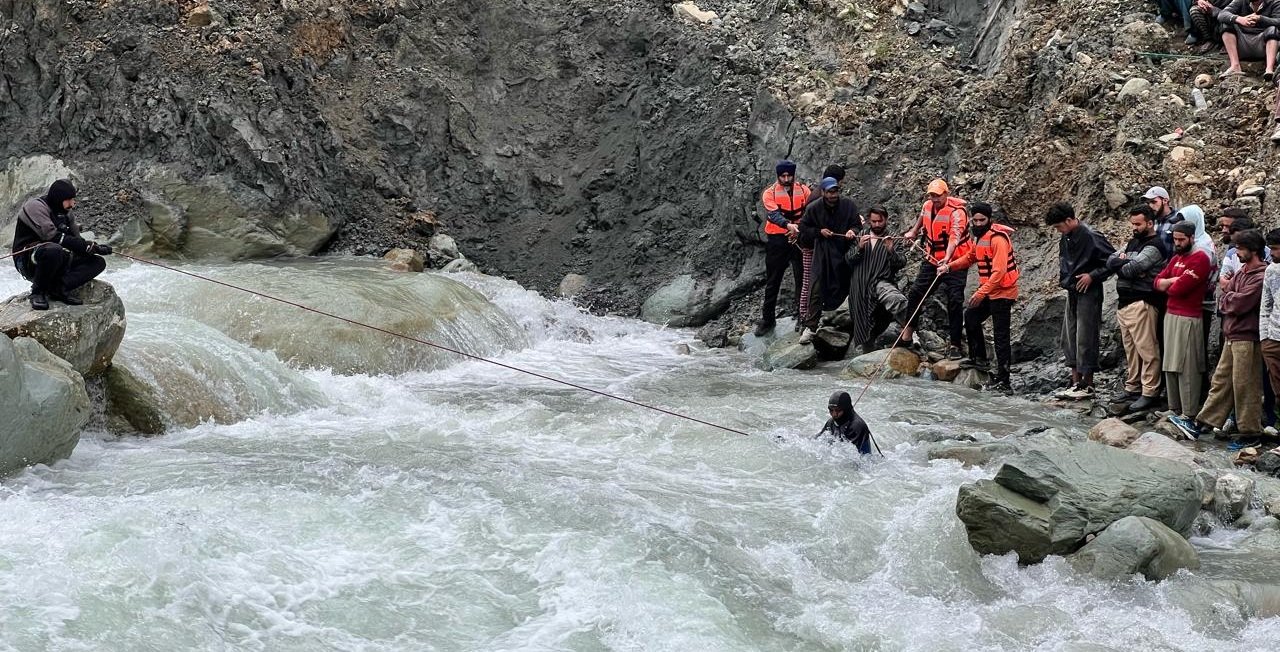
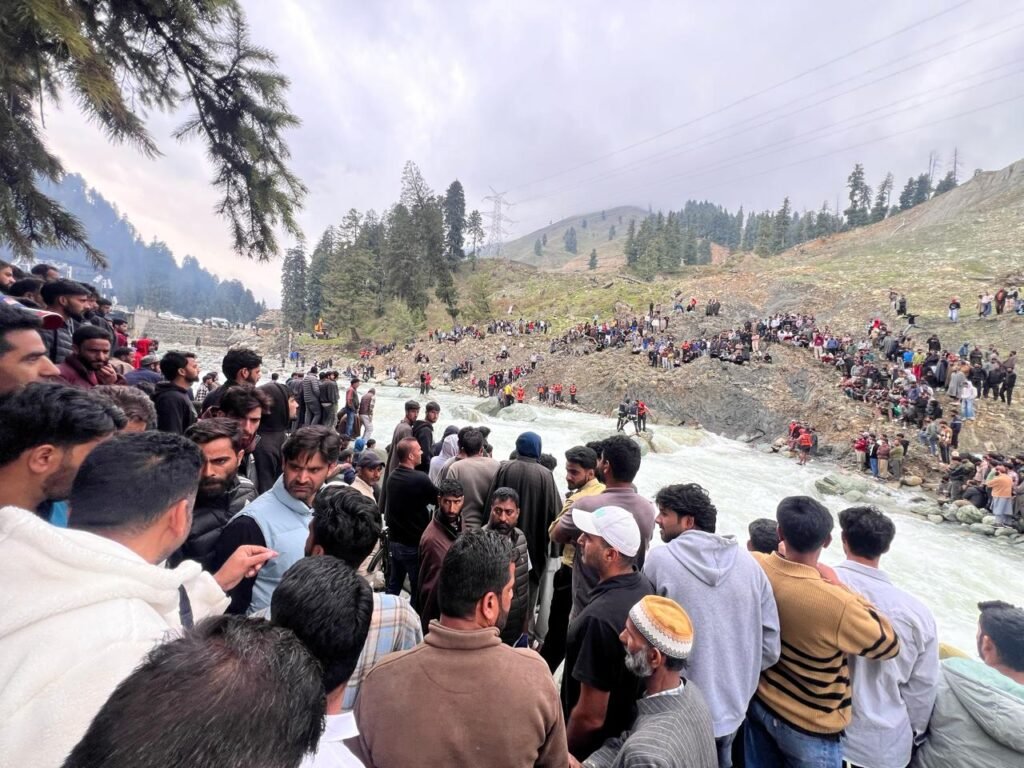
When the news first broke that a toddler had been swept away, the atmosphere in the surrounding villages shifted from the mundane to the frantic. In the initial hours, hope is a sharp, desperate thing. Divers plunged into the frigid depths, and locals lined the banks, eyes scanning the white foam for a glimpse of fabric or a small limb.
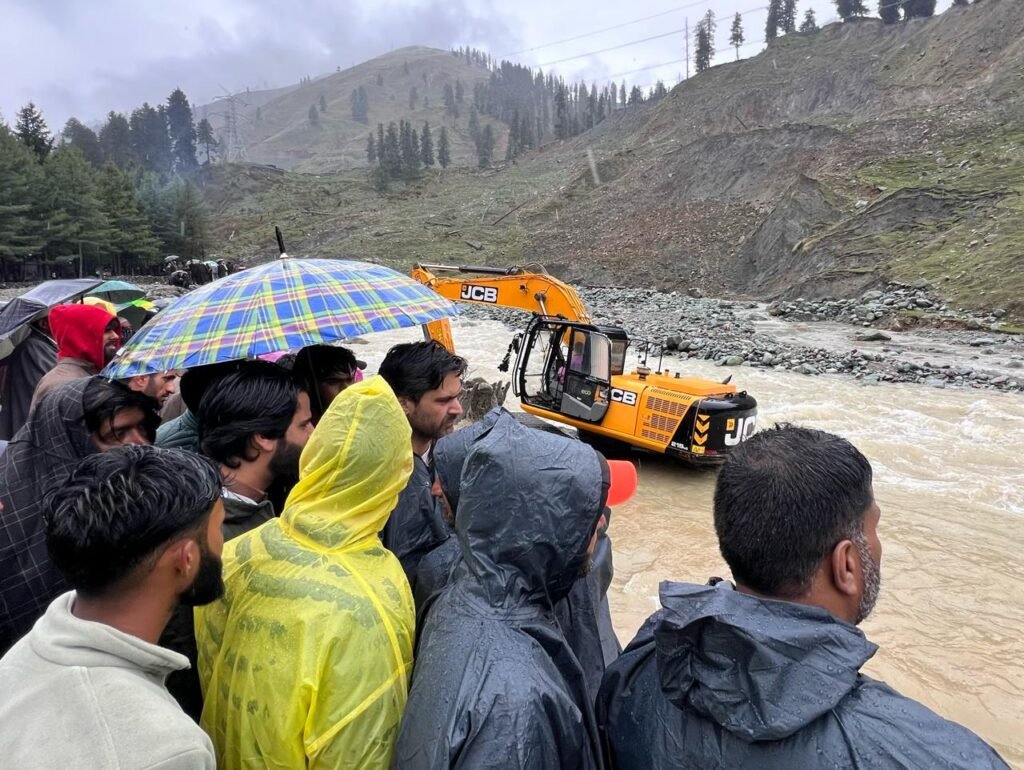
However, as the first day bled into the second, and the second into the third, the grim reality of the Dubjan Nallah began to settle. The current was too strong, the underwater crevices too deep, and the silt too thick. This was no longer a simple rescue; it was a complex engineering challenge disguised as a humanitarian crisis.
Mehraj Ahmad: The Architect of Effort
While many stood in grief, Mehraj Ahmad moved with the clinical precision of a man who understood that emotion, while a powerful motivator, does not move boulders. Mehraj did not just join the search; he became its heartbeat.
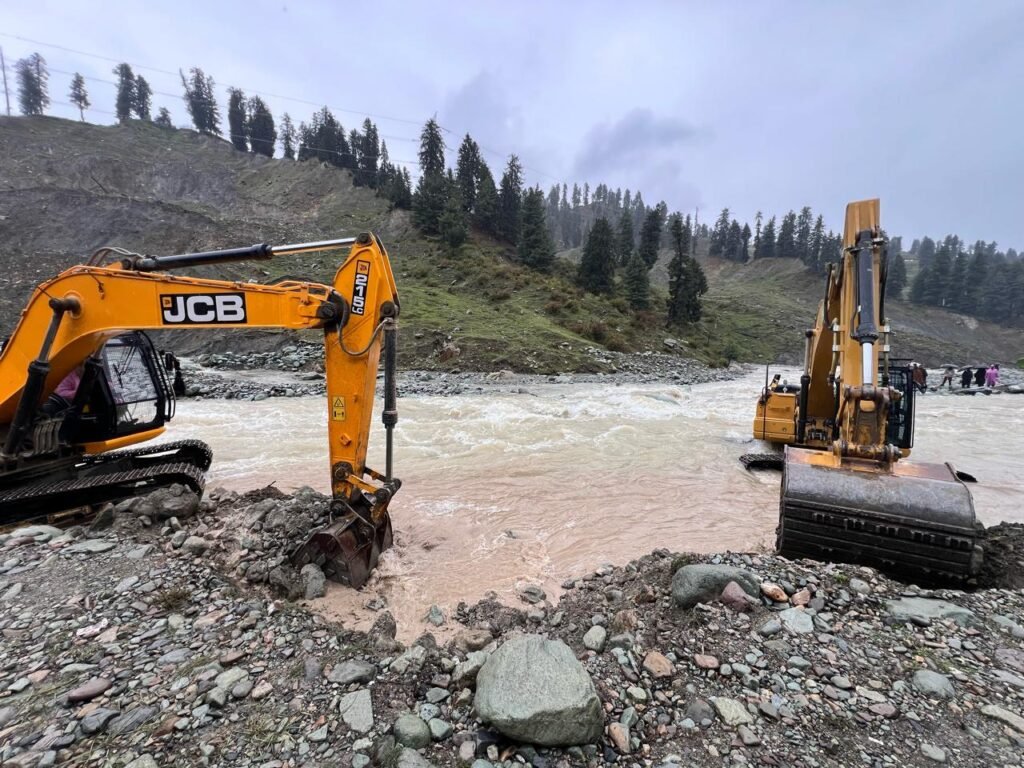
His role was exemplary not because he shouted the loudest, but because he saw the logistical gaps that were preventing the recovery. The Nallah was shielded by its own geography, massive rocks and diverted channels that made manual searching nearly impossible. Mehraj realised that to find the boy, they had to negotiate with the river itself.
Working in seamless coordination with the MLA Pulwama, Waheed Para, Mehraj became the bridge between legislative support and ground-level execution. On the direct intervention and guidance of the Waheed Para, who remained a constant pillar of support throughout the ordeal, Mehraj began the Herculean task of bringing heavy machinery into a terrain that was never designed to hold it.
The Mechanics of Compassion
To the casual observer, an excavator at a tragedy site looks like cold steel. To the grieving family, that machinery procured and positioned by Mehraj through Waheed Pararepresented the only hands strong enough to reach into the abyss.
Mehraj oversaw the deployment of heavy earth-movers, steering the delicate politics of local administration and the physical dangers of the riverbank. He was there at dawn, and he was there long after the generators flickered to life at night. He wasn’t just a supervisor; he was the man checking the cables, the man talking to the operators, and the man ensuring that the MLA’s directives were translated into literal movement of earth and water.
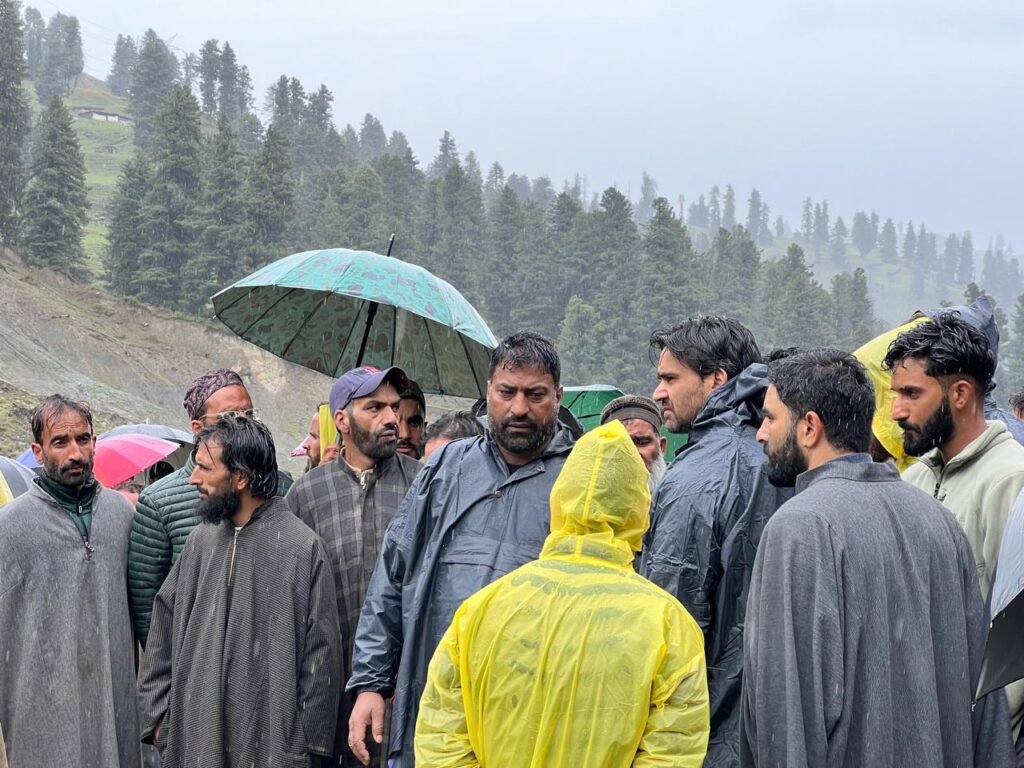
The operation was a masterclass in community-led crisis management. While the MLA Pulwama ensured that the hurdles were cleared and resources were diverted with urgency, Mehraj stayed in the mud. It was this synergy, the high-level advocacy of the representative and the relentless “boots-on-the-ground” spirit of Mehrajthat kept the operation from collapsing under the weight of its own exhaustion.
The Father, the Son, and the River
The emotional core of this story, however, remains the bond between a father and his lost child. Throughout the days of searching, the father remained a haunting fixture by the water. It is a fundamental human right to be able to lay one’s child to rest, yet the river seemed intent on denying even that small mercy.
Mehraj understood this. He treated the operation not as a recovery of a “body,” but as the return of a son. Every bucket of silt removed by the heavy machinery was a step toward closure.
Finally, after days of agonising uncertainty, the breakthrough occurred. Through the combined efforts of the volunteers, the precision of the machinery Mehraj had organised, and the sheer persistence of the search party, the boy was foundby Ashiq Farooq Sawar and Farooq Ahmad Sawar. They located and recovered the child’s body in the middle of the river at a place known as Patilpal in Heerpora, Shopian, on the sixth day of the search operation. In a moment that will forever be etched into the memory of those present, the father and son were reunited, not in the way anyone had prayed for, but in a way that allowed for the dignity of a goodbye.
A Legacy of Service
In the aftermath, as the machines were loaded back onto trailers and the crowds dispersed, the name Mehraj lingered in the air.
Journalism often seeks heroes in the halls of power or the heat of battle. But in the quiet corners of Pulwama and Shopian, heroism looks like a man who refuses to go home while a neighbour is still hurting. It looks like the strategic use of heavy equipment to solve a problem that human hands could not. It looks like the support of a legislative leader Waheed Para who trusts his people to lead the way.
Waheed Para’s role cannot be understated, without that high-level directive, the “heavy metal” required for such a task might never have arrived. But it was Mehraj who steered that ship through the storm.
For Times Link Magazine, this story is more than a report on a local incident. It is an exploration of the Kashmiri spirit, ‘the Kashmiriyat’ that manifests when the chips are down.
We see a society where a legislative representative is not a distant figure but an active participant in the sorrows of his constituents. We see a leader like Mehraj, who demonstrates that “exemplary” is not a title you are given, but a standard you meet when the river is rising and hope is sinking.
Mehraj didn’t just help fish a body out of a Nallah. He fished a sense of communal strength out of a tragedy. He showed that when leadership and local activism align, even the most unforgiving waters must eventually give up their secrets.
As we write this, the Dubjan Nallah continues to flow, cold and indifferent. But the people of this region walk its banks with a little more resolve, knowing that if the worst should happen, there are men like Mehraj, and leaders like waheed para, who will move heaven, earth, and the very river itself to bring their children home.
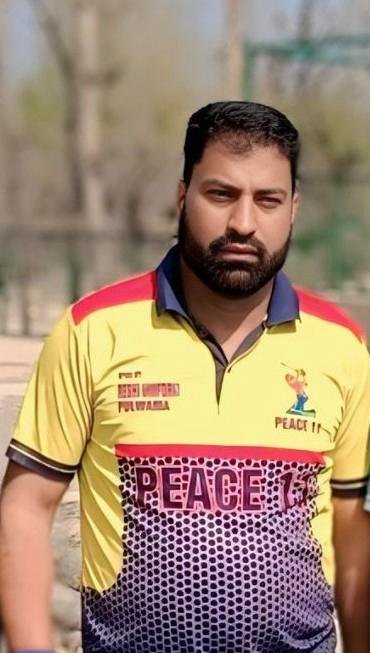
This feature stands as a tribute to the rescuers, the administrative leaders, and above all, the family of the young soul lost to the Dubjan. May his memory be a blessing, and may the courage of Mehraj Ahmad be a lighthouse for others.