

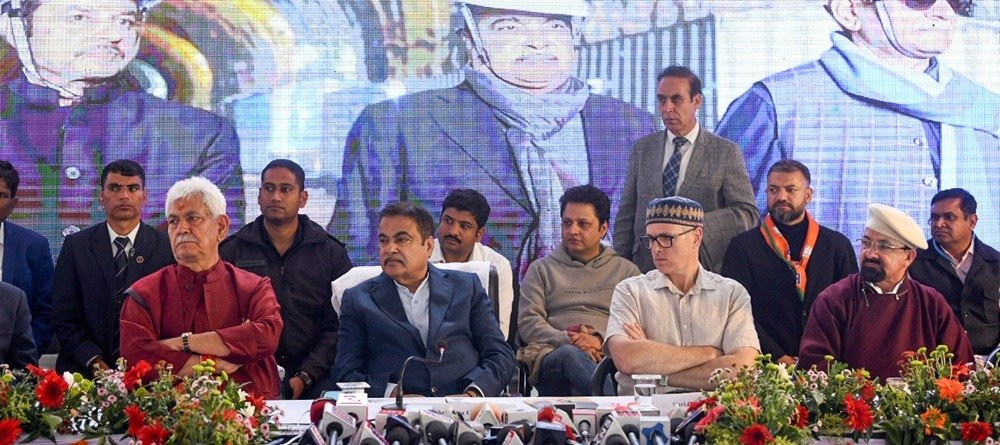
The Government of India has given a big push to road infrastructure, after earmarking an expenditure of Rs 1 lakh crore to build highways and tunnels in Jammu and Kashmir. The most outstanding projects have been Z-Morh tunnel and Zojila tunnel plans.
There is a popular saying: ‘Time is money’. Everything revolves around time. Those who make best use of time, emerge as successful in the journey of life. And those who don’t show respect to time are lost in oblivion. When we look at the relation of time with the people of our region (Jammu & Kashmir), particularly Kashmir, we observe a huge gap between the two. We have been unable to make most of the time available with us and most of the time we have found ourselves short of time. In other words, we have usually failed to capitalise on the bounties of time.
There are many factors, which have resulted in wastage of time. However, let us pick the road connectivity. which is in news today as Union Minister for Road Transport and Highways, Nitin Gadkari, was here to take stock of the development of road infrastructure in the region. Here, the road connectivity has been in shambles for decades and continues as one of the major impediments to achieve desired economic growth. We have the kind of roads where small distances, which are normally covered in 15 minutes, take even two hours for commuters. It is a nightmare experience to travel on the shabby roads and people lose most of the productive hours in travel. Precisely, be it urban, sub-urban or a rural locality, most of the roads available are in dilapidated condition and trigger huge traffic jams resulting in wastage of working hours.
Some time back, it was a shot in the arm when a parliamentary panel on a visit to J&K recommended to the Centre that it must place special focus on the maintenance of roads in the Jammu & Kashmir region.
The parliamentary standing committee in its recommendation to the Ministry of Road, Transport and Highways after concluding their visit to the J&K region said: “The Committee is of the considered view that the Ministry must place special focus on the maintenance of roads in the Jammu and Kashmir region, since the region needs good connectivity throughout the year, from both economic as well as strategic viewpoint. A well-connected, well maintained road network would spur economic activities and further the tourism prospects of the region. The Committee, therefore, recommends the Ministry to ensure sufficient budgetary provisions for this purpose.”
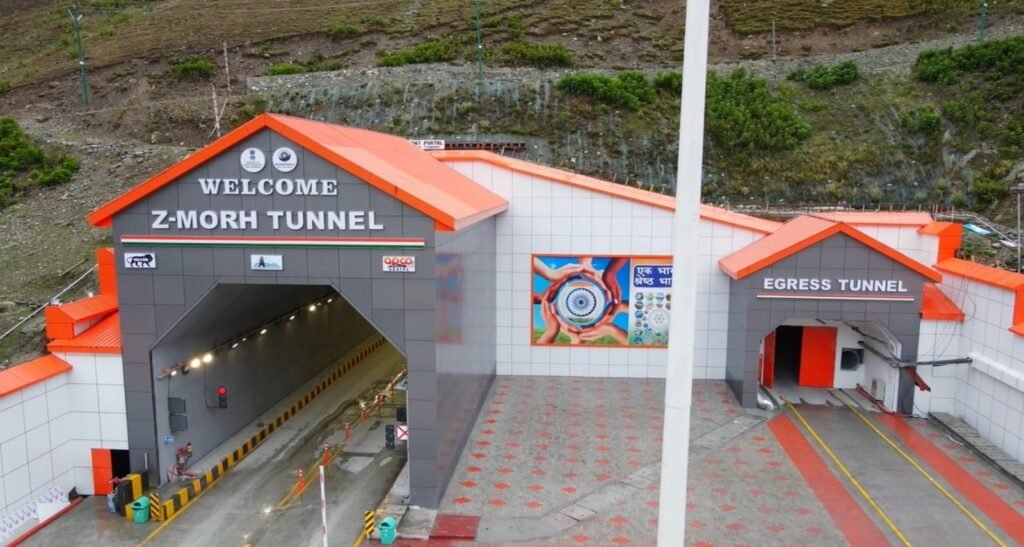
It’s worth mentioning that in the last couple of years, Jammu & Kashmir has been witnessing concerted efforts on the economic front to bring vibrancy in the economic landscape of the region. Responding to the recommendations of the parliamentary committee, the focus has rightly been on the development of roads and tunnels. The Government of India has given a big push to road infrastructure, after earmarking an expenditure of Rs 1 lakh crore to build highways and tunnels in Jammu and Kashmir.
The most outstanding projects have been Z-Morh tunnel and Zojila tunnel plans.
Prime Minister Narendra Modi inaugurated the Z-Morh tunnel on January 13, 2025. The tunnel is a 6.5-kilometer-long, two-lane road tunnel connecting Gagangir in Ganderbal district to Sonamarg in Jammu and Kashmir. The work of the Z-Mohar Tunnel project began in 2015 under BRO but later, it was developed by the National Highways and Infrastructure Development Corporation Limited (NHIDCL).
Key Takeaways
– The Z-Morh tunnel tunnel, situated at an altitude of 8,650 feet, is strategically located on the Srinagar-Leh National Highway, facilitating year-round access to the Ladakh region, which was previously hindered by seasonal road closures due to heavy snowfall and avalanches. It has been constructed at a cost of Rs. 2,400 crore, the Z-Morh Tunnel comprises a 6.4-kilometer main tunnel, an egress tunnel, and approach roads. It features a two-lane bi-directional road with a parallel 7.5-meter-wide escape passage for emergencies.
– Beyond enhancing civilian travel, the tunnel holds significant strategic importance for defense logistics, ensuring uninterrupted connectivity to the Ladakh region, which is in proximity to the China border.
– The tunnel is one of the booster doses to trigger up the scale of tourism in Sonamarg, known for attractions like the Thajiwas Glacier and activities such as whitewater rafting on the Sind River. Remarkably, by providing all-weather access, the tunnel is anticipated to stimulate economic growth in the region, facilitating trade and improving the quality of life for residents. Here it’s worth mentioning that the tunnel is part of the larger Zojila Tunnel project, aimed at ensuring all-weather connectivity between Srinagar and Ladakh.
The work on Zojila Tunnel project began on 1 October 2020, and the first blasting at the Nilgrar Tunnel was performed on 14 October 2020. Thetunnel aims to establish all-weather connectivity between Jammu & Kashmir and Ladakh. It’s a hugestrategic infrastructure push in the regions to accelerate regional development, tourism, trade and national security. The first phase of the project was completed on March 15, 2025, which covered approach roads, bridges, Nilgrar twin tunnels, cut‑and‑cover works, and snow gallery components.
The strategic tunnel achieved a major construction milestone with a final breakthrough blast in June 2026. The project is currently on track for its operational inauguration and commissioning to the public in February 2028.
(TIMES LINK Editorial Desk)