

Ayash Arif
It is deeply disturbing and difficult to understand that not a single feature film from Kashmir found a place in the final selection of the “First International Film Festival of J&K”. For a festival being held in this very region, the complete absence of a locally produced feature film raises serious questions about the fairness and sensitivity of the selection process.
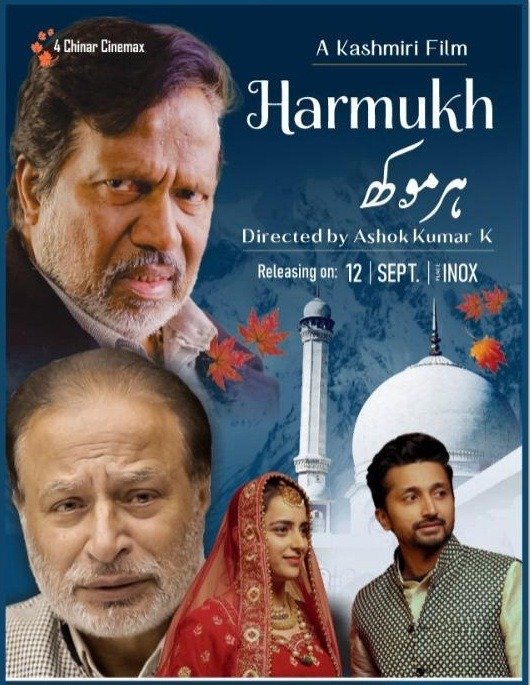
The exclusion of Kashmiri feature film “Harmukh” is particularly difficult to comprehend. The film was a unique cinematic endeavour; the first feature made simultaneously in Kashmiri and Kannada,through technical collaboration between filmmakers and film professionals from Kashmir and Karnataka. Its very conception represented the spirit of cultural exchange, friendship and national integration that a festival of this stature should have celebrated.
“Harmukh” brought together an accomplished team from both regions. Its director and writer, Ashok Kashyap, is a prolific and highly experienced filmmaker with around a hundred films to his credit and several national and international honours. The film featured well-known actors including Nagabarna of KFC fame and technicians from both Kashmir and Karnataka. It was not merely a local production; it was a serious professional cinematic venture with considerable technical and artistic merit.
When the film premiered at INOX, Srinagar, it received an overwhelming response from the audience. Viewers were visibly moved by its emotional narrative and appreciated the film’s technical quality. Its message of friendship, brotherhood, cultural understanding and national integration was equally powerful.
Yet, despite these evident strengths, the film was denied a place in the festival’s official selection. This cannot simply be dismissed as a matter of artistic preference. It represents a serious failure to recognise and encourage the very filmmakers whose work the festival should have been providing a platform for.
Looking at the final selection, one cannot escape the impression that films conforming to a particular narrative or perceived viewpoint were given preference, while several deserving and accomplished works were overlooked. Such an approach defeats the very purpose of a film festival, which should encourage diversity of expression rather than reward only familiar or preferred narratives.
A festival organised in J&K should have made a conscious effort to acknowledge its own cinematic talent. A dedicated section for films made by local filmmakers would have been the minimum expected gesture; not as charity, but as recognition of the region’s emerging cinematic voice.
The exclusion of deserving local films is therefore not merely a disappointment for individual producers and filmmakers. It sends a deeply discouraging message to an entire generation of local film professionals who are investing their talent, resources and passion in telling the stories of this land.
If a film like “Harmukh”, with its bilingual innovation, professional technical collaboration, accomplished team, emotional appeal and powerful message of national integration; cannot find space in J&K’s own international film festival, then one is compelled to ask: what exactly is the festival seeking to celebrate?
A film festival must be a celebration of cinema, not a selective endorsement of narratives. Local filmmakers deserve recognition, representation and a fair opportunity to be seen. Their exclusion from their own region’s first international film festival is an injustice that should not be ignored.