


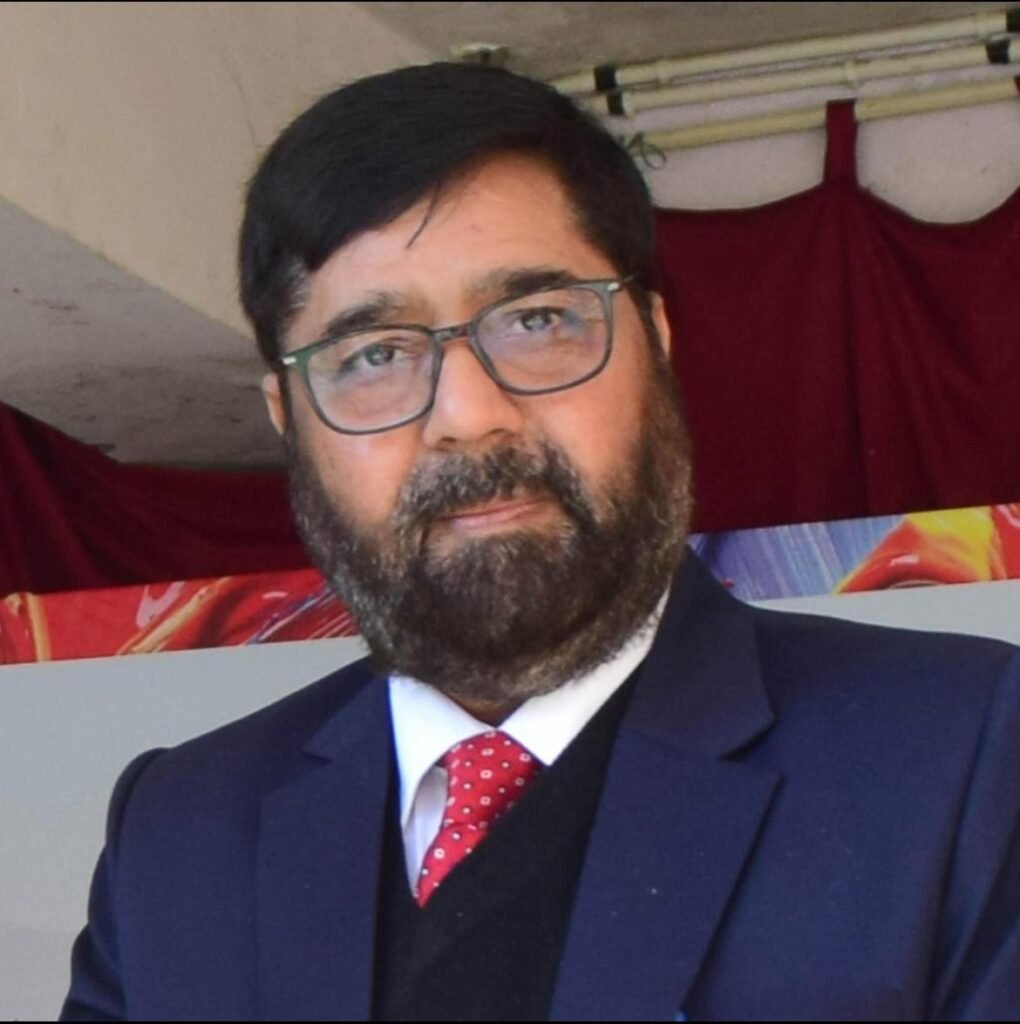
Arun Joshi
At the end of the autumn session of the legislative Assembly on 30th September, the high point of which was the passage of the resolution calling for “immediate and urgent restoration of statehood to Jammu and Kashmir”, the Omar Abdullah government squeezed from Kashmir-centric rivals and more formidable BJP, registered himself as a leader not averse to risk taking.His risks were well calculated – to say the things which he intended to say, but chose the vocabulary that defined his government’s collective intention with a specific focus on statehood.
The resolution, the outcome of which is not a matter of speculation but a conclusion that it has not made any headway toward the return of statehood, isa result of the competitive narratives. The reality lies somewhere else. It is true that there were no TV debates and there was almost negligible commentary on the resolution as it was deemed that the issue is over and it has slid into cold storage.
This missed a vital point: what happens in Kashmir rarely stays in Kashmir. It reverberations will be felt in the days and months to come. A wounded psyche wanted an expression, and a majority of the legislators gave it, despite their own reservations about performance of the government which is close to completing its two years in office.
Almostthe entire population acrossJammu and Kashmir, notwithstandingsome die-hard protagonists of the further division of Jammu and Kashmir who harbour an insatiable quest for divisions on the sub regional and religious lines. For them, statehood is not a promised land, it is a miniature manifestation of what Dogra rule bestowed upon the region. Ironically, those claiming to be representing the Dogra land were severe critics of the resolution, which was an inherited legacy of Maharaja Hari Singh.And, those whose ancestors launched “Quit Kashmir” agitation against the Maharaja were citing the legacy and history.
This session coincided with nearly two-year-long innings of the Omar government, and separating the governance issue from all the political and administrative moves his government is pitching for cannot be separated from each other. His achievements on the ground despite severe constraints have been camouflaged by the narrative that he is a “prince”and unable to connect with the masses, and that the demand for statehood was nothing but a cover up for the failure. This was mostly focused on the shortcomings with regard to the regularisation of over 70,000 daily wagers, 200 units of free electricity, enhanced ration scale and 12 gas cylinders and drought in government jobs. And power tariff hike was yet another point on which the opposition sought to grill the government.
A political element too was visible when he was quizzed why he is not talking of Article 370 and Greater Autonomy in explicit terms. The resolution did reference to these political issues but did not give specific context. BJP was quick to read the underlying meaning and what the resolution intended, others were more interested in semantics.
The BJP was in the forefront of criticism of the government ably assisted by the Kashmir-centric parties often seen as representing and talking of the Valley’s majority community Muslims. Either their thinking was the outcome of the feedback they received from their constituents or something else was at work. Their frustration with the government stemmed from their absolute and clear reservations resting on the question: how could Omar Abdullah whose National Conference they had reduced to 15 seats in 2014 could win over 40 seats and form the government in 2024.
BJP which had nurtured the ambitions of getting yet another chance at the government formation rejected the government from the day one of its formation when it claimed that the NC has exploited regional, parochial and secessionist sentiment in the Valley. It however, never realised that where its failure in connect with the people in Kashmir lay. That was again visible during and after the session.
A question was left unanswered: whether the statehood is all about the governance? The opposition was right in asking this, as they targeted Omar Abdullah ‘s single-lens approach on statehood.
Two vitals of the statehood are ignored: J&K was a full-fledged state much larger than many others, the statehood was done away with to disempower the region – there was an overwhelming fear that a Muslim-majority border territory flanked by hostile borders and victim of cross-border terrorism could not be trusted with all the powers. There was another fear that the restoration of statehood could lead to other demands citing the same very geographical and geopolitical reasons. So, the best way was to keep it pinned down as Union Territory, asking for more powers and statehood, and finally to condition the people and political parties to the status quo .
This explains the whole theory, and it is immaterial whether the Omar Abdullah could have done better than what he did in the past two years of his being in the chair of Chief Minister with limited powers that constrained him at every stage. It is a much wider question, whether he is moving in the right direction on his political goals, day-to-day governance? This answer cannot be put in a yes or no. There are many grey areas in between.
In a place like Jammu and Kashmir, despite its truncated geography and demography is not what it was supposed to be after its demotion to the Union Territory. It has been subsumed by the new political narratives where the idea of the UT was reinforced accompanied with the threat to the national security question. Dotting every word. The Centre, no doubt effected large scale anti-terrorism operations, which struck hard at the ecosystem in which terrorism gained its protection and flourished. It has greeted J&K with the infrastructural and connectivity development that existed in dreams only. It placed the development as an antidote to terrorism .Kashmir became a cradle for separatism is a well-established fact.
A wide-ranging conflict between the idea of India and regional political aspirations transcended beyond the pre-1953 status of Jammu and Kashmir – the state had all powers except on matters of defense, communications and foreign affairs. It was a call for severing ties with India and declaring “ Azadi” for the region , though in reality, it was a slogan camouflaging the pro-Pakistan agenda. Even the “Azadi” slogan became more horrifying feature for Pakistan, than the dangers it spelt for India.
Times have changed, the idea of India is pronounced in streets through tricolour, national anthem and rendition of Vande Matram. All this was unthinkable even in the pre-1989 era when the kind of armed militancy Kashmir saw in the 1990s onwards was neither in sight nor in mind. The anti-India or to put it mildly, a hostile atmosphere was all pervasive, and for that many factors, Pakistan, in particular, and the internal forces in Jammu and Kashmir, were responsible.
The Omar Abdullah government’s performance since October 16, 2024, is judged on multi-layered yardsticks: political, day-to-day governance, and where does it stand today and its future direction, and the most critical touchstone for this elected government is the LG rule preceding it.
Politically, Omar proved himself to be a naïve who believed that the things would move in the directionthat were promised – Delimitation, Elections and Statehood. Since J&K had accomplished first two tasks. And these were undertaken and accomplished by the Centre, but the main role in making the election process a big success was played by the people of J&K, no election or democratic exercise, undertaken after a gap of 10 years could have been successful without the public participation. The overall voting percentage broke records,and Kashmir, in particular crossed all the redlines of the past, because it reaffirmed its faith in democracy in Modi era , trusting Prime Minister and Home Minister for what all they told them at the time of elections .
Prime Minister Modi lived up to his party’s manifesto of 2019, to do away with the Article 370, and soon after that he had promised that J&K would get back everything that it longed for in the transformative reality post August 5, 2019, a date that both pro- and anti – Article 370 consider a defining moment for themselves. Almost all J&K Assembly election time speeches of Prime Minister Modi prominently pronounced that full statehood would be restored to J&K.
This government has been challenged on day-to-day governance. The issues of electric poles and taps have dominated, and answers have been demanded for failing to give enhanced scale of ration, 12 free gas cylinders to each household, and 200 units of free electricity to one and all. This was the promise at the time of the elections. The NC manifesto authors, perhaps, did not anticipate that a handsome electoral victory would greet their party. But the people voted for NC in overwhelming manner. Its victory and the government formation made it accountable for all the promises it made.
Even in the most ideal circumstances, no government in the world, can ever deliver on all its promises. The realism should have guided the Omar Government, and he could have started delivering on these promises in a phased manner within whatever powers it was supposed to perform. He kept on waiting for the return of statehood and tailored his plans accordingly. He could not visualise that he would have to navigate tornado and hurricanes without life jacket.
The comparison between LG’s rule and that of the elected government is made to drive home the point that the National Conference government is not even a shade of that. It deserves greater analysis than merely what was done and what all could be done.
First of all, the LG rule is continuing even after the people’s government took over on October 16, 2024. That was inbuilt in the UT status of J&K, which NC was resisting all along. A fair comparison is possible only when all facts are placed on table, not in terms of narratives but as the ground exists. This comparison is often tempted in terms of LG Manoj Sinha’s rule since August 7, 2020, a year later after the abrogation of Article 370.
Manoj Sinha took over as LG amidst severe Covid-19 epidemic situation. The priorities were centered on dealing with the epidemic crisis, curbing terrorism, and consolidating normalcy. These were huge tasks, and given his experience and reputation as a tough administrator with a political background of BJP stalwart, he was considered a right person for the right job at right time in J&K. He lived up to his reputation, and his biggest contribution was to move around the people and places to gauge the mood, while sending a very tough message that “peace will be established, not bought.” The meaning was very clear: no dialogue with separatists or others promoting or engaged in secessionism, and all such elements would be dealt with ruthlessness. He introduced the idea of India of the Modi era – organized Tiranga rallies and other high nationalistic narrative, with a zero tolerance for the challengers. All this was possible that he had all the powers that even the state governments in the past didn’t have.
Still it was Omar who brought relief to the people, rejuvenated tourism and Kashmir economy after the catastrophic Pahalgam massacre of April 22, 2025. The tourists who came back to the Valley trusted him and his word, for they had known by then that certain narratives and optics of normalcy also had few cracks, which Pakistan could exploit through its terror tools.
This incident was much more killing for him -this was mounted to sabotage the mandate that had flowed out of the elections, and this what the analysts within the Centre also noted. It was spoken quite frankly that one of the motives behind the savagery in Baisaran, Pahalgam, was to derail the new-fond democracy post -2024 elections.
The horrifying incident, which was equated towiping out of Sindoor (vermilion that Hindu women place in the parting of their hair, symbolising that they were married and their husbands were alive), hit him hard politically on two counts. First, it was a blot on the landscape of Kashmir, as the Valley had almost forgotten massacre of civilians – the last was in Nadimarg, Kulgam, in March 2003, and was clearly aimed at destabilising his government .
Second, his political opponents went to the town saying that the elections had brought in Pakistani terrorists – a ridiculous canard spread by the vested interests. It was not an ordinary massacre, and it was avenged through Operation Sindoor, a real-time war in which Jammu and Kashmir was at the centerstage and the territory suffered the most from Kathua to Kupwara. These events put J&K far behind where it stood even in the worst terror era.
The judgments on the performances is made when the challenges are fair – the Omar government is burdened with much more than that, so the analysis is blurred .The real dynamics of the performance would be known only after he steps on to the promised land.
>>>>>>>>>
Quotes Places in different places
Ironically, those claiming to be representing the Dogra land were severe critics of the resolution, which was an inherited legacy of Maharaja Hari Singh.And, those whose ancestors launched “Quit Kashmir” agitation against the Maharaja were citing the legacy and history.
Times have changed, the idea of India is pronounced in streets through tricolour, national anthem and rendition of Vande Matram. All this was unthinkable even in the pre-1989 era when the kind of armed militancy Kashmir saw in the 1990s onwards was neither in sight nor in mind.
Still it was Omar who brought relief to the people, rejuvenated tourism and Kashmir economy after the catastrophic Pahalgam massacre of April 22, 2025. The tourists who came back to the Valley trusted him and his word, for they had known by then that certain narratives and optics of normalcy also had few cracks, which Pakistan could exploit through its terror tools.