

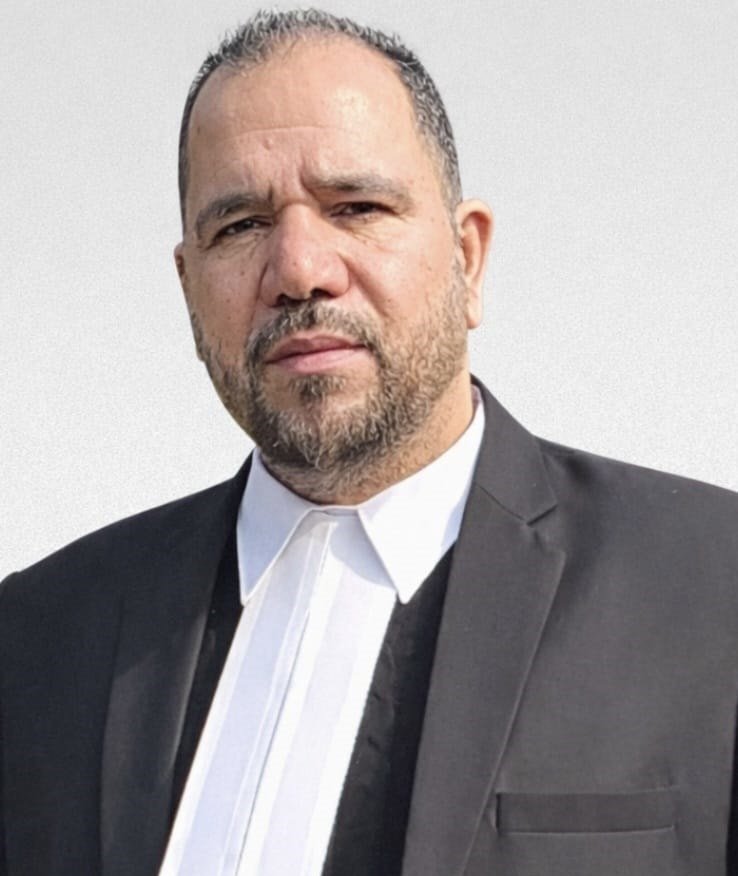
Advocate Syed Shabir Bukhari
Mahatma Gandhi once returned a client’s fee upon discovering that the case lacked truth. Allama Iqbal envisioned a society where khudi—selfhood anchored in moral courage—guided human action. Abraham Lincoln, in his days at the Bar, refused to argue causes he believed to be unjust, choosing instead the harder road of integrity over convenience.
These were not merely great leaders—they were custodians of conscience in a profession where the temptation to compromise often lurks beneath the surface. Their legacy reminds us that law, at its finest, is not a trade of arguments but a trust of justice.
It is easy to relegate such ideals to history. Harder—and far more meaningful—is to witness them alive in our own time.
What I encountered recently was one such rare moment.
The episode began with a story that stirred immediate sympathy. A close friend approached me, deeply concerned about his elder brother—allegedly a victim of a cruel property dispute with his younger sibling and their elderly mother. The narrative was compelling: a man who was my friend. He was on the brink of dispossession along with his wife including his two kids , a family fractured, and an aging mother entangled in litigation.
Moved by the urgency, I reached out to the counsel representing the opposing side in the Court. The lawyer who was representing the old lady and her younger son in opposite side responded with dignity and openness, expressing his willingness to explore an amicable settlement. He appeared particularly concerned about the 75-year-old mother, whose presence in court, time and again, was itself a quiet tragedy.
A meeting was arranged.
But what transpired there revealed the first—and perhaps the most striking—facet of the lawyer’s character.
In an attempt to secure a favourable outcome, my friend made what he perhaps considered a “practical” offer: a substantial monetary inducement to the opposing counsel, in exchange for helping him secure 50% of the property from her mother
The reaction was immediate—and unforgettable.
The lawyer’s face hardened. His voice, firm and unyielding, cut through the air as he reprimanded my friend in no uncertain terms. He refused even to entertain the suggestion, asking him to leave and warning him against such conduct . It was not merely a rejection—it was a moral rebuke.
In that moment, the first pillar of his character stood revealed: incorruptible integrity.
Where many might have hesitated, negotiated, or quietly ignored, he drew a clear, uncompromising line.
The matter then proceeded to mediation.
What unfolded there dismantled the earlier narrative and replaced it with a more complex, more human truth.
The elderly mother, in whose name the property stood, spoke with quiet clarity. Though she had personally invested a major part in the purchase of entire property as such entire property was registered in the papers on her name but still she expressed her desire—freely and without coercion—to divide the entire property equally between her two sons. Her decision was not born of legal obligation but of maternal emotion: a longing for peace, an end to conflict, and perhaps the hope of preserving what remained of her family.
My friend—the elder son—was more than willing. In fact, he had been eagerly anticipating this very outcome, even going to the extent of offering money earlier to the counsel of mother for such kind of settlement so as to secure 50% property .
But here emerged the second defining trait of the lawyer—his unwavering commitment to justice beyond the client’s immediate demands.
While the proposal of equal division appeared fair on the surface, the lawyer saw what others overlooked. He recognized that the mother—already dragged into court by one of her sons—was on the verge of parting with her entire security. Emotional willingness, he understood, does not always equate to informed justice.
With calm reasoning, he proposed a balanced solution: let the property be divided, but ensure that a reasonable portion remains in the mother’s name during her lifetime—protecting her dignity, independence, and right to live without fear or dependence.
It was a suggestion rooted not just in law, but in humanity.
And then came the moment that revealed the third and perhaps the rarest quality of all.
The elder son refused.
He objected even to his mother retaining a share in her own property during her lifetime. What had been portrayed as a plea for fairness now stood exposed as a demand for absolute control.
The room grew heavy with silence.
The mother, driven by emotion, was still willing to give everything away. The path of least resistance lay open. The agreement could have been concluded. The file closed. The fee earned.
But the lawyer chose a different path.
Visibly disturbed, he stood firm. He refused to be a party to an arrangement that, though legally permissible and even voluntarily accepted by the mother, violated the deeper principles of natural justice, equity, and good conscience.
In a voice that carried both conviction and restraint, he declared that he would not associate himself with such a settlement. And with that, he disengaged from the case and walked away.
No drama. No hesitation. Just principle.
In that quiet act of withdrawal lay the true grandeur of the legal profession.
At a time when courts are often criticized for endless adjournments—“tareekh pe tareekh”—and justice is seen as delayed, if not denied, it is individuals like this lawyer who restore faith in the system. They remind us that beyond procedures and delays, there still exists a moral spine—steady, unyielding, and deeply human.
His actions reflected three enduring virtues:
Integrity that cannot be purchased
A commitment to justice that transcends client interest
The courage to walk away rather than participate in moral wrong
These are not merely professional qualities. They are the lifeblood of public trust.
For the common man, who steps into a courtroom with hope despite delays and disillusionment, such examples are invaluable. They reaffirm a simple but powerful belief: that justice, though slow, is not soulless—and that within the system, there are still guardians who will not let conscience be eclipsed by convenience.
Gandhi practiced it. Iqbal envisioned it. Lincoln lived it.
And on an ordinary day, in an ordinary mediation room, I witnessed it.
Not in words, but in action.
Not in victory, but in refusal.
Because sometimes, the truest service a lawyer can render is not to win a case—but to refuse to win it at the cost of justice.