

The answer does not lie in cutting down trees indiscriminately, nor in ignoring the suffering of vulnerable citizens. The solution lies in evidence based environmental governance that protects human health while preserving ecological stability for future generations.
Dr Muslim Ahmad Shah
(Indian Institute of Forest Management, Ministry Of Environment, Forest and Climate Change Govt. of India.) [evsmuslim@gmail.com]
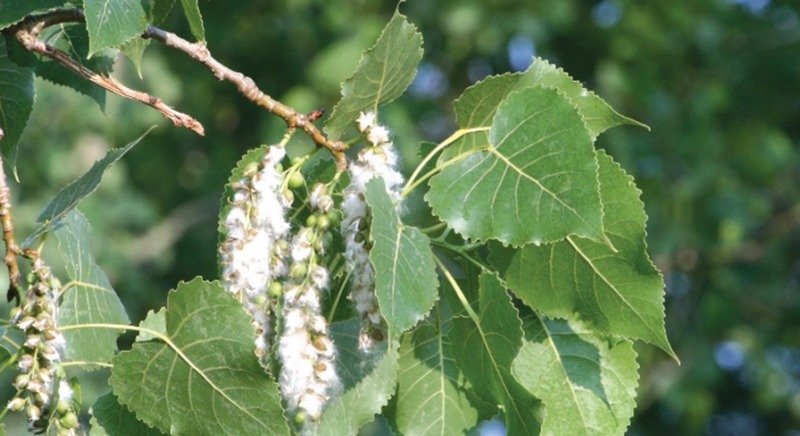
Every year, as white cotton like fluff begins floating through the air from trees such as the Russian Olive and similar cotton producing species, public anxiety rises sharply. Streets, parks, rooftops and even homes become covered with drifting fibers, while many people complain of sneezing, eye irritation, breathing difficulty and worsening asthma. In public discussions, these trees are increasingly blamed for causing “cotton allergy” and deteriorating air quality.
However, science presents a more nuanced reality.
The visible white cotton is usually not the principal cause of respiratory allergies. In most cases, the real culprits are microscopic pollen grains released earlier by male trees, combined with dust particles, fungal spores and existing urban pollution that become trapped within the floating cotton. The fluffy material itself is primarily a seed dispersal fiber and is generally too large to deeply penetrate the lungs. Yet it can still irritate the eyes and nose, aggravate asthma and create discomfort due to its dense accumulation in the environment.
This distinction is important because emotional reactions often lead society toward simplistic conclusions either demanding indiscriminate cutting of trees or dismissing public suffering altogether. Neither approach is scientifically sound.
Governments and urban planners must avoid over-plantation of highly allergenic species and prioritise diverse native trees better suited to local ecosystems. Urban plantations should maintain a balanced mix of tree genders to reduce excessive pollen release
At the same time, trees remain indispensable for human survival. They absorb carbon dioxide, release oxygen, reduce urban heat, trap pollutants, prevent soil erosion, conserve biodiversity and contribute significantly to mental and physical well being. In an era marked by climate change, rising temperatures and deteriorating air quality, the importance of trees has become even greater.
The issue, therefore, is not “trees versus clean air.” The real challenge is achieving a balance between ecological sustainability and public health.
Modern environmental science explains that allergies have become more severe due to multiple interconnected factors. Rising pollution levels inflame the respiratory tract, making people increasingly sensitive even to moderate pollen exposure. Climate change has prolonged pollen seasons, while overcrowded cities, poor waste management, declining biodiversity and the destruction of native vegetation have further weakened environmental resilience.
Urban forestry practices have also contributed to the problem. In many cities, male trees are heavily preferred because they do not shed seeds and are considered easier to maintain. However, male trees release enormous quantities of pollen into the atmosphere. Environmental scientists sometimes describe this phenomenon as “botanical sexism” an unintended urban planning practice that increases airborne allergens while reducing ecological balance.
In an era marked by climate change, rising temperatures and deteriorating air quality, the importance of trees has become even greater.The issue, therefore, is not “trees versus clean air.” The real challenge is achieving a balance between ecological sustainability and public health.
Scientifically and legally, clean air is indeed a fundamental human right. Pure air is essential for oxygen exchange, cardiovascular function, brain health, immunity and overall survival. Courts in many countries, including India, have repeatedly linked the right to clean air with the constitutional right to life.
But protecting this right does not require hostility toward trees. Instead, it requires intelligent environmental management.
Governments and urban planners must avoid over-plantation of highly allergenic species and prioritise diverse native trees better suited to local ecosystems. Urban plantations should maintain a balanced mix of tree genders to reduce excessive pollen release. Regular pruning before pollen season, scientific environmental impact assessments, improved air-quality monitoring and stronger control of vehicular emissions and dust pollution are equally essential.
Individuals can also reduce exposure by wearing masks during high pollen days, keeping windows closed during peak pollen hours, washing clothes and face after outdoor exposure, using indoor air purifiers when necessary and seeking medical advice for persistent allergies or asthma.
The broader lesson is clear: nature itself is rarely the enemy. Problems arise when ecological balance is disturbed through poor planning, unchecked pollution and scientifically uninformed policies.
The broader lesson is clear: nature itself is rarely the enemy. Problems arise when ecological balance is disturbed through poor planning, unchecked pollution and scientifically uninformed policies.
A healthy society requires both clean air and healthy forests. The answer does not lie in cutting down trees indiscriminately, nor in ignoring the suffering of vulnerable citizens. The solution lies in evidence based environmental governance that protects human health while preserving ecological stability for future generations.