


In a podcast, Fayaz Sheheryar, Ex. Director General All India Radio (A.I.R), resorted to factual discrepancies about public broadcasting. He talked about certain things which never happened or were contrary to the factual situation. TIMES LINK Consulting Editor, Zahoor Zahid, puts the record straight by identifying the ‘misinformation’ dished out by him in the podcast.
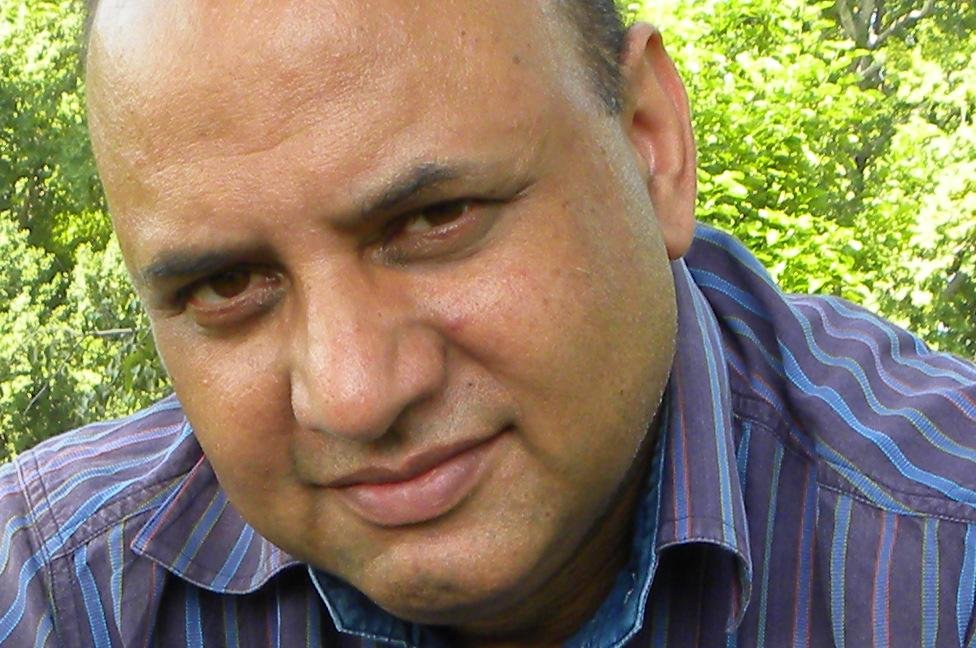
Zahoor Zahid
(Consulting Editor)
These days, watching reels and other content on social media has become increasingly uncomfortable. People with little or no knowledge appear on the screen, shouting, screaming, and resorting to strange antics merely to attract attention and increase their viewership. While technology has placed a powerful communication tool in everyone’s hands, it is often being misused to spread misinformation, sensationalism, and content that lacks even the most basic standards of responsibility.
A disturbing trend is that many self-proclaimed content creators publish material without verifying facts or understanding the subjects they discuss. In their race for popularity, accuracy, ethics, and public responsibility are frequently sacrificed. This flood of unverified and often misleading content has created an unfortunate environment where truth struggles to compete with noise.
The situation is particularly disheartening for genuine journalists and responsible content creators who follow professional ethics, verify information, and respect the intelligence of their audience. Their voices are often drowned out by sensationalism and manufactured outrage.
Most thoughtful and right-minded people find this trend deeply frustrating. There is a growing sentiment that while freedom of expression must be protected, it should also be accompanied by accountability. Many believe that an effective legal and regulatory framework is needed to curb the spread of misinformation and irresponsible content, while safeguarding the rights of credible journalists and sincere creators who serve the public interest.
I recently watched the podcast of senior journalist Ahmad Ali Fayaz, who has earned immense respect in the journalistic fraternity for his balanced reporting and insightful discussions. Lately, he has been inviting several credible personalities to his podcast. His recent conversation with Fayaz Sheheryar Ex. Director General All India Radio (A.I.R) particularly caught my attention, and since he headed the organization, I watched it with great interest.
However, I noticed certain factual discrepancies that deserve to be placed on record, especially because they concern the broadcasting profession, a field in which I have spent considerable time and have a deep interest.
The first discrepancy relates to Mr. Fayaz Sheheryar’s account of his recruitment. During the conversation, he stated that he appeared before the UPSC interview for the post of ProgrammeExecutive (PEX). In fact, he joined the organization as a Transmission Executive (TREX), which is the basic feeder cadre for the Programme Wing of All India Radio and Doordarshan. He continued in that position for several years. His first attempt to become a Programme Executive through the UPSC interview was unsuccessful. It would be unfair to interpret that as a question of capability; there were several other factors that influenced selections in those days.
Another point that merits discussion is his assertion that the decline of the organisation began with the establishment of the Prasar Bharati Corporation. In my view, this conclusion overlooks the real structural changes that had begun much earlier.
The seeds of institutional decline were sown during the 1980s when, following a court order, members of the creative cadre, primarily Producers – were inducted into the administrative hierarchy. Traditionally, Akashvani had a carefully designed organisational structure. The creative wing consisted of Producers, and Staff Artists who were responsible for conceptualising and producing content, while the administrative wing managed governance and administration. This distinction exists in almost every successful public broadcasting organisation across the world.
Creative professionals ordinarily grow within their own specialised cadre, where their promotions are linked to creative excellence without being diverted into administrative roles. This preserves both artistic quality and institutional efficiency. Once this distinction was blurred and the creative cadre was absorbed into the administrative structure, creative priorities gradually gave way to bureaucratic concerns. In my opinion, this marked the beginning of the erosion of the vibrant broadcasting culture for which Akashvani and Doordarshan were once renowned.
This is not merely a matter of historical detail; it is an important institutional lesson. If we wish to understand the challenges faced by public broadcasting today, we must identify the real turning points rather than attributing the decline solely to the advent of Prasar Bharati.
Beyond the Producers, the real creative strength of broadcasting lay in an entire ecosystem of specialists; News readers, scriptwriters, production assistants, duty officers, drama artists, comperes, announcers, composers, musicians, and many other professionals whose combined talent gave radio its distinctive identity. Broadcasting has never been the product of a single individual; it is a collaborative art that depends upon the expertise of highly specialized creative minds.
Unfortunately, barring a few creative cadres, this entire professional structure was gradually dismantled and replaced by a single, generic cadre of Transmission Executives. Recruitment to this cadre was based largely on a conventional written examination, followed by a personality test. There was virtually no attempt to identify or recruit specialists possessing the artistic aptitude, communication skills, creative imagination, or broadcasting temperament that the profession demands.
Broadcasting is not merely a government job; it is a vocation. It demands passion, sensitivity, creativity, and an instinctive understanding of the spoken word and the listener’s mind. There are people who are naturally gifted for this medium. When such specialised talent is ignored and recruitment is reduced to a routine employment exercise, the organisation inevitably loses its creative soul. For many recruits, broadcasting became just another source of livelihood rather than a lifelong commitment to public communication. That, in my view, is precisely where the decline of the organisation began.
The selection process for creative positions in radio and television through the UPSC also deserves serious reconsideration. Broadcasting is a highly specialised profession where creativity, communication skills, cultural sensitivity, and command over the spoken word are as important as academic qualifications. These qualities cannot be adequately assessed through a brief interview alone. An interview often becomes a test of general knowledge, confidence, and performance on a particular day rather than a reliable measure of creative potential.
For positions that shape the country’s public broadcasting, professional aptitude should carry significant weight. A selection process that includes practical assessments – such as script writing, programme planning, voice presentation, production exercises, and language proficiency, would be far better suited to identifying genuine broadcasting talent. Equally important is encouraging candidates with relevant professional training and experience in broadcasting, journalism, media production, or the performing arts.
When recruitment fails to identify and reward creativity and professional competence, institutions inevitably suffer. Public broadcasting deserves a selection system that recognises not only intellectual ability but also the rare creative skills and aptitude that distinguish a broadcaster from an ordinary administrator.
Fayaz Sahib referred to the immensely popular programme Vadi Ki Awaaz. It is important to remember that the programme did not become a phenomenon merely because of its title or format. Its enduring appeal rested on its unforgettable stock characters, brilliantly brought to life by gifted artists such as Kedar Sharma, Shanta Kaul, Manohar Parothi, and several others. These voices transcended regional boundaries and earned admiration across the Indian subcontinent. Listeners eagerly waited for these familiar characters because they had become part of their emotional and cultural lives.
When these artists disappeared from the airwaves, Vadi Ki Awaaz also lost its soul. The programme continued in name, but it could never recreate the same emotional bond with its audience. The tragedy is that these iconic characters were not allowed to evolve or be preserved. They were, in effect, silenced by those who occupied positions of authority and viewed their immense popularity with jealousy rather than pride.
The same fate befell many other landmark broadcasts. Daily programmes such as Dehati Programme, Gojri, Pahadi and Panjabi broadcasts and several regional productions derived their popularity from a dedicated Staff Artists’ cadre, Sharief ud Din, M. S. Pandit, Abdul Rehman Bhat, Altaf Bukhari, Abdul Hamid Kasana and many more, who had developed distinctive characters over decades. These artists were not interchangeable employees; they were institutions in themselves. Instead of nurturing this invaluable creative capital, the organisation allowed it to wither away, sacrificing artistic excellence for administrative uniformity. In doing so, it lost not merely programmes but an entire broadcasting tradition that had taken decades to build.
A gradual decline set in when the organisation’s larger objectives began to take a back seat to the personal ambitions of those at its helm. The damage becomes particularly severe when junior officers are elevated over more deserving seniors, not on the basis of merit but to accommodate personal interests or facilitate the placement of favoured individuals elsewhere. Such decisions undermine both organisational goals and the moral fabric of the institution.
An organisation cannot flourish if honest criticism is treated as insubordination. When a person at a lower level raises a legitimate concern in good faith but is met with persecution instead of appreciation, a culture of fear replaces a culture of accountability. Progress demands that leaders set aside personal ego, welcome constructive dissent, and act with fairness rather than as unquestionable dictators driven by personal vendettas.
Institutions are strengthened not by unquestioning obedience, but by merit, transparency, and the courage to listen to uncomfortable truths.
When the devastating floods of 2014 submerged Kashmir and almost every means of communication fell silent, one voice refused to be drowned. Even as his own home lay under water, broadcaster Shamshad Kralwari climbed the heights of Shankaracharya Hill with nothing more than a microphone and an unshakable sense of duty. There was no studio, no sophisticated equipment, no certainty, only a determination to reach people trapped in despair.
In those darkest hours, when hunger, fear, and isolation gripped the Valley, Radio became the lifeline of the people because of his extraordinary courage and professional commitment. Broadcasting without food, water, or basic facilities, he and others who joined him later restored hope when hope itself seemed to be fading.
In many countries, such an act of selfless service would have been recognised with the highest civilian honour. Tragically, instead of being celebrated, he was ordered to stop the transmission as makeshift studio at Narbal high power transmitter was made functional. I witnessed that painful moment personally. It remains one of the saddest examples of how true dedication is sometimes met not with gratitude, but with indifference.
Contrary to what has often been claimed, the devastating floods of 2014 never entered the Tape Library, despite widespread apprehensions at the time that the priceless archive, housing more than six decades of invaluable recordings, had been damaged. This misconception itself reflects how poorly informed people at the helm of affairs are about the institution’s archival infrastructure.
Equally misleading is the assertion that all archival recordings were digitised and transferred to the Central Archives. The reality is quite different. The archival collection was never truly digitised. Genuine audio digitisation requires specialised equipment, including a dedicated professional-grade sound card capable of high-fidelity audio capture. Instead, what was provided was an ordinary computer with a basic onboard sound card, which is wholly inadequate for archival preservation. What was carried out was merely a transfer of recordings, not digitisation in the professional sense.
Had those responsible for the institution been genuinely committed to preserving this priceless heritage, they would have retained or re-engaged the librarian who, despite limited resources, had performed a remarkable and painstaking job of safeguarding the archive. Institutional memory is built through the dedication of such professionals. It is unfortunate when the painstaking work of committed individuals is overlooked, while credit is claimed by those who neither created nor preserved it.
The infrastructural expansion and technological upgradation of Akashvani and Doordarshan have been remarkable. State-of-the-art buildings, modern studios, and sophisticated equipment were created at enormous public expense. Yet one fundamental question was never asked: who would create the content? Technology can enhance broadcasting, but it can never replace the human resource that gives it purpose and life. Expansion without investing in creative professionals is an empty exercise, no matter how impressive the infrastructure may appear.
Equally tragic was the fate of the old Radio Kashmir building, which was far more than a broadcasting center, it was a living expression of Kashmir’s cultural soul. Its traditional wooden shingle roof, handcrafted doors and furniture, exquisite Khatamband ceilings, and pencil portraits of eminent personalities adorning its corridors reflected the Valley’s artistic heritage. Merely stepping into the building immersed one in the spirit of Kashmir.
Much of this cultural identity was dismantled in the name of modernisation. What disappeared was not just wood and brick, but the memory, character, and ethos of an institution that had once embodied the finest traditions of Kashmiri art and culture. Development should strengthen heritage, not erase it. When modernisation comes at the cost of identity, it ceases to be progress; it becomes the demolition of a priceless legacy.