



Zahoor Zahid
(Consulting Editor)
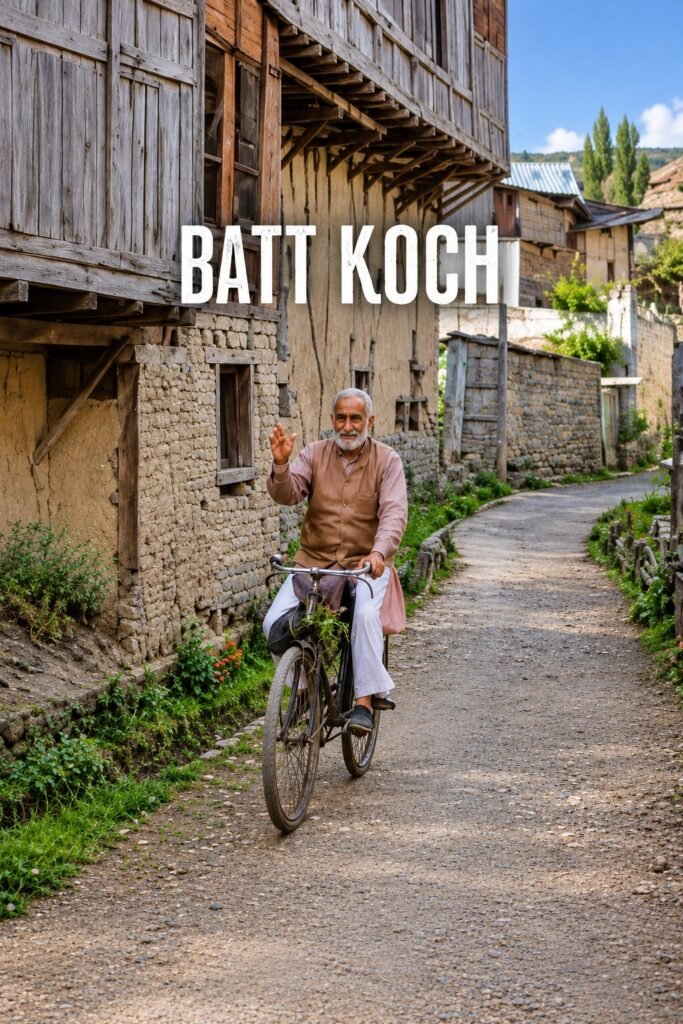
One of the most talked-about films of the festival was Batt Koch, directed by Sidarth Koul, with creative ideation by Ankit Wali. The film explores the migration of a Kashmiri Pandit family forced to leave its home when the situation in Kashmir turned hostile in the early 1990s.
At its heart, Batt Koch is a story about home, displacement and the emotional trauma of separation from one’s roots. Leaving one’s homeland is never merely a physical act. It means leaving behind a house, a neighbourhood, familiar landscapes, memories, relationships and a way of life that may have taken generations to build. For any community compelled to abandon its home in distress and seek refuge elsewhere, the experience can be deeply agonising.
The film captures the anguish of leaving one’s homeland in distress and rebuilding life elsewhere. Although many Kashmiri Pandit families chose to remain in the Valley, but majority hadto migrate during those troubled years. When circumstances threaten one’s safety, seeking refuge elsewhere becomes a painful but understandable choice.
What makes Batt Koch compelling is its focus on the emotional cost of displacement; the loss of home, memories, belonging and roots. It is a powerful and universal theme, and the film succeeds in bringing that human pain to the foreground.
Interestingly, Batt Koch was initially conceived as a short film but grew into a feature-length work during the editing process. The film is deeply emotional, portraying a family struggling to reconcile the aspirations and anxieties of the older generation with the realities of life in a place far removed from its cultural roots.
The older generation’s continuing attachment to the homeland, its memories and traditions, stands in contrast to the younger generation’s attempts to adapt to an unfamiliar environment. This generational tension is one of the film’s strongest elements and is captured with considerable sensitivity. It gives Batt Koch a human dimension that goes beyond the story of migration and makes the experience of displacement deeply relatable.
Perhaps the strongest element of the screenplay are the letters written by M.K. Raina. And kept in safe box. Initially, they appear intriguing and somewhat enigmatic, but their real significance unfolds brilliantly towards the end. When their purpose is finally revealed, the letters acquire a powerful emotional resonance. They convey the longing of those who are no longer alive and those who live continue to yearn for a return to their motherland, as well as the tragedy of those who eventually settled in distant foreign lands while leaving behind ancestral homes that now stand as shattered ruins. The revelation gives the film a poignant and lasting emotional impact.
One aspect that appears less developed is the dialogues of the film. Except for the final five or six minutes, when the family visits its ancestral home in Kashmir, much of the conversation seems to rely on improvisation by the actors. This is also evident when, after the screening at INOX, Sidarth and Ankit themselves acknowledged their difficulty in speaking Kashmiri. Dialogue is not merely a means of moving a story forward; in a film rooted in a particular culture and language, it gives authenticity to the characters, establishes their social and cultural identity, and reveals their emotional and psychological depth. Well-crafted dialogue could therefore have added greater richness and credibility to Batt Koch. At the same time, considering that neither Sidarth nor Ankit is well-versed in Kashmiri, their decision to make the film in Kashmiri is commendable and deserves appreciation.
The performances are another major strength of Batt Koch. Anil Chrangu is particularly impressive, bringing a natural ease to his character and making the performance appear almost effortless. M.K. Raina and Kusum Dhar, both seasoned actors, bring the maturity and emotional depth that their roles demand. Kusum Tickoo is equally convincing and seems to completely inhabit her character, particularly in the more emotional moments. The two children also deliver remarkably natural performances, adding innocence and warmth to the family narrative. Collectively, the cast gives the film much of its emotional credibility, with performances that feel restrained, authentic and deeply rooted in the characters.
The technical treatment of the shoot is one area where the film appears to fall short of the standards expected of a feature-length production. The cinematography suggests a relatively minimal lighting setup and with the result limited control over exposure, particularly in shots involving strong natural backlight. In several sequences, excessively bright backgrounds have resulted in underexposed foregrounds and it has been treated with highlighting the shadows which have made such shots overexposed. It could easily would have overcome by masking the background which is possible in any professional editing software.
The film also appears to lack a sufficiently finished colourgrade. Grading is not merely a cosmetic process; it is an essential stage of post-production that establishes consistency in exposure, contrast, colour temperature and overall visual mood across a feature film. I later discussed this with the director after the screening, who acknowledged that the film had not been fully graded. This may well have been a consequence of budgetary constraints, but a more comprehensive finishing process could have substantially enhanced the film’s visual quality and cinematic impact.
Narratively, Batt Koch follows a largely single-track storyline and, as a result, has limited dramatic movement. The most significant weakness, however, is the very brief treatment of the family’s return to Kashmir. Given the title and the film’s central theme of longing for the homeland, this portion should arguably have been the emotional culmination of the narrative.
The family’s arrival in the Valley could have been developed as a deeply evocative experience, particularly for the children who were born and brought up away from Kashmir. Their first sight of the landscape, their anticipation of seeing the ancestral home and their gradual connection with the place their grandparents had always longed for could have created powerful emotional and dramatic moments. Instead, the family is taken almost directly to the grandparents’ house, leaving little room to experience their journey back to their roots.
The final Kashmir portion, therefore, feels too brief to fully justify the emotional promise of the title. Had the filmmakers extended and developed this section with greater dramatic intensity, allowing the characters and especially the younger generation; to experience Kashmir before reaching their ancestral home, the film could have left a considerably stronger and more lasting impact.
Despite its shortcomings, Batt Koch connects with the audience because the pain of being uprooted from one’s homeland is universal. I appreciate the courage of young filmmakers Sidarth Koul and Ankit Wali in bringing the suffering and displacement of their community to the screen. Their passion for cinema and their desire to tell stories rooted in their homeland are encouraging, and I believe they have the potential to take many more such stories from Kashmir to audiences across the world.
At the same time, the tragedy of Kashmir cannot be viewed through the suffering of one community alone. The Valley witnessed an extraordinarily painful period in which both Kashmiri Pandits and Kashmiri Muslims endured fear, violence and profound loss. While the Pandit community suffered displacement and the loss of their homes and cultural roots, the majority community too experienced years of crackdowns, identity parades, disappearances, kidnappings, killings, torture and the anguish of families searching for loved ones. Unknown graves and the memories of violence became part of the collective landscape of a society caught in prolonged conflict.
Kashmir has seen some of its darkest years, leaving scars that cannot easily be measured. Batt Koch reminds us of one dimension of that tragedy – the pain of leaving home. But the larger story of Kashmir is one of shared suffering, broken families, lost lives and a deeply wounded society. Perhaps cinema can play its most meaningful role when it tells these difficult stories with sensitivity, allowing the pain of every community to be remembered and understood, rather than allowing one suffering to overshadow another.