


Zahoor Zahid
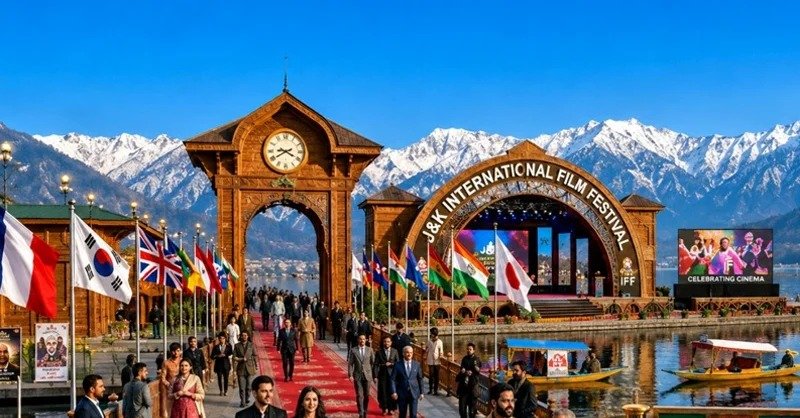
The growing interest generated by Jammu and Kashmir’s first international film festival is undoubtedly encouraging. However, it has also brought to the fore a question that deserves serious discussion: who can genuinely be described as a filmmaker?
The term filmmaker is increasingly being used rather loosely. Does producing television serials or programmes for Doordarshan automatically make someone a filmmaker? Can producing a five-minute song or short film, or merely operating a DSLR camera, qualify a person to claim the title? Is the completion of a single film sufficient to acquire the professional identity of a filmmaker? And, more importantly, can someone with little or no understanding of the craft, language and technology of cinema be placed in the same category as a trained and experienced filmmaker?
There is a fundamental difference between producing television content and making a film, yet the two are often casually placed in the same category. Television is primarily a broadcast medium; filmmaking is a specialized art and a highly technical craft involving storytelling, screenplay, direction, cinematography, production design, sound, editing, lighting, colour grading and a host of other disciplines.
What is even more disturbing is the growing tendency of people who have produced a television programme; or perhaps a five-minute video – to proudly describe themselves as filmmakers. Making a video does not automatically make someone a filmmaker, just as holding a microphone does not make someone a broadcaster
There is, of course, no academic qualification that one must possess to make a film. Cinema has always welcomed self-taught artists, and talent can emerge from anywhere. But filmmaking is far more than pointing a camera and recording images. It is a complex art form involving visual language and an understanding of the grammar and aesthetics of cinema.
With the extraordinary advancement of digital technology, filmmaking has become increasingly sophisticated and technically demanding. Modern cameras and editing software may have made filmmaking more accessible, but access to technology does not automatically translate into mastery of the medium.
There is an important distinction between making a film and being a filmmaker. A person may produce a film, assist on a production, make a short film or work extensively in television and still be at different stages of learning the cinematic craft. A filmmaker, in the true professional and artistic sense, is someone who understands the medium, has developed the necessary skills, possessed sustained practical exposure and demonstrated a serious engagement with the art and craft of cinema.
The present excitement generated by the film festival should, therefore, be welcomed, but it should also encourage greater professionalism, informed discourse and respect for the discipline of filmmaking. The festival can become an important platform not merely for showcasing films, but for helping J&K develop a genuine film culture, one based on knowledge, training, talent, experience and artistic integrity rather than labels and self-proclamation.
Filmmaking today is far more sophisticated than simply pointing a camera and recording images. The technology, grammar, aesthetics and production processes of cinema have changed dramatically. Contemporary filmmaking demands knowledge, training, technical competence, creative understanding and practical experience. It is a profession that requires far more than enthusiasm, self-promotion or the ability to operate a camera.
Unfortunately, those with genuine technical qualifications and professional training are often sitting on the sidelines, while individuals with little or no formal understanding of filmmaking confidently occupy the space by calling themselves filmmakers. This casual misuse of professional terminology not only demeans the craft but also undermines those who have spent years acquiring the knowledge and skills required to practice it.
The Government therefore needs to bring clarity to this increasingly confused space and frame appropriate guidelines defining who can legitimately be recognized as a filmmaker, producer, director or other film professional. There must be a distinction between a content creator, television producer, videographer and a trained film professional.
The Film Policy needs to provide much greater clarity on who qualifies as a filmmaker and what constitutes a film eligible for government subsidy. At present, it does not appear to sufficiently specify the subject, language, format, technical standards or professional credentials required for a production to qualify for such assistance.
There is an important distinction between making a video and producing a professional film. While modern technology has made filmmaking more accessible, and high-quality cameras are now available in relatively compact formats, a professionally produced feature film ordinarily involves appropriate cinematography equipment, professional sound recording, lighting, post-production, colour grading and mastering standards.
Professional films are generally captured in formats that retain sufficient image information for professional post-production and colour grading, such as RAW or other high-quality digital cinema formats. This enables the filmmaker and colourist to achieve the intended cinematic look, tonal range and consistency required for theatrical or festival presentation. The choice of camera, however, should not be treated as the sole criterion; the complete technical workflow and final mastered quality of the film should also be considered.
This becomes particularly important when government subsidies and official recognition are involved. If the policy does not establish objective eligibility criteria, there is a possibility of treating a professionally produced feature film and an independently produced amateur video as equivalent categories.
The policy should therefore clearly define “filmmaker,” “professional film,” “feature film,” “short film” and “eligible production”, and prescribe transparent criteria relating to production quality, duration, technical specifications, professional credits, certification and intended exhibition platform.
Such provisions would not exclude emerging or experimental filmmakers. Rather, they would create different categories for professional, independent, student, amateur and experimental productions, ensuring that each is assessed according to appropriate criteria.
Without such clarity, the very definition of a filmmaker can become so broad that virtually anyone shooting a video on a DSLR or other consumer camera may claim professional filmmaker status and seek the same benefits as a professionally produced film. A government film policy should encourage accessibility and innovation while, at the same time, maintaining clear professional standards for films seeking public subsidy.
The most important aspect of any film subsidy policy should be to encourage professional filmmaking and raise the quality of films produced in the region. Public funds should encourage films with serious and meaningful themes, sound storytelling and strong technical standards so that filmmakers from J&K are able to compete with productions at the national and international level.
At the same time, the policy should not discourage filmmakers who are making films in the local languages. A fixed, clearly defined subsidy should be available to every film that fulfils the prescribed eligibility criteria and is produced in a recognized local language. Such a provision would encourage more filmmakers to produce films in Kashmiri, Dogri and other languages of J&K, while creating a larger body of regional cinema.
A similar model exists in Karnataka, where government support has been used to encourage films produced in Kannada. A comparable mechanism could be considered for J&K, suitably adapted to its own linguistic and cinematic requirements.
There is, however, a serious concern regarding the implementation of the existing policy. Since the Film Policy was announced, local filmmakers who have submitted the requisite documents have reportedly been waiting for the release of their subsidy. Such prolonged delays inevitably create frustration and uncertainty among filmmakers and defeat the very purpose of the policy.
Subsidy should not merely exist as a provision on paper; it must reach the filmmaker within a defined and predictable timeframe. The Government should establish an annual subsidy cycle, scrutinize applications within a stipulated period and disburse the approved amount every year. This would also prevent accumulated liabilities from becoming so large that the subsidy amount eventually becomes difficult to release.
A transparent system with clearly defined eligibility, fixed subsidy slabs, annual disbursement, time-bound scrutiny and publicly available guidelines would give filmmakers confidence to invest in serious productions. It would also encourage professional standards and help build a sustainable film industry in J&K rather than merely announcing a policy without creating an effective mechanism for its implementation.
If the Government is sincere about recognizing and nurturing filmmaking talent, it must ensure that support reaches genuine, committed filmmakers with the vision, competence and passion to create meaningful cinema. Film is an expensive art, and financial resources play a decisive role in enabling filmmakers to engage talented actors, skilled technicians and the technical expertise essential for producing quality films. Government subsidies alone cannot sustain a vibrant film industry; there is an equally urgent need to attract private investors who are willing to finance promising, commercially viable and creatively compelling projects. The ultimate objective must not be merely to provide financial assistance, but to build a professional, sustainable and competitive film industry in Jammu and Kashmir; one that empowers genuine filmmakers, creates employment, showcases our rich cultural heritage and enables Kashmiri cinema to earn recognition on national and international platforms.