

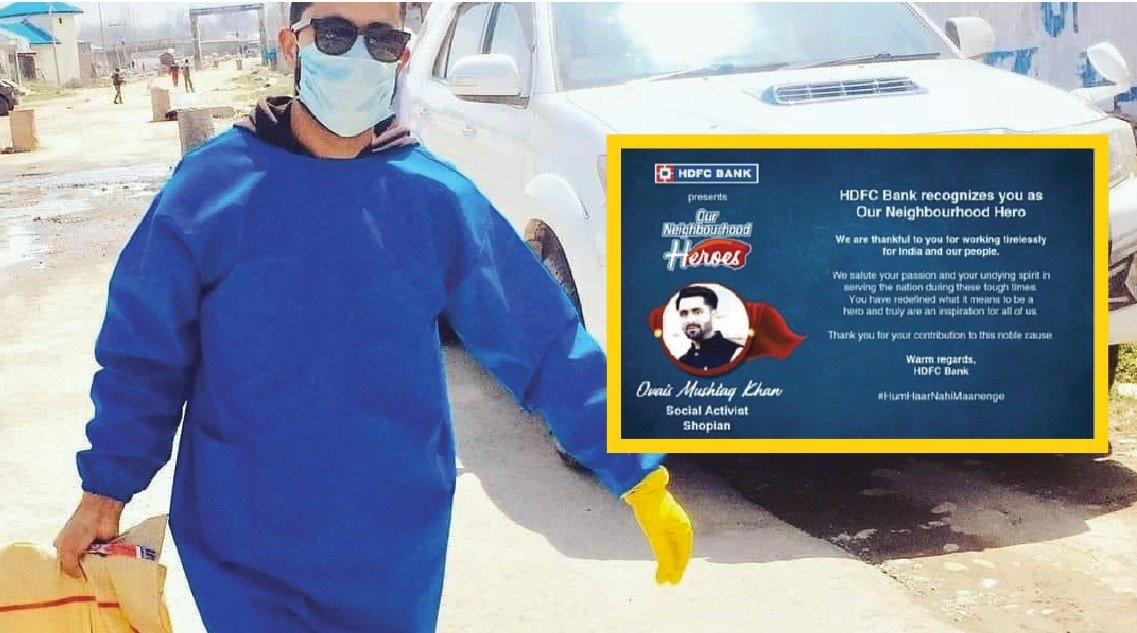
He was recognised by the Lieutenant Governor of J&K for his humanitarian services, particularly for his role during the COVID-19 pandemic and the 2014 floods, which included distributing over 1,000 ration kits.

Jazim Bazaz
In the picturesque valley of Jammu and Kashmir, where apples bloom on terraced orchards and snow-capped peaks crown the horizon, a quiet revolution is taking shape. This shift is not coming from towering political legacies or headline-grabbing elites. Instead, it is being driven by a new generation of leaders who are rooted deeply in community spirit and grassroots action. At the forefront of this movement is Advocate Owais Khan, a young lawyer turned politician from Shopian whose commitment to rural development is changing lives in his community.
Born and raised in Shopian, Owais Khan’s early life mirrored that of many youth in the district, academically ambitious, community-oriented, but acutely aware of the socio-economic challenges around him. After completing his law degree from Kashmir University, his interests expanded beyond the courtroom. He went on to earn a Post Graduate Diploma in Cyber Law and a Master’s in Sports Management from Pune, blending legal expertise with a broader vision for social and youth development.
This educational foundation gave Owais an edge. He understood law not just as a profession, but as a tool for social justice. He saw how legal knowledge could empower rural communities that were often unaware of their rights and entitlements. His entry into politics was not abrupt but evolved organically from his social work. Known locally as a sports promoter and someone who actively engaged with the youth, he became a familiar face in community initiatives long before formal politics entered the picture. His work organising sports activities and fitness programs garnered appreciation and helped create a sense of unity among Shopian’s youth, a demographic often sidelined in mainstream conversations.
From being a social activist to becoming a member of the Peoples Democratic Party youth wing, Khan spent a significant amount of time in political circles. In March 2023, Khan made a decisive political step by joining the Jammu & Kashmir Apni Party, led by Syed Mohammad Altaf Bukhari. In a well-attended event in Shopian, he brought nearly 250 young supporters into the party fold, many of whom had no prior political engagement. The gesture was symbolic: a young leader not only entering politics but bringing with him the voices of others who were yearning for representation. At that time, party leaders praised him for his commitment to social service and identified him as someone who could strengthen the party’s outreach in South Kashmir. Bukhari himself highlighted Khan’s integrity and dedication during the event, entrusting him with significant responsibilities and was assigned the responsibility of Social Media Head of the J&K Apni Party.
Despite the formal political association, his work in Shopian has always extended beyond party politics. Among his earliest initiatives was mobilising youth to respond to urgent community needs. During the difficult months of the COVID-19 pandemic in 2020, Khan led a group of over 700 youth volunteers who distributed essential food supplies and medicines to families across the district. They brought relief directly to people’s doors, often at risk to their own safety, especially when public movement and access were restricted.
This act of solidarity, no banners, no slogans, just service remains one of the defining moments of his grassroots approach. In a region where youth often feel alienated from political processes, this initiative gave many young people a sense of purpose and collective action. He was recognised by the Lieutenant Governor of J&K for his humanitarian services, particularly for his role during the COVID-19 pandemic and the 2014 floods, which included distributing over 1,000 ration kits. Another instance highlighting his role as a community mediator came when workers of the Hospital Development Fund (HDF) staged a protest over unpaid wages and lack of regularisation. Advocate Owais Khan stepped in as a voice of calm, urging authorities to listen to the workersdemands and advocating for fair treatment. His role was not just political posturing; it was community stewardship in times of distress.
Politics in Jammu and Kashmir, especially in places like Shopian is dynamic and often unpredictable. Leadership affiliations can shift as leaders seek platforms better aligned with their goals for public service. In late 2025, Khan made such a shift by joining the Indian National Congress, one of the country’s oldest political parties, at an event in Srinagar. He was welcomed by J&K Pradesh Congress Committee President Tariq Hameed Karra, alongside other leaders from across the Union Territory.
Described as a “pro-people approach” party by Congress leadership at the joining event, this move signals his intent to tap into a broader political canvas where national policies and grassroots activism intersect. Hundreds of his supporters also made the transition, indicating that his influence in the district extends beyond merely symbolic politics.
However, there are challenges on the ground. Such transitions are not without hurdles. Shopian, like other districts, has also grappled with security issues, unemployment, and social unrest. For a young politician, the responsibility requires not just political savvy but resilience, empathy, and a genuine connection with people’s daily struggles. Khan’s legal background often helps him articulate these issues in forums where law, policy, and social needs intersect. What sets him apart from many emerging politicians is his emphasis on rural development, youth empowerment, and social cohesion. In conversations with villagers across Shopian, common themes emerge: lack of job opportunities, poor infrastructure in interior hamlets, and lingering effects of decades-long instability. Owais has consistently made these issues the core of his political narrative. Through village-level meetings, youth forums, and community programs, he pushes for targeted interventions, from improving road connectivity to advocating for tourism-linked employment and education resources for rural youth. For many locals, his efforts offer not just hope but a practical roadmap toward inclusive growth.
In a region where political leadership has often been viewed through lenses of skepticism and historical baggage, Owais Khan represents something different, leadership with heart. His evolution, from a law student organising food drives to a political figure engaging major parties encapsulates a journey driven less by ambition and more by service.
Whether it is rallying youth for constructive causes, mediating community disputes, or representing his people in political platforms that matter, Advocate Owais Khan gives rural Kashmir a voice that resonates with authenticity and hope.
In a rapidly changing Jammu and Kashmir, leaders like Owais may well shape not just electoral outcomes but the future of community trust, civic engagement, and rural development.
(Times Link Editorial Desk)