

Kashmiris have gradually come to a realisation. Even if they dislike the current setup, they recognise that they have no other viable option. Kashmir has now experienced the full weight of state power. Understanding state power is actually beneficial for us as a society. We must understand what a state truly is and what its power entails. In that sense, it serves as a reality check for you, for me, for my children, and for everyone.People have now understood what state power really means, and understanding this clears away many misunderstandings. My generation, as well as my son’s generation, must realise the mistakes our elders made so they do not fall into the same trap. These young people should live to support their parents as they grow old.
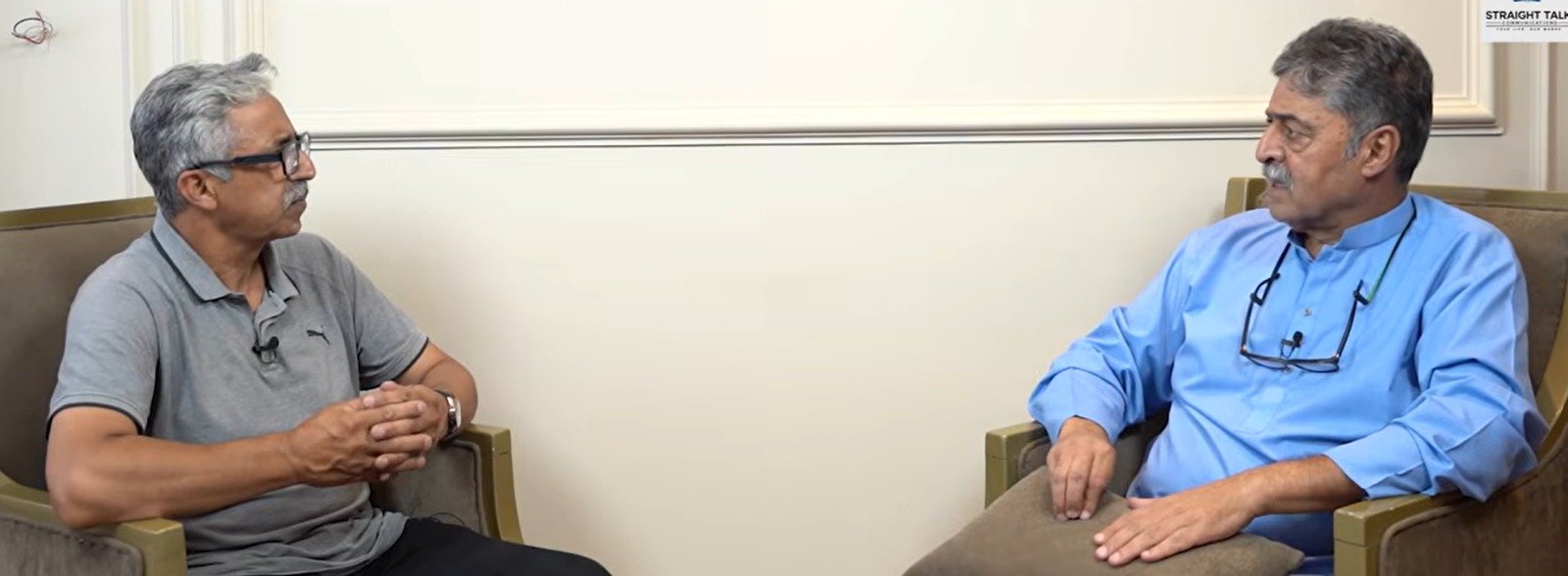
This is what Bilal Gani Lone (BGL), who made an ideological transition from separatism to mainstream politics, stated in an exclusive interview with TIMES LINK EDITOR Sajjad Bazaz (SB). He was candid in admitting the mistakes committed by separatist cadres, of which he was an important part, that destroyed Kashmir during the three decades of separatism.
Here are the excerpts of the conversation:
SB: You have been in politics for almost 25 years. You started your political career with separatist politics, and now you are moving towards the mainstream. How do you view the current political scenario?
BGL: I started my political journey in 2002 after the brutal assassination of my father. So, the scenario in 2002 was very different from today’s scenario. It was different then, and it is different today.
We made mistakes, and the system back then was also very brutal, so it is a mix and match.
As you can see, today’s politics is post-5th August 2019. Things have changed massively in Kashmir. When you analyse it, there is silence on the surface. Even if someone is angry, that anger is suppressed inside. Under these circumstances, when it comes to political thought and political activities, there is always a gap and a distinct difference in the freedom to speak.
There is an absolute difference. But when you look back at 2002, those were tougher times from both sides. From the extremist perspective within our ranks, they were stepping up, and at the same time, the state machinery was also operating intensely. So, if you analyse it, it is a 50-50 situation.
It was a challenging period then, and it is a challenging period today. But today, there is a difference: today, the command originates from here [the Union/State], whereas at that time, the command came from somewhere else. That is the main difference. Back then, we had a dual command and a dual system. One side exerted pressure from over there, then there was pressure from Delhi, and we were stuck in between.
Furthermore, regarding Kashmir as a society: from 2002 to 2019, all of us boarded the same bus. At that time, no one could see beyond it. Then, on 5th August 2019, we boarded another bus. Somewhere, as the permanent residents [state subjects] of this place, we ought to have introspected about Kashmir on our own – what had happened, what needed to be done, and how to move forward.
SB: Are you blaming the common Kashmiri?
BGL: Sir, I am not playing the blame game here. A nation gets the leadership it reflects, as the nation is, so is its leadership. You should not expect to import a leadership tailored for the people from outside. The nation is formed like this.
And let me add to your point: yes, the leadership at that time failed somewhere. They failed in the sense that, rather than making their own firm decisions and guiding the people on what to do, they simply listened to what was being dictated to them and moved forward with whatever was said. That is where they failed, and I agree with you on that.
However, when we talk about national issues, these are broader societal matters. You will find all cross-sections represented in a nation – doctors, engineers, journalists, politicians, and businessmen sitting together. In my opinion, to think that this entire failure lies solely with the leadership while keeping the nation out of it is incorrect. The leadership had its faults, but you cannot keep the nation detached from this outcome.
I have memories from 2002 as I moved forward. Back then, as you well know, there were floods of people on the roads. At that time, the policy of the Government of India was different; they allowed things to roll out as they were. Governments have their own policies and understanding. But we, as a nation, should have understood that we shouldn’t rush or burden our leadership recklessly. That was the reality of our time.
SB: You are saying that leadership reflects the nation. Didn’t you have this thought when you were in the Hurriyat and dominating separatist politics? At that time, you stated in front of many people that this is a dispute between India and Pakistan.
BGL: Look, whether they call it an ‘issue’ or a ‘dispute’, it is for India and Pakistan to decide. I am saying this carefully: we are caught in this. We represent Kashmir, but we are up against far bigger powers. I will speak for myself: I should not harbour the delusion that I am larger than India and Pakistan. We are a small society, and I should know my place and speak within my limitations.
Let me step back a little. Over these 30 years, people spoke so grandly, yet everybody faltered. Let us not point fingers at specific individuals. Our national issues are such that people simply resort to abusing the leadership. I am not talking about myself here; abusing the leadership achieves nothing. People outside laugh at us and make fun of us, saying, “Look at this nation.”
Despite all this, I believe we have lost over 100,000 lives, and our own home has been severely affected. Whether those 100,000 people were on the right path or the wrong path, we must keep one thing in mind: they lost their lives, and they are in their graves now. Meanwhile, others have become accustomed to sitting comfortably at home while nurturingradicalism, ruining the environment without their own homes ever being touched.
Therefore, we need to understand things from a broader perspective. There has been a tremendous amount of bloodshed in Kashmir. I think we have sacrificed enough; there is no need to give any more lives. Non-violence is the best path forward for us. Even if we have to demand our rights, we must pursue a non-violent path. The gun has given us nothing except destruction. This is my personal conviction; I am not speaking on behalf of anyone else.
Violence has destroyed our generation. And if you ask me why I didn’t speak up like this back then: the way I am speaking to you today is the exact same way I thought back then. However, I was in a minority, and a minority often has to yield to the majority. But I have spent my life in this movement. If you meet people who were with me during those times, they will confirm that I held these exact same views. I am not trying to project myself as someone morally superior. I said the same thing then, and I am saying the same thing today. May Allah ensure that the sacrifices made so far do not lead to any more graves.
SB: You have seen the Hurriyat system very closely. There were two factions: one led by the late Syed Ali Shah Geelani, and the other led by Mirwaiz Umar Farooq. These two factions formed the Hurriyat. You mentioned things were going wrong and that you were in the minority. Can you explain that era, where did people make mistakes, and where were they misled?
BGL: Look, I do not want to engage in a blame game. My stance is simply that we should have advocated our cause in a non-violent manner.
Regarding Geelani Sahib’s Hurriyat faction and our faction, there was an explicit ideological difference. They held an extremist point of view, whereas our faction held a moderate point of view. But at that time, street power was so overwhelming that extremist elements became dominant. You witnessed that yourself. During times of mobocracy, intellect dictates that one should step aside.
When you analyse that period, extremist elements were dominant and controlled matters in their own way. There was street power and street violence, and the conditions were entirely different from what you see today. At that time, the government of the day allowed things to proceed as they did, because governments know how and when to assert control. The fundamental issue was this underlying ideological tension.
Now, Geelani Sahib is no longer with us. In my view, there is no point in debating things concerning people who are no longer in this world. However, for the sake of future generations and for people to understand history correctly: yes, there was a deep ideological difference between the two Hurriyat factions, and a major loss was incurred due to the decisions made.
SB: You mentioned that the government allowed things to happen during that period, but after 2019, the central government intervened forcefully. This shift came with the change of leadership at the Centre. Modi’s government came in, whereas before that, it was the UPA government led by Congress. Do you mean the previous government was lenient, whereas this government took control and remained strict?
BGL: It is not a question of leniency. That was simply the operational process and governance system of that government. They did not grant us freedom or independence, but they allowed the situation to play out. In the process of governance, I felt that the government’s approach was distinctly different then.
SB: Do you think the current government at the Centre is better in that regard? Because post-2019, at the ground level, street violence, civilian casualties, and stone-pelting have stopped. There is a peaceful atmosphere, and people can venture out at night, which was impossible back then.
BGL:States and countries across the world adopt similar procedures when handling such scenarios. I agree with you that street violence has ended, which is very good for us. We can walk freely at night, which is also very good for us. Secondly, whether one likes it or not, civilian killings have reduced to a negligible level.
However, the BJP has its own distinct political temperament. The BJP is a massive political party in India, without a doubt. If you ask me, I disagree with them on many fronts. I am not larger than them, but I am entitled to hold a different opinion. When you analyse their approach, they often operate with a heavy hand in Kashmir.
While they have managed the security situation here, it isn’t just about bringing down violence – they also leverage their tough stance on Kashmir to consolidate votes in other parts of the country. Furthermore, given that Jammu & Kashmir is a Muslim-majority region, I believe certain policies of the BJP lean anti-Muslim, and I disagree with them on that basis.
SB: You mentioned earlier that people here are quiet, that while it seems peaceful on the surface, people have suppressed their anger. Can you elaborate on this?
BGL: What I mean is that people have gradually come to a realisation. Even if they dislike the current setup, they recognise that they have no other viable option. Kashmir has now experienced the full weight of state power.
When I look at it from a broader perspective, understanding state power is actually beneficial for us as a society. We must understand what a state truly is and what its power entails. In that sense, it serves as a reality check for you, for me, for my children, and for everyone.
To give you an example: back then, I saw many government employees who worked their official duties during the day, but in the evening, they engaged in distributing extremist literature, promoting radical viewpoints, and writing abusive posts on Facebook. They took government salaries from 10 AM to 4 PM and then acted differently in the evening. You have to choose one path clearly. If someone genuinely wanted to wage a war back then, they can still do it today, but true ideology doesn’t come from sitting comfortably at home behind a laptop or posting on social media. Abusing leaders on the internet achieves nothing; it only exposes one’s own character.
That is why I am giving you this perspective: conditions then were different, and conditions today are different. People have now understood what state power really means, and understanding this clears away many misunderstandings. My generation, as well as my son’s generation, must realise the mistakes our elders made so they do not fall into the same trap. These young people should live to support their parents as they grow old.
Of course, life and death are ultimately in the hands of Allah. But the children of common Kashmiris have suffered immensely. If someone still believes in taking an extreme path, let them send their own children first. Society as a whole must realise that enough is enough, too much has already happened.
We must consider where this new generation is headed. Since 5th August 2019, J&K was downgraded from a full-fledged State to a Union Territory, leaving youth aged 25 to 35 uncertain about who holds ownership over their future. Their future looks bleak. While unemployment and economic challenges exist globally, we are a very small region and must proactively figure out viable solutions for our youth.
My primary desire is for this new generation to live with dignity, stability, and self-respect. That is why I emphasise how fundamentally things have changed.
SB: After 5th August 2019, you stepped away from the separatist cadre and transitioned into mainstream politics. Tell us about this shift. When did you realise that enough was enough, and that you should enter the mainstream? What challenges did you face in making this ideological transition from separatism to mainstream politics? You must have faced internal debates with yourself.
BGL: Let me answer this in detail. First of all, I had the option to sit quietly at home, that option is always available. But I feel I owe something back to my people. Having witnessed that entire era firsthand, it is my duty to come forward and explain the reality of these problems to them.
I am not going to force anyone to agree with me, but it is my moral and religious duty to share my experiences and warn the youth: “Do not go down that destructive path.” After that, the choice is theirs.
Stepping back into complete escapism would be wrong. I am not doing this out of a desire to secure an electoral seat tomorrow. Rather, I have a wealth of experience to share with the younger generation. Even if a few individuals learn from it and avoid making fatal mistakes, I will feel satisfied that I fulfilled my responsibility.
Furthermore, even in official Hurriyat meetings in the past, I stated on record that we should not shy away from the democratic process. Back then, critics accused us of acting at the behest of external agencies. But what agency was involved? This entire situation is a high-stakes conflict between big nations – India and Pakistan – and ordinary Kashmiris were merely used as pawns. Realistically, what can a pawn do on its own?
Kashmiris often suffer from the misconception that we are central to the universe. We are just a small part of the global map, and when you look at the larger picture, even India and Pakistan occupy specific geopolitical spaces. I have overcome those illusions, even if others in the separatist movement refused to acknowledge them.Politics is ultimately politics – I do not draw rigid linesseparating ‘separatism’ from ‘mainstream’ politics. These definitions need to be re-evaluated. The political space that was passive yesterday is active today. Working for the welfare of the people is a form of service.
SB: How would you define the Kashmir issue for the younger generation so they are not misled in the future?
BGL: It is a simple principle: first, they must focus on their education and read history objectively.
This is fundamentally an issue between India and Pakistan. Whether it is classified as a political dispute or a bilateral issue, it is for those two nations to resolve. Our generation had no actual control over the core geopolitical levers, nor will future generations.
The youth must not be misled by rhetoric. Concepts like absolute separation or unilateral freedom are detached from ground realities. Anyone preaching battle must face the battlefield themselves, rather than making grand declarations from the safety of home.
Kashmiris extended maximum emotional and physical support to the cause over the decades, yet the end result was the restructuring on 5th August 2019. That demonstrated the absolute power of the Indian state. We must accept ground realities; my generation must convey to the current generation that reconciliation is necessary. If we do not reconcile with reality, no one else is going to save us. The state operates without sentiment.
There is a major difference between mere intellect and true wisdom. My generation needs to act with wisdom. Having raw knowledge is not enough unless you possess the wisdom to apply it practically. Intellect is powerful, but without practical wisdom, it becomes meaningless.
SB: As a separatist politician, you visited Pakistan multiple times and met high-level delegations. There were also dialogue processes between separatists and the Central Government of India. Tell us about those interactions—what were those talks really about? You now state that this issue is primarily between India and Pakistan, whereas the Hurriyat’s traditional stance was that Kashmiris are the primary party, requiring tripartite rather than bilateral talks. You also visited Pakistan, and your father was notably part of the era around the Agra Summit. What was that experience like?
BGL: I want to convey the ground reality to the younger generation. I have visited Pakistan two or three times. First of all, if anyone believes visiting Pakistan was inherently illegal or a sin, that is incorrect. We travelled with proper official clearance from India. May Allah grant peace to Prof. Abdul Gani Bhat Sahib, who used to say humorously, “We are traveling to Pakistan through India.”
Pakistan is a culturally warm place with hospitable people. From those visits, I realised that Kashmir is ultimately a complex geopolitical issue between India and Pakistan, rather than something Kashmiris can resolve independently. I met President Pervez Musharraf twice. Deep down, even if Pakistan maintained a tough official posture, Musharraf recognised that Kashmiris needed a dignified exit route from this ongoing conflict, and we were receptive to that approach. However, his internal political and administrative system did not fully support his vision. When we walked out of high-level meetings, second-line officials and hardliners would privately say, “Let the conflict continue as it is; there should be no compromise.”
So, our youth must understand this reality with wisdom. Pakistan is an independent sovereign country looking out for its own interests. As a Kashmiri, I had to understand how the system in Pakistan operated and engage with them accordingly, rather than acting on false assumptions.
When Musharraf proposed his Four-Point Formula: opening borders, facilitating soft movement, freezing territorial claims, and promoting self-governance, he tried to convince us to support and promote it. We made genuine efforts to push that process forward, though many people have forgotten those details today. Musharraf held a practical view, but India, as a major power, maintains a strict stance that it will not tolerate external interference in its sovereign affairs.
Kashmiris must break free from outdated mindsets. I have personally shed my past misconceptions, and the new generation must avoid falling victim to illusions that lead to further loss of life.
SB: You mentioned that Musharraf was candid about providing Kashmiris an exit route, but his broader administration insisted on maintaining a hardline stance. On the other hand, you also led/joined Hurriyat delegations that held talks with the Central Government of India – meeting leaders like Atal Bihari Vajpayee, L.K. Advani, and P. Chidambaram. How was their attitude towards these discussions?
BGL: The fundamental obstacle where Kashmiris always got stuck was the deep mistrust between India and Pakistan. Between two sovereign nations with a history of conflict, an element of mistrust naturally exists. As long as cross-border hostility did not cease completely, genuine trust could not be built.
Dialogue cannot remain a one-way street. Kashmiris need to step out of the illusion that we can outsmart complex geopolitical systems; we must navigate these realities with practical wisdom.
Regarding the historical summits: during the 2001 Agra Summit, Musharraf visited India to hold talks with Prime Minister Vajpayee, Deputy PM L.K. Advani, and External Affairs Minister Jaswant Singh. There were internal differences within setups, and hardline extremist elements outside also played a role in derailing the peace process. I recall discussions at the time that derailing those talks was a major setback; it would have been far better if the dialogue had succeeded. Once derailed, the momentum was lost.
When our Hurriyat delegation which included Mirwaiz Umar Farooq Sahib, Prof. Abdul Gani Bhat Sahib, Moulana Abbas Ansari Sahib, Fazal Haq Qureshi Sahib, and myself engaged with the Centre in Delhi, both sides had expectations. However, our biggest limitation was our inability to enforce firm decisions independently on the ground.
SB: Because you did not have control over the armed militants?
BGL: It was not just about the gunmen. It was a combination of armed militants, extremist elements, and active conflict dynamics all layered together. It was extremely complex.
When people analyse Kashmir, they often only see the armed combatants. But in Kashmiri society, there were also “typewriter intellectuals” and white-collar individuals sitting comfortably at home operating laptops. These white-collar figures did not pull a trigger themselves, but they incited and directed others toward destruction. A lot of such individuals existed in Kashmir, and today many of them are sitting quietly.
I remember a seminar around 2008 held at a local hotel where Mirwaiz Sahib was invited, though Geelani Sahib did not attend. Mirwaiz Sahib made a statement that was widely reported in the media at the time, noting that “freedom in an absolute sense is an unrealistic goal, and the time has come for honourable compromises within realistic parameters.”
SB: Yes, I remember that statement from Mirwaiz Sahib in 2008. But after that, that line of thought seemed to fade away.
BGL: Mirwaiz Sahib has his own political responsibilities and perspective. Having worked alongside him for 24 years, I have learned a great deal from him, and I believe he remains a very important and sensible voice for the Kashmiri people.
SB: After stepping away from separatist politics, do you feel a sense of relief and personal peace?
BGL: I found peace because I chose not to lie anymore. I do not claim to be an extraordinarily pious person, but I stopped speaking untruths. I find peace in being able to speak honestly with my people and engage with my constituency. Strictly speaking, that political constituency was originally built by my late father [Abdul Gani Lone].
And yes, I am not positioned against anyone. I intend to play my own constructive role. If people choose to support me, I will serve them; there is no hostility.
My primary goal was to help guide my people out of a cycle of destruction. Even if some choose not to listen, I am relieved of the personal moral burden because I spoke the truth. Within separatist politics, we had opportunities to steer things toward peace and save lives, but we failed to capitalise on them. I regret that deeply. Trying to secure peace was worth every effort, even if success wasn’t guaranteed.
Look at Kashmir’s current socio-economic layout: roughly 70 to 75% of the population belongs to the working and middle class, about 20% represent the business elite, and 10% represent the political elite. Where does that 70% working class go?
Certain sections of the business elite in Kashmir have historically manipulated systems purely for their own advantage, securing permissions, policies, and access regardless of which government was in power, whether BJP, NC, or PDP, while the general public remained sidelined. When political leaders offer basic governance as special favours (“Murad”), ordinary citizens are hesitant to demand them simply as their fundamental rights.
I want to intervene constructively by visiting villages, creating civic awareness, and helping the younger generation understand these dynamics. That is the best tribute I can pay to my society. No external authority forced me to abandon my past political stance, whatever decision I took was based on my own independent thinking, without pressure from anyone.
SB: As you focus on public welfare measures after exiting separatist politics, there remains the issue of legal cases and detentions. Thousands of people have faced cases under laws like the Unlawful Activities Prevention Act (UAPA) or are currently detained. How do you view this situation?
BGL:That reflects the full exercise of state power. Central authority can enforce its legal framework firmly, and this dynamic is not unique to Kashmir, it occurs across various conflict zones globally.
While I do not hold an official executive position, my consistent view is that individuals facing minor or unsubstantiated cases should not remain incarcerated. There are instances where individuals become unintended victims of circumstances.
Furthermore, state policy should avoid collateral harassment of families. Punishing family members or relatives for the actions of an individual is unjust; collective punishment should never be applied. If an individual has committed a specific legal offense, the law should take its due course transparently and with proper justification. Ground-level actions must always be legal, proportioned, and clearly justified under the law.
SB: What do you think about statehood and the restoration of Article 370 and Article 35A? What is your take on this?
BGL: Personally, I think it should be restored. But the big question is: will they actually do it? I don’t think the present dispensation in Delhi will restore it. This is my personal opinion—I am not speaking on anyone else’s behalf, just on my own. For the government in Delhi, it is a clear-cut, closed chapter. I think for them, everything has been cleared and settled.
As far as restoration of statehood is concerned, in a way, the BJP is also part of ruling J&K because power is divided half-and-half between the elected government and the Centre. From their perspective, this arrangement is going well, even though it creates confusion and problems for the common man. But as long as it functions smoothly for the Centre, they are content with it.
>>>>>>>>>>>>>>>
Use Different Places
QUOTES
I met President Pervez Musharraf twice. Deep down, even if Pakistan maintained a tough official posture, Musharraf recognised that Kashmiris needed a dignified exit route from this ongoing conflict, and we were receptive to that approach. However, his internal political and administrative system did not fully support his vision. When we walked out of high-level meetings, second-line officials and hardliners would privately say, “Let the conflict continue as it is; there should be no compromise.”
State policy should avoid collateral harassment of families. Punishing family members or relatives for the actions of an individual is unjust; collective punishment should never be applied. If an individual has committed a specific legal offense, the law should take its due course transparently and with proper justification. Ground-level actions must always be legal, proportioned, and clearly justified under the law.
No external authority forced me to abandon my past political stance, whatever decision I took was based on my own independent thinking, without pressure from anyone.