

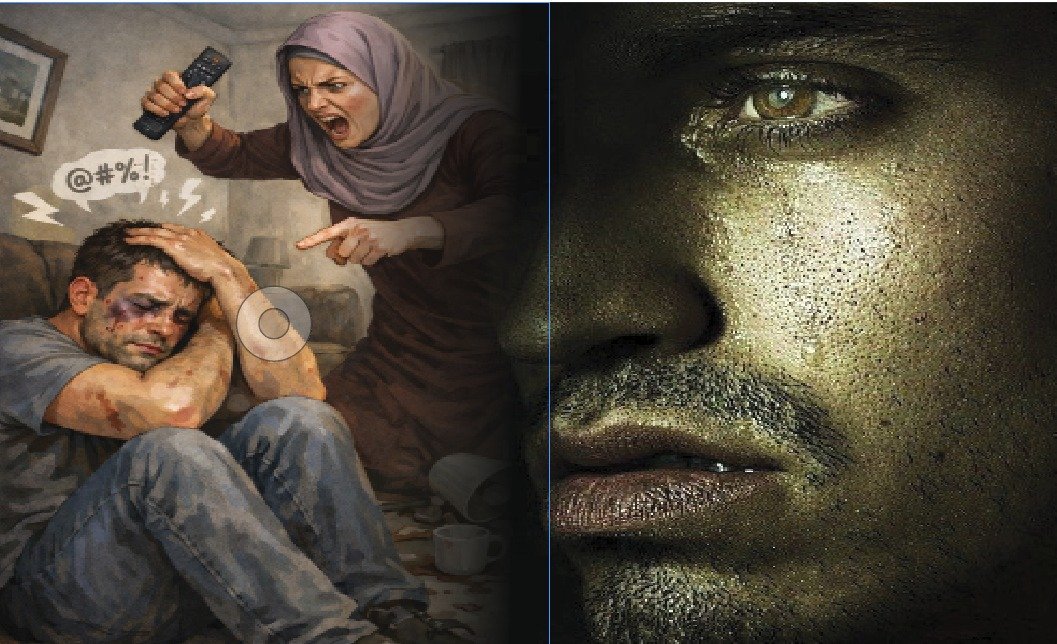
Domestic violence remains a human issue before it is a gendered one. Addressing it fully means acknowledging every victim behind closed doors—including the many men who continue to carry their pain alone.
Peerzada Masarat Shah
Marriages are decided in heaven and performed on earth. This is what I have heard from our elders and when it fails, we say the Will of God and accept it as our fate. Apart from this point of view another dimension is people in the age of 30 have become intolerant and have set up expectations from each other, without taking approval from each other. A huge load of expectations mars the husband-wife relationship, as both succumb to the pressures of society.
Domestic violence is often discussed through a single lens, one that assumes suffering within homes affects women alone. While women continue to face serious and systemic abuse and deserve strong legal protection, this narrow framing has left another reality largely invisible: men in Kashmir who experience domestic abuse but suffer in silence.
From an early age, Kashmiri boys—like many elsewhere—are taught endurance over expression. Emotional restraint is praised, vulnerability discouraged, and silence equated with strength. These expectations follow men into adulthood and shape how they respond to harm within their own homes. When abuse appears, many men hesitate to speak, fearing ridicule, disbelief, or the loss of dignity.
Domestic abuse against men does not always involve visible violence. It often takes quieter forms – constant humiliation, emotional manipulation, financial control, threats, isolation, false accusations, or restricted access to children. These experiences slowly erode confidence and mental stability. Anxiety becomes routine, sleep is disturbed, and a sense of worth diminishes. The home, meant to provide safety, becomes a source of distress.
When men attempt to share their experiences, they frequently encounter scepticism or uncomfortable silence. The idea that men cannot be victims remains deeply rooted. As a result, many retreat further inward, carrying emotional wounds that remain unseen and untreated. Over time, this isolation takes a serious toll.
Recent data from Jammu and Kashmir indicates a sharp rise in reported domestic violence cases during 2024–25. However, these figures largely reflect women’s complaints, as reporting systems and support centres are primarily designed for female victims. Mental health professionals and social workers in Kashmir note that men facing similar harm rarely come forward, not because abuse is absent, but because support structures and social acceptance are limited.
Official data from Jammu and Kashmir shows a sharp increase in reported domestic violence cases during 2024–25, with the government recording 1,979 complaints in 2024–25, up from 893 cases in 2023–24—a rise of more than 121% in a single year.
These figures were presented in the Legislative Assembly and are drawn primarily from ‘One Stop Centres’ (Sakhi Centres) and the Mission Shakti dashboard, which are government-run mechanisms designed to support survivors of domestic abuse. Officials say the rise reflects greater awareness, improved access to helplines, and increased willingness among women to report abuse, rather than a sudden spike in violence alone.
This silence has broader consequences. Across India, men account for a significant proportion of suicide cases, many linked to marital stress, emotional abuse, and prolonged legal pressure. Psychologists in the Valley observe similar patterns, where unresolved domestic conflict and emotional neglect push men toward breaking points. Comparable studies from other regions show that a substantial number of married men experience some form of domestic abuse, suggesting a wider social pattern rather than isolated cases.
Acknowledging male victims does not undermine protections for women. On the contrary, it strengthens the idea of justice. Domestic violence is not rooted in gender alone—it is rooted in power, control, and harm. A fair society recognises suffering wherever it exists.
Addressing this issue requires expanding conversations and support systems. Counselling services, mental health resources, and awareness programmes should be inclusive. Education must challenge harmful stereotypes that equate masculinity with silence. Families and communities play a crucial role by listening without judgment and responding with empathy rather than dismissal.
Men experience fear, pain, and emotional trauma as deeply as anyone else. Expecting them to endure quietly places an unfair burden on them and deepens social harm. Healing begins with recognition, and change begins with listening.
Domestic violence remains a human issue before it is a gendered one. Addressing it fully means acknowledging every victim behind closed doors—including the many men in Kashmir who continue to carry their pain alone.
In recent times men have become victims of domestic violence more as Judiciary empowers women to fight for their rights and in the process some greedy women use it as a tool to extract money from the husband. The 498-A was as draconian as any other law for terrorists and no bail was granted to boy and his family, but now there has been few changes and boy can apply for anticipatory bail and take legal advice before he is arrested. It has been observed that girls use all kinds of tactics to malign him at the workplace, on social media and in society. No lawyer in this world can save you from these tactics of an estranged wife. Today’s woman who is financially independent and has freedom of moving around and working in offices spews venom when she is not able to adjust at her in-laws place and the soft target is the poor husband.