

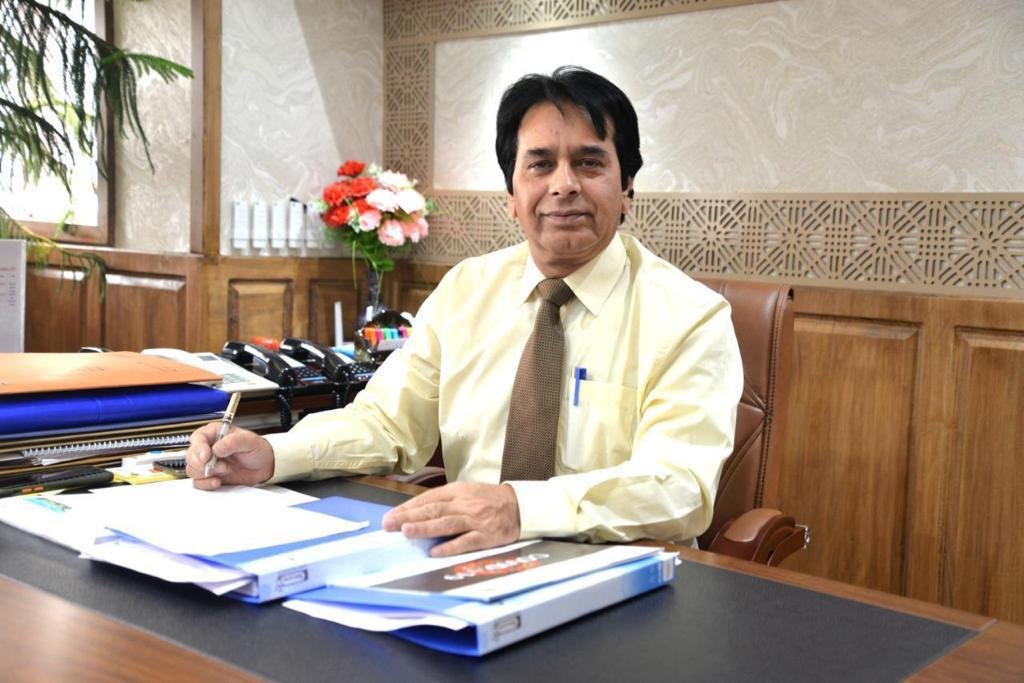
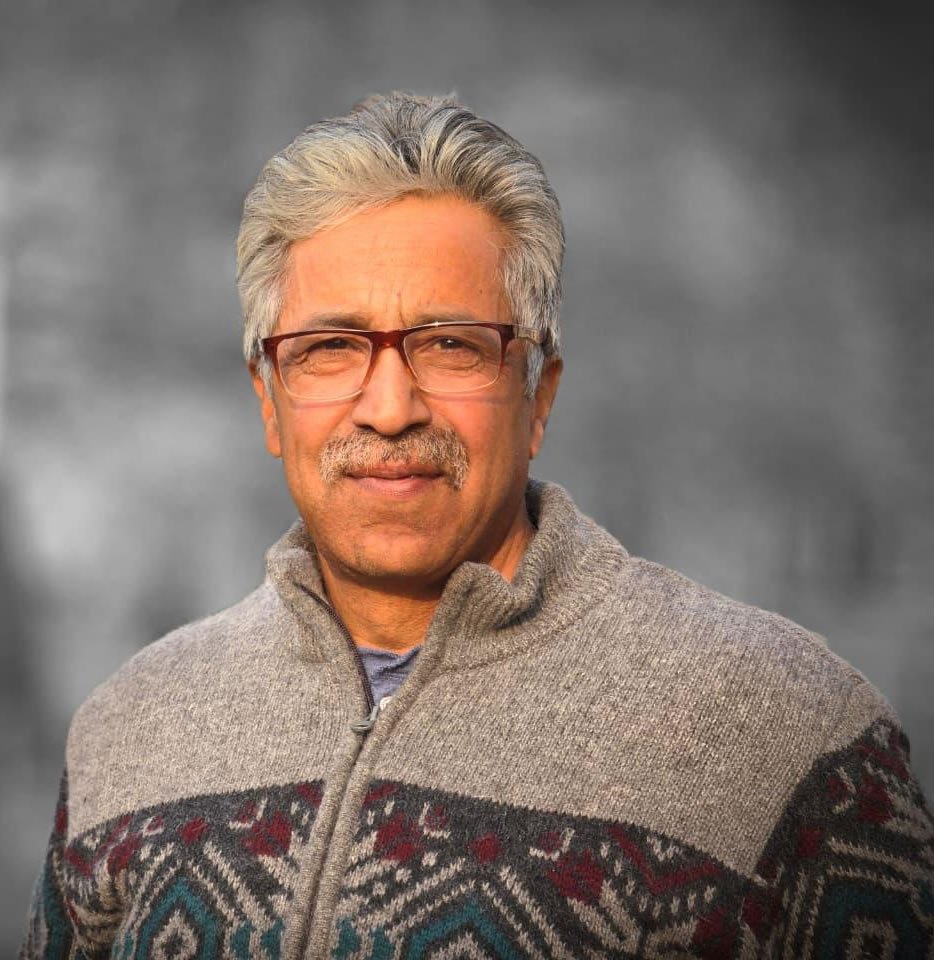
Sajjad Bazaz
The mid 20th century was a watershed period reckoned with the dawn of transformational scenarios in the subcontinent of South Asia, particularly around India, Pakistan, Bangladesh etc. It was a time when the scientific world was driving humanity to a better future through various inventions, discoveries and technological advances, but the dark side of nuclear technology devastated Japan. From the advent of electricity to electromagnetic devices, aviation industry, medicine and industrial revolution some great people were born during this period who contributed immensely in making the world a better place than it was erstwhile.
Amid this transformative scenario a poverty-ridden blacksmith family welcomed a new-born baby boy. This boy was affectionately called Gana’ah, a typical Kashmiri style of short name carved out of his full name – Abdul Gani Ahangar. His parents could hardly afford to have two meals. However, despite the hardships, ‘Gana’ah’ grew up with a naturally-infused determination to acquire knowledge as much and from every corner and the limited support available.

This blacksmith boy transformed himself fromGana’ah to Dr. A.G. Ahangar through his sheer hard work and appetite to achieve not only his goal, but also mark himself as a distinguished professional in the field of his medical profession.
The journey of this poor village boy is one among the most inspiring stories that happened in the mid-twentieth century, who made (and continues to make) immense contribution to humanity in his capacity as “Second God”.
The Primary Life

Dr. Ahangar while feeling nostalgic about his childhood memories narrates a leaf from his past: “My father, a blacksmith, would help the local community in the village where I was born. Agriculturists/ farmers would seek his service in making and repairing their agricultural tools/implements. The most striking thing about my father that would always remain in my mind was his hard work, dedication and most of all his highest integrity in his profession while not only helping the family that he was working for, but all other people in the vicinity – be it neighbours, friends or acquaintances in our native village and adjacent villages. All these qualities had made him an outstanding, honest, hardworking and dedicated blacksmith. Our income was meagre and our survival was equally dependent on a loan from the industries department of the Government of Jammu and Kashmir, which I had to repay later on. The first thing after I became a doctor was to repay the loan. I used my internship stipend for liquidating this loan. We had no agricultural land and were very poor and landless labourers.”
Ahangar would always help his father while helping him during his work at his shop and acquired all the skills that his father had as a skilled blacksmith. Even his two younger brothers and sister would also help their father to whatever possible extent to sustain the family’s livelihood. It was only after pre medical studies that he had to stop helping his father at his shop. Though on weekends or vacations he would attend customers at the shop as much as possible.

However, family members and teachers who contributed to his being a hardworking student advised him to focus on his studies as he was made to pursue studies in medical subjects at secondary school level. In fact, his teachers were giving special attention to him as they found him to be a brilliant mind in his studies and a ‘sure-shot’ to become a doctor if guided properly.
Job offers not availed
With an offer of an opportunity in the Indian Posts and Telegraph department and as a teacher after passing his matriculation examination, he didn’t join. But continued his education to strive for better. Dr. Ahangar revealed he had applied in the Indian Posts and Education department because there was uncertainty in his career-building owing to the unstable financial position of his family. He says: “I never knew I would become a doctor. It was my desperation to help my poor family. It is notable that there was no pressure from my family to take up a job, despite having acute financial constraints at home. The parents, friends and relatives advised me against going for a job and encouraged me to go for further studies.”

Actually, he was lucky to be blessed with the support of his teachers who taught him at the primary level at the government central school, Midroo. These teachers not only proved mentors to him, but they acted as his god fathers. They would not only teach him with conventional knowledge, but would also shower their love and affection and support him financially. This love and affection was out of sheer dedication and diligence of this blacksmith boy towards his studies, despite living a hard life for want of basic necessities. The teaching faculty constituted a mix of Muslims and non Muslims.

Teachers’ unconditional support
Moti Lal was one of the teachers posted in his school, living in an adjoining village, Laeryar. He had rented a room adjacent to the school. He was academically highly impressed with the blacksmith boy and would often serve him with food and would also occasionally fund him to meet education expenses. A Sardar teacher from adjoining Gamraz village was also hand holding him in his studies. The headmaster of the school, Ghulam Ahmad Shah, would go to any extent to help him financially. He would often get books, uniforms and other essentials for him to ensure he maintains focus on his studies consistently without any hindrance. His hard work and unmatched grasping power of lessons was highly impressive and the teachers would always feel delighted to have Gana’ah as their student and this reputation among the teachers earned him the status of a leader of the whole school. To be precise, this blacksmith boy emerged as the face of the school.

Notably, the teachers would occasionally engage him to conduct teaching classes and deliver lessons to his fellow classmates. This was something special confidence-boosting measure which proved a game changer in his future endeavours and career-building. Within no time, there was a buzz about Gana’ah not only in his village, but also in adjoining villages for being a meritorious student in the school. It was a routine in the village now that many students of the village would come to his home after school hours to take lessons from him. He was glad to impart lessons to his fellow students at his home and he capitalised on the opportunity to gain more stimulus, spark and steam to review his own performance, identify his weak areas and learn from the mistakes.

Leaning on Father’s Back
Dr. Ahangar is nostalgic about some turning points in his career-building. He narrates his early life in his own words as: “My seventh class examination in a different school at Noorpora Tral, 8 kms from my village Midroo, was something that I would never forget. During the examination which was a landmark in my career, I happened to be very ill, febrile with a boil in my right hand that I was very sick to the extent that I couldn’t stand up or walk. My father would carry me on his shoulders alternatively in his lap all along this distance from my village to another village so that I could sit in the examinations. And the harsh experience of being very sick, unable to move and even unable to write as I was having boil on the very right hand and yet facing the landmark examination with my father carrying me all through despite all the odds was a strong stimulus for me to study with more dedication and strive for the best. I still remember this harsh period vividly, how difficult it was for my father carrying me for a distance of 8 kms during the examinations. Despite being so sick and ill, I could barely see, not to speak of preparing for examinations. However, God was kind enough to sail me through with better merit amongst all the students.”

The Jagdesh Factor
Jagdesh Singh was a well built and handsome personality and was teaching English and Science in Noorpora High School.
Midroo’s tenure of Gana’ah ended with flying colours after he passed out from the 7th grade. For further studies he had to move out of his village for secondary level studies. He got admission in Noorpora High School, where the reputed teacher of the school, Jagdesh Singh, spotted his sharp mind while supervising the entrance examination for admission to 8th class. On the first day of the new class, 8th class, Gana’ah grouped himself with the students who had chosen Arts subjects to pursue further studies. Jagdesh Singh forced him to be in the medical group, despite having no interest in medical subjects.

Visualising his lack of interest in medical subjects, Jagdesh Singh asked him why he was reluctant to go for medical stream. He narrated his lack of ability to pursue medical subjects and also told him that being poor he would not be able to purchase books. Jagdesh Singh could see him in the grip of fear psychosis and did his best to remove his fear as he had fervent belief that this child had all the abilities to pursue his future education in medical subjects.

Jagdesh Singh after testing the grasping and understanding power of Gana’ah, strictly directed him to be regular in the Science class. This direction proved a turning point in his career .The best thing happened that Jagdesh Singh was totally focussed on him and would usually take him home for imparting important Science lessons after the school hours. He even made him a class monitor which helped him to remain focussed on his studies.
With the support of Jagdesh Singh he landed at the prestigious S.P. College, Srinagar, for his pre university and pre-medical education that ultimately drove him to being a doctor as he got selected for MBBS course at Government Medical College, Srinagar at a period of time that was changing the scenario of the sub-continent post 1971 Indo-Pak conflict.
The MBBS Tale

Ahangar’s entry into the Government Medical College, Srinagar is loaded with its own history. There were no MBBS admissions in the college for four years from 1971 to 1974. It was after this four year gap that a batch of 75 students was selected in 1975 for an MBBS course in the college. More than 33000 candidates had appeared in the written entrance examination. Those students who qualified the examination were then subjected to an interview to select the final batch of 75 students. It was for the first time that the entrance examination was introduced to screen the candidates for admission in MBBS courses in Jammu and Kashmir. The interview of the students was conducted in the erstwhile State Assembly complex by the then Deputy Chief Minister along with two cabinet ministers, Devi Das Thakur and Sonam Narbu. Both these cabinet ministers were ambassadors of the government of India and were brought back to the State by none other than Sheikh Abdullah.
Ahangar qualified the entrance examination and interview without receiving any private coaching . He had no finances to purchase books and travelled from his village to Srinagar barefooted. He stood 5th in merit among the 75 students selected for the medical course.

With the dream of becoming a doctor from nowhere, this blacksmith boy put his blood and sweat to the handwork and struggled to secure the best possible merit for the hard toil of his parents to fulfil their aspirations too, besides his own ambition of becoming a doctor and leading a better life. This struggle and transformation from an ordinary school boy to a medical graduate highly impressed many people around his vicinity and the region to a great extent as he became a role model for all those who wanted to change and lead the change.
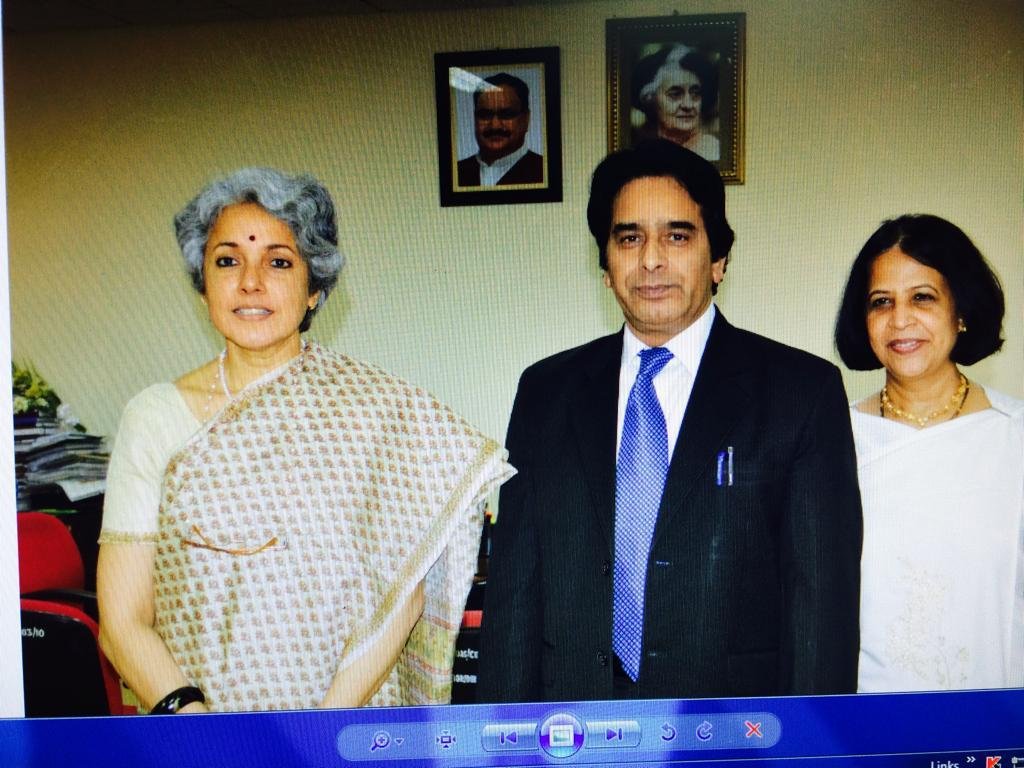
The hunger for total transformation and further knowledge and training drove this poor little boy to have a masters degree in surgical field from the very same medical college. But simultaneously he was restless for achieving the ultimate in his ambition for changing the hearts of the sick and moribund by way of doing open heart operations – a concept that was condemned in its early phase in 1930s when the authorities world over in surgical principles would advise against touching the heart, not to speak of conducting operation on the human heart. Theodor Billroth – the greatest of all surgeons at that point of time even advised that a person doing a surgical intervention of the heart should be condemned to death.

Dr. Ahangar says: “I would get fascinated to see an electric motor, be it in an automobile, in any electrical device or any domestic device and remember Michael Faraday. The best part of remembering him is that whenever I would do an open heart surgery as I had to take help of a heart lung machine for conducting the operation, I would remember Michael Faraday. The fundamental principles are based on the electromagnetic motor which in fact is a roller pump that takes blood of a patient during open heart surgery and pumps it after oxination in an artificial lung back to the human body. This contribution of Michael Faraday touched me at the peak of my career that made me an open heart surgeon. This in turn gave me my identity in the medical profession because of which I had the prayers and blessing of my patient population who ultimately led me to the final destination of being a medical administrator also. Inspite of the fact that I achieved the most in the medical profession possible under the circumstances leading different apex institutions in the country as the chief executive, I kept my heart connected being a cardiac surgeon. Today, I continue to conduct open heart surgeries using the heart lung machine where Michael Faraday stays in my mind and heart.”
Kidnapped along with family by militants
Ahangar was Out of sheer determination and will i crossed all these hurdles with inherent risks including threat to my life, that left my kidnapping along with my family members one evening It was in December 1995, 2nd day of holy month of Ramadhan, around 5 pm, when Dr. Ahangar along with his family was kidnapped in Noorpora village, His car was in which he was travelling was intercepted by unidentified gunman. He fired at his car which forced him to stop. “I was driving the car when militants fired upon the car to force me to stop. I had a scuffle with the gunman as I stepped out, grabbed the neck of the gunman, snatched his pistol and pointed at him. I choked him, simultaneously kicked and pushed him in the car. Precisely, I overpowered him. Immediately, a lot of people gathered around, some of whom had recognised me and it became a huge embarrassment for this gunman. Ultimately, some of the well wishers managed to drive me to some distant location, unidentified and unknown to me. I was asked to stop the car somewhere at an unidentified place where I had to desert my family in the car whom I asked not to come out of the car at any cost, unless I would come by myself. I was taken by these people to somewhere in a village where I was literally humiliated, harassed, abused and threatened by a group of 10-12 armed gunmen with different arms and ammunition brandishing. It was a torture for about one and a half hour in the confined room and all these gunmen marching right and left abusing, shouting and threatening. By then it happened to be Iftar time. Around 6 pm, the owner of this house where I had been holed up offered me a bit of oranges for breaking my fast that I refused. This gentleman apologised on behalf of the gunmen for their rudeness, misbehaviour and abusive language and their terror tactics. However, coincidentally I heard a lot of ladies outside crying outside and shouting – ‘we know this doctor. He is our life and we put our lives at stake for his safety. We will not hesitate in roasting all of you who live in this house.’ In the meanwhile, one young man crashed into the room along with his brother, smashing some of these gunmen right and left and shouting, ‘you scoundrels he is our brother. We will not let his hair be grazed, not to speak of anything else. We will all finish you now.’ One was my school batchmate and another was a colleague at SKIMS. Meantime, a group of ladies, young and old, barged into the room where I was kept. They thrashed the gunmen and helped me to get released from the militants’ captivity which lasted for over 4 hours. It was a close shave with death.”
BOX ITEM
A Telegram From God
It was evening time on Saturday, June 29, 1989, Dr. Ahangar was busy in attending his patients in Cardiovascular Thoracic Surgery (CVTS) ward at the Sher-i-Kashmir Institute of Medical Sciences (SKIMS) when a Khaki-clad postman while looking for him entered the ward. He handed over a telegram to him. For a moment, Dr. Ahangar was unnerved while receiving the telegram, fearing it as a communication about some untoward incident at his domestic front.
Of course, the telegram carried a message declaring an emergency situation for Dr. Ahangar, but not on his family front. It was carrying good news about his selection in MCH in Cardiac Surgery. The telegram stated: “You stand selected for MCH in Cardiac surgery at PGI Chandigarh, if you don’t join by 30th of June 5 PM I stand a chance. Kindly reply.”
The telegram left Dr. Ahangar clueless and frustrated on two counts: One, it was an unofficial telegram from some unknown person in PGI Chandigarh. Second, it was the most challenging, almost impossible job, to reach PGI Chandigarh as the last date of completing the admission formalities for the said course was 30th June by 5 P.M.
On Saturday, at 5 PM, attending his duties in the CVTS ward at SKIMS, he immediately rushed to the office of the then Head of Department (HoD), CVTS, Late Prof (Dr) Guroo. Since it was evening time, Dr. Guroo was almost ready to leave office for his ancestral village in Sopore town of North Kashmir. As a matter of routine, Dr. Guroo on weekends without fail would travel to his ancestral village to serve his people in the village neighborhood. Dr. Ahangar lost no time to show him the telegram and requested for grant of leave of absence for 2-3 days so that he could attend the PGI Chandigarh to complete the admission formalities.
Dr. Guroo was not convinced as the telegram didn’t bear the official stamp and signatures of the PGI authorities. However, Dr. Ahangar persuaded him to allow him to travel to PGI Chandigarh. Dr. Guroo advised him to see the Director and, being the competent authority, seek his permission for leaving the station. Complying with the instructions, Dr. Ahangar rushed to the then Directors Late Prof. (Dr.) Zahoor Ahmad Shah, who after listening to him, said, The telegram is unofficial. However, if you are so keen to visit the PGI and have this leave sanctioned we will have to go through your file, check your records and process it which cannot happen within a matter of a minute. It is likely to take time from an official processing point of view.
The Director’s response left Dr. Ahangar in desperation because the time was not on his side and questioning the authenticity of the telegram from an unknown person from the PGI Chandigarh was equally frustrating. This being the Saturday, 29th of June, it was not an option for him to wait for the conclusion of the official process for seeking sanction of leave along with station leaving permission. He didn’t even have the sufficient finances and other resources with him to manage his travel expenses.
After getting a discouraging response from the Director SKIMS, he immediately apprised his HoD Prof Guroo about the discussion with the Director. Prof Guroo out of his magnanimity took him along in his car, drove to Shiraz travels at Dalgate and personally, requested the travel agent for a ticket to Chandigarh in next morning flight. By the time they reached Shiraz Travels, it was already around 6 PM and by then they had closed down their office. They blankly refused for being not in a position to manage a ticket for his travel to Chandigarh next day. They left the Shiraz Travels office dejected.
However, Prof. Guroo gave him the station leaving permission on a typed letterhead from his home. Dr. Ahangar was determined to explore all possibilities to reach PGI Chandigarh. Next morning, Sunday (30th June), it was raining like hell and at 9 am he reached the Indian Airlines office at Dalgate to manage a ticket to fly to Chandigarh. Again a pall of gloom descended upon him as there was no flight scheduled to Chandigarh on that day from Srinagar. Instead there was a flight scheduled for Amritsar. For a moment, Dr. Ahangar faced a total blackout. He tried to hire a taxi to travel to Chandigarh by road. But his bad luck continued to haunt him as the national highway was blocked on that day owing to heavy landslides at many places.
Facing dejection after exploring every possibility of travelling to Chandigarh, he rushed to the airport to try to catch the flight to Amritsar. To his good luck he met one of his schoolmates who was a police inspector in airport security. Having heard his story, the inspector friend managed to stop this Amritsar flight by delaying it for some time and managed an open ticket at the airport which he converted to a confirmed travel document. With a delay of some 10 to 15 minutes in the flight, Dr. Ahangar was miraculously in the flight scheduled for Amritsar.
He reached Amritsar at around 1.30 PM and boarded a simple ordinary bus to Chandigarh. The trip to Chandigarh from Amritsar was another stressful period for him. Floods had caused extensive damage to roads at several places and many areas were water logged. Finally, he reached PGI Chandigarh by around 6 PM where he found offices closed down for the day. This left him again in a state of frustration. Roaming here and there in the PGI Campus, he found a very dear senior colleague Dr. Shabir Iqbal who was undergoing MCH in Plastic Surgery in the Institute. He was stunned to see Dr. Ahangar and took him to his hostel room. Dr. Shabir Iqbal after listening to his ordeal told him that the admissions in PGI stop on 30th June every year as a matter of calendar. And there was nothing on earth that could change it. From the discussion that prevailed, it transpired that he had no hope whatsoever, not to speak of a chance to get the admission.
With all the dejections and frustrations, he somehow tried to look for the in-charge of the admissions, the Registrar of the PGI Chandigarh, Dr. O P Sharda. The Registrar was known as a tough, but a man of principles with no deviation from the rules whatsoever.
After spending the night in restlessness, Dr. Ahangar, at around 9 A.M., rushed to the office of the Registrar and apprised him of the telegram and the trauma he had gone through while reaching Chandigarh. The Registrar gave him a patient hearing, but denied that any official telegram was sent to him from the Institute. He said: To make it very clear to you that admissions in PGI Chandigarh close by 5 PM on 30th June as a matter of principle every year, every time without any relaxation whatsoever.
But he too seemed to be quite concerned as to who could send such a telegram and expect to join if Dr. Ahangar fails to do so. Obviously, it has to be one of the candidates who had appeared in the examination. However, he advised him to approach Prof. J S Gujral, Head of department, CVTS.
Prof. J S Gujral, was excited to see Dr. Ahangar in his room. He got up from his chair and embraced him with a tight hug. O Angel where were you till date? Why didn’t you join so far? (Prof Gujral was pronouncing Ahangar as Angel). Dr. Ahangar narrated the whole story starting from receiving the telegram from an anonymous person about his selection and the trauma he faced to reach Chandigarh. Dr. Gujral was surprised and shocked to know about this. He immediately accompanied him to the office of the Director. While asking Dr. Ahangar to wait in the Directors office, Dr. Gujral met the Director and narrated him the story of Dr. Ahangars ordeal. The Director advised Dr. Gujral to apprise the Dean Academics about all this.
After another few minutes, the HoD CVTS department, Dr. Gujral typed an application on his behalf on his own from the typewriter of a junior assistant in the office of the Director. And got this application vetted from the Dean and the Director, directing the Registrar Dr. O P Sharda to grant him the admission even though the calendar as a matter of principle was denying him this admission.
Having approached the office of the Registrar once again with these directions from the Dean and recommendations from the HoD, Dr. Sharda advised him to wait in his office till his next call. By then it was around 1 PM and Prof J S Gujral advised him to stay on and inform him on phone from his office regarding the outcome of the whole exercise.Even as the lunch hour was over at 2.30 PM, Dr. Ahangar again knocked the door of Dr. O P Sharda who again advised him to wait till his next call. By around 4.30 PM as there was no intimation from his side and all staff of his office and Dean Academics had left, virtually the offices were getting closed as it was approaching 5 P.M.
Dr. Ahangar was running out of patience. Frustration was visible on his face and as a matter of last chance, he knocked the door of Dr O P Sharda again. Dr. Sharda explained to him that he was waiting in fact for the person who had sent him the telegram to ask him as to on what basis did he send this telegram that he stands a chance of joining in case Dr. Ahangar would fail to do so. He advised him to wait for some more time outside his office. But to his surprise, as it was 5.05 PM he got a call from Mr. Sharda giving him the admission slip and asking him to deposit the admission fee. A concerned junior assistant was the only employee in the office waiting for him since morning on the command to accept his admission fee in case it was granted. Dr. Ahangar was jubilant and deposited the admission fee. Within 15 minutes he was handed over the hard earned admission letter. Almost at the breaking point, Dr. Ahangar immediately approached the office of the HoD J S Gujral who by then had left for his home, but had advised his secretary to inform him about the outcome of the admission exercise.
The next day, Tuesday morning, Dr. Ahangar was officially the MCH student of the CVTS department of the PGI Chandigarh against all odds and torture of more than 72 hours after receiving the telegram back in Srinagar. Prof Gujral apprised him about the selection process where he had stood number 1 in the merit based on his basic merit as wells performance in the interview. 40 students had appeared in the competition for one seat. Though the person who had sent the telegram remained unknown, it was a divine intervention through telegram that he came to know about his prize selection in the prestigious MCH Cardiac Surgery course in the prestigious Post Graduate Institute (PGI), Chandigarh.
Glimpses of Profile
Dr. A.G. Ahangar, served as the Director, Sher-i-Kashmir Institute of Medical Sciences & Ex-OfficioSecretary to the Government of Jammu & Kashmir withPrincipal Interests that include Hospital Planning andDevelopment, Health Policy, Health Insurance, Cashless Care, focus onoptimizing the use of Technology and Management Skills in achieving thehighest standards of technical efficiency, clinical effectiveness and quality inthe delivery of healthcare, as exhibited through his extraordinarymanagement skills in the management of Trauma arising from civil unrestof 2016 and COVID-19 crisis in J&K.
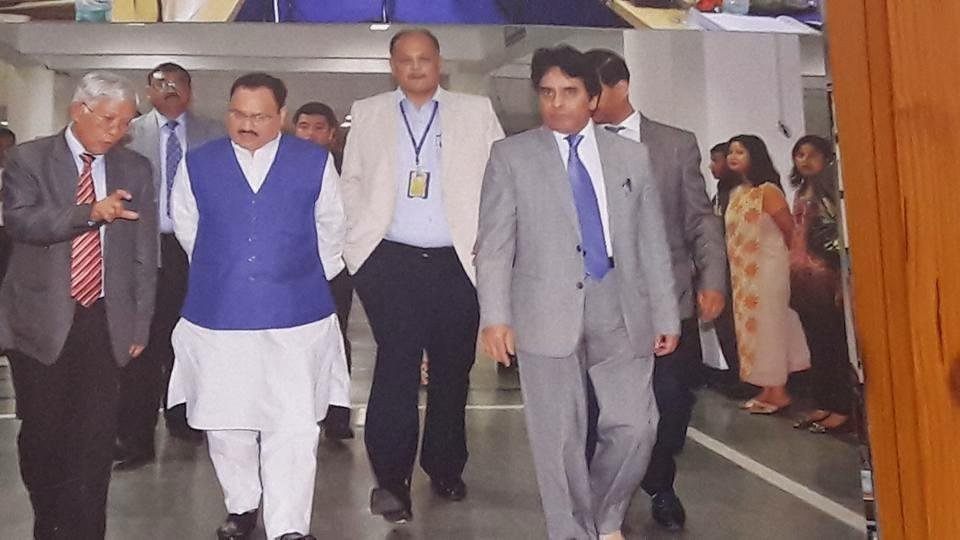
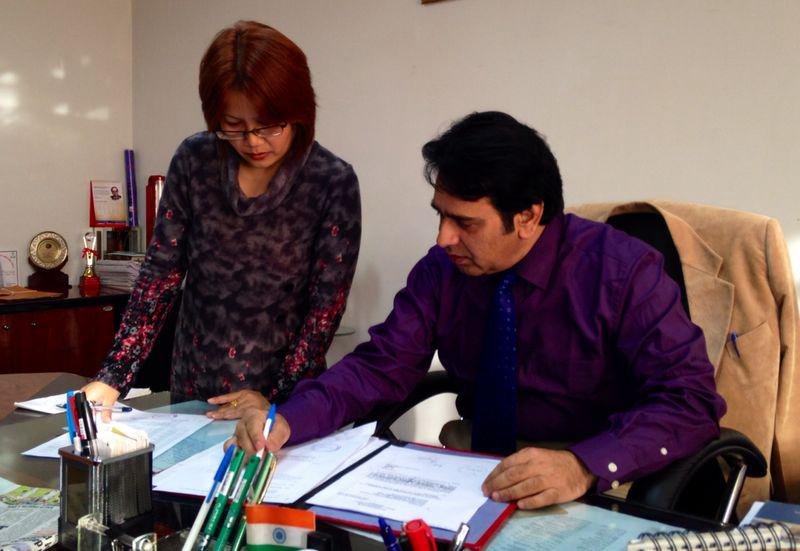
Director, North Eastern Indira Gandhi Regional Institute of Healthand Medical Sciences, Shillong, Meghalaya, India from October 22, 2012 toJuly 10, 2016, with Exceptionally Brilliant APAR from Ministry of Health& Family Welfare, Government of India, New Delhi.
Graduated from Government Medical College Srinagar, specialized inGeneral Surgery from Govt. Medical College Srinagar and qualified with Post-Doctoral Degree, Cardiac Surgery (M.Ch CVTS) from PrestigiousPostgraduate Institute of Medical Education and Research, Chandigarh,served as Faculty Member at various positions including Head of Department,Cardiovascular & Thoracic Surgery till October 22, 2012 at SKIMS,Srinagar.
Medical Council of India Inspector/Assessor for Medical Education atPost-Doctoral Level in India and Postdoctoral Guide/ExternalExpert/Examiner for Postdoctoral Studies and Diploma National Board ofExaminations at various institutes of repute such as Postgraduate Institute of Medical Education & Research,Chandigarh; Sanjay Gandhi Postgraduate Institute of Medical Education &Research, Lucknow; North East Indira Gandhi Regional Institute of Health and MedicalSciences; Sher-i-Kashmir Institute of Medical Sciences, Srinagar etc.
Some of the Milestones
– Head of Department of Cardio-Thoracic Surgery at SKIMS from1993 till 2012, almost two decades.
– Director and Chief Executive Officer, NEIGRIHMS Shillong underMinistry of Health & Family Welfare, Govt, of India, New Delhi Oct-2012 to July-2016 with ExceptionallyBrilliant APR from Hon’bleMinister of Health and Family Welfare, Govt, of India, Shri J.P.Nadda Ji.
– Director, Sher-i-Kashmir Institute of Medical Sciences& Ex-Officio Secretary to Government with exemplary performancepost with-2016 civilian unrest and post-Corona (Covid-19)Pandemic Crisis Management-Both Disaster Level ManagementServices periods.
– Principal, SKIMS Medical College and Hospital, Bemina sinceFeb 1, 2021 with extraordinary management in Administration,
Academics & Clinical Sciences.
– Member, Apex Advisory Committee for Treatment protocols inNewly Established AIIMS in different States of India.
- Member, Governing Council &Academic Council of AIIMS Bhopal.
- Member, Apex Advisory Committee for Covid-19 PandemicManagement Protocols, Govt. of Jammu and Kashmir.
- Establishment of Modern Cardiac Surgery at SKIMS Since-1993.Introduction of Post-Doctoral Training Programme at SKIMSsince 1994.
- Postdoctoral/Postgraduate Guide and Teaching, Training Maximumnumber of Post-Doctoral Scholars since-1995.
- National Medical Council Assessor (Erstwhile MCI) for Post-Doctoral Training Programmes in Cardio Thoracic Surgery in IndiaSince -2000.