

Sajjad Bazaz
Let me begin with a quotable quote: “There is no substitute for experience.” It means practical and real-world knowledge cannot be replaced by theory, books, or simple observation. The experience adds heavy weight to a person’s profile when it crosses a timeline of 50 years. In other words, it translates into a “Golden Jubilee Experience”.
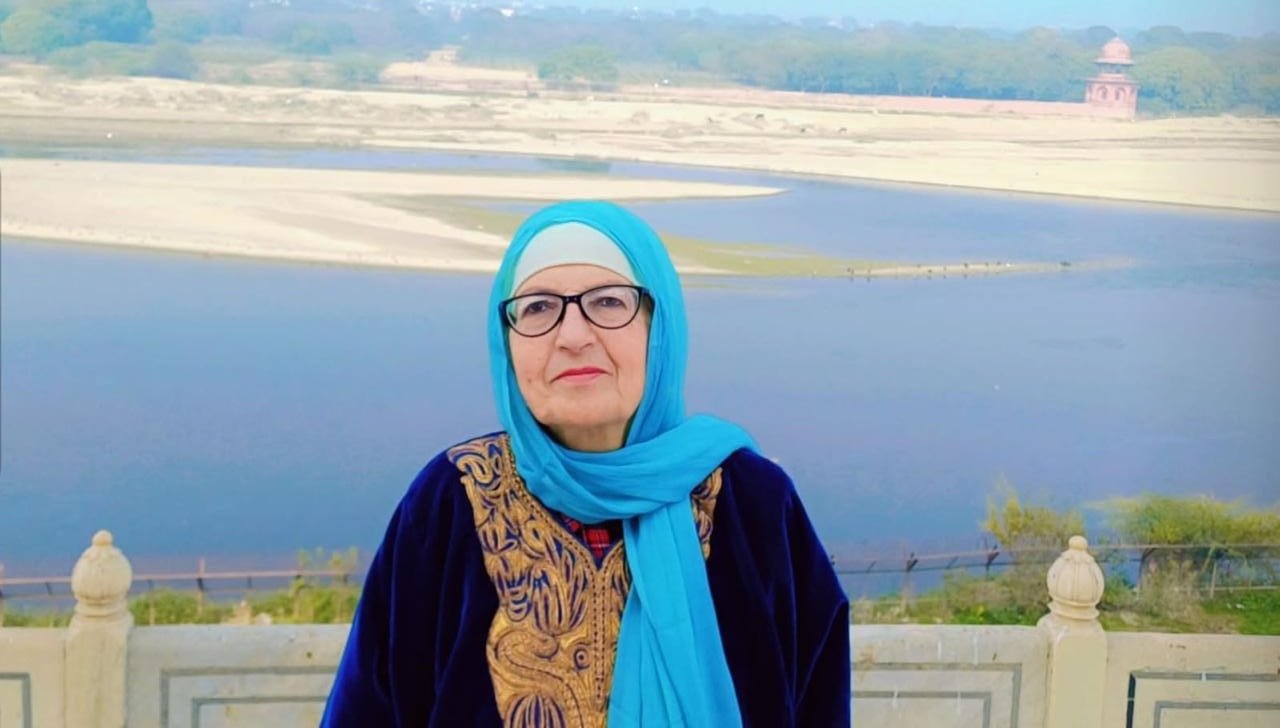
This worthwhile ‘heavy weight’ tag is carried by an inspiring woman personality, Rukhsana Jabeen, who is an established name in the world of poetry and Indian broadcasting. In fact, those who have watched Rukhsana growing in her field of profession pick her as one among the very few female litterateurs in Jammu and Kashmir who have carved a niche in the subcontinent’s vast domain of Urdu poetry and public broadcasting.
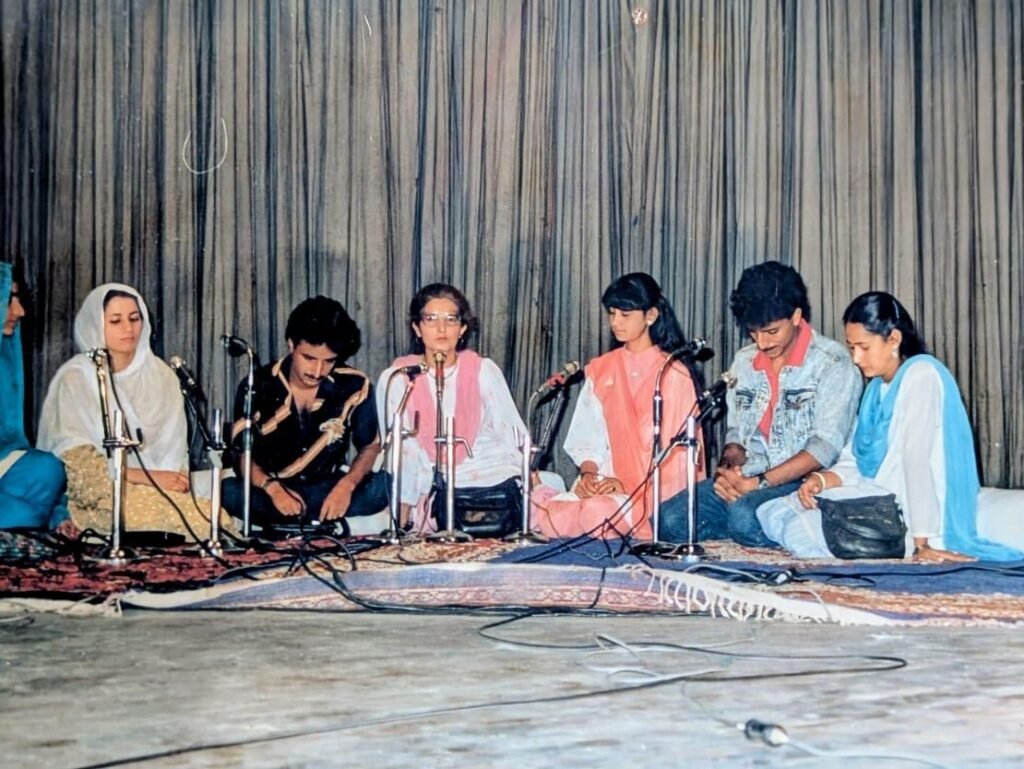
Rukhsana retired as Director at All India Radio (Radio Kashmir Srinagar) in 2015. A lady full of confidence and fearless in decision-making, Rukhsana Jabeen didn’t let her expressions in art and literature remain buried during the three decades of armed militancy in Kashmir when almost all other voices, especially that of women folk, were muted. “Whatever came to my mind, I wrote and expressed without any fear,’ she says, showing firm belief in herself. In other words, her career path spanning over a period of 50 years speaks about her extraordinary skills of exploring women empowerment through knowledge and wisdom without getting entangled in any controversy. Her decision-making in her profession of broadcasting and selection of words in her poetry are set examples usually quoted by her colleagues as a benchmark of achieving excellence.
Here it makes sense to share an incident which reflects her wisdom and decision-making fearlessly. By virtue of my official capacity as Head of J&K Bank’s Corporate Communication Department, I had fixed a meeting with Rukhsana Jabeen in her office. During the meeting, one of his subordinates informed her about the pressure mounted by some newspaper editors to higher-up mentioning the names of their publications in “Aaj Ki Surkhiyan” – a morning transmission programme broadcast from Radio Kashmir Srinagar highlighting important news headlines published by various local newspapers. Every editor wanted his newspaper headlines to be on the top along with the name of their publication. The presenters of the programme were in a fix- what to do and how to categorise the newspapers. Because, according to them, every editor was claiming his newspaper as leading publication.
All of us know it well that handling media is not a child’s play and is one of the toughest jobs for any organisation to categorise them in the order of priority. In fact, the job (maintaining media relations) is highly risky. Here the producer of “Aaj Ki Surkhiyan” was genuinely caught in a fix. He had been continuously receiving “displeasure” messages from various newspaper outlets who were finding their news headlines along with the name of the newspaper not prioritised in the programme. Precisely, everyone wanted the name of their newspapers to be mentioned ahead of others.
Rukhsana, as Station Head, addressed the problem once for all. In a spontaneous reaction to the producer’s plea seeking her guidance, she directed him not to mention the name of any newspaper in the programme while reading out news headlines. Here, her decision-making was at its best. She resolved the most complex issue in a jiffy without giving any opportunity to the newspaper editors to express displeasure. “Aaj Ki Surkhiyan” continues that policy – broadcasting newspaper headlines without mentioning the name of newspapers. She buried the controversy once for all.
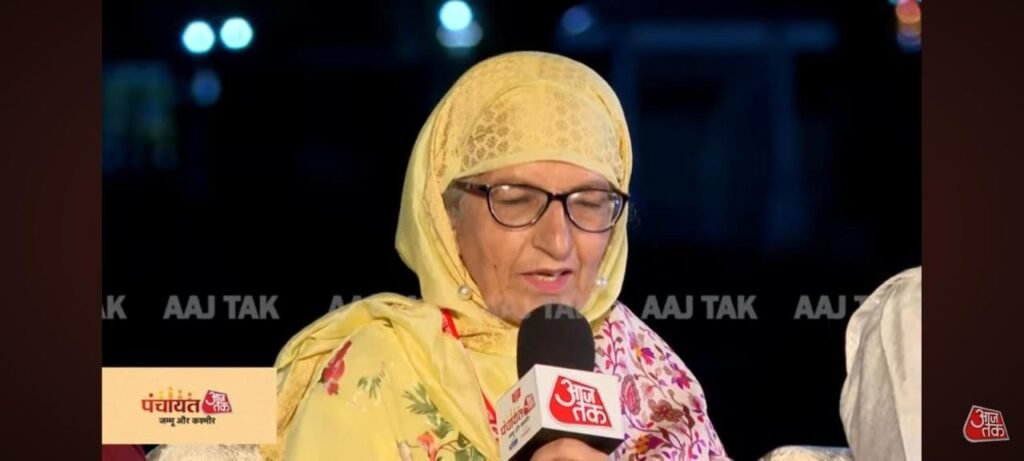
I am also reminded of her broadcasting tips during the recording of a discussion programme in 1986, when she was producer at Yuva Vani section of Radio Kashmir Srinagar. Actually, it’s the story of my university days when I was pursuing a Masters degree in Mass communication and Journalism in Kashmir University. As a part of our training programme in Radio production, the department picked three students, including me, for participating in a radio programme to discuss “SHEHR -I- SRINAGAR KO SAAF RAKHNY MEIN NAVJAWANOU KA ROLE – (THE ROLE OF YOUTH IN KEEPING THE SRINAGAR CITY CLEAN). Rukhsana was producer of the programme. With a proper rehearsal and planning, we went for recording of the programme and everyone of us was made well aware beforehand about the issues to be discussed in the programme. During recording, I used some Urdu words which were not matching to the discipline of the language. For example, during conversation with my fellow participants, I said “Jaisay Mein Ny Farmaya”. After recording of the programme was over, Rukhsana pointed out my language problem and explained to us the nuances of the language and importance of proper use of words in a radio script, Those golden tips are still relevant today even when technology has overpowered almost all aspects of Radio programming. She had meticulously noted the mistakes which we had committed during recording of the discussion and in a play-way method explained to us how delivery and use of a word in broadcasting impacts the presentation of a radio programme. Remarkably, her basic lesson guided me (and continues to be a guiding line for me) to produce, script, present and edit “JK Bank Diary” programme for 18 long years.
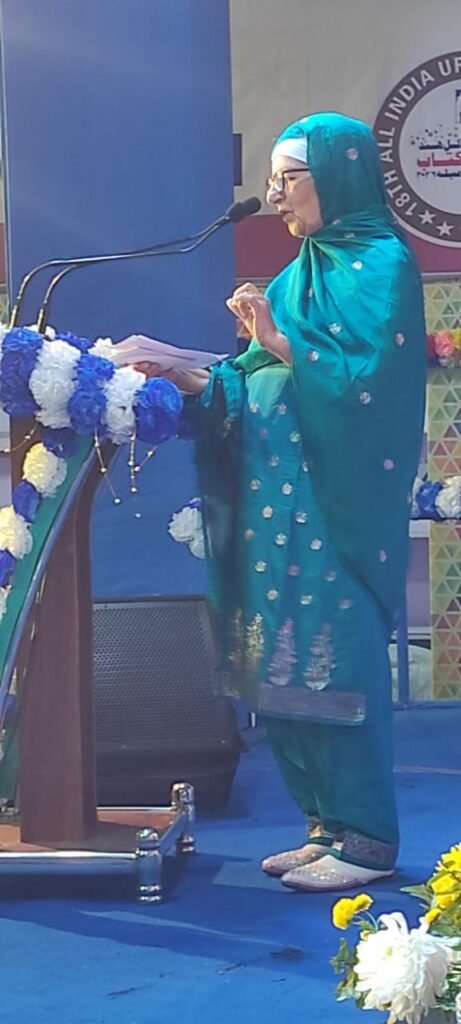
Rukhsana’s life journey speaks about her being well organised and full of confidence right from her childhood. She belongs to a family of the descedants of the revered saint and Kashmiri-Persian poet Syed Meerak Shah Kashani born in the Khwaja Bazar neighbourhood of downtown Srinagar in 1955, She did Master’s in Urdu followed by another Master’s degree and M Phil in the Persian language and literature at the University of Kashmir. In 1983, she joined Radio Kashmir Srinagar as a Programme Executive. Notably, she was already connected to Radio Kashmir during her student days as she used to participate in various programmes for being good at Urdu language and flair for poetry.
Her selection for a job in All India Radio was ‘shocking’ for her family. She had not taken permission from her parents to apply for the job. Even if she would have asked for it, the parents would not have allowed her to apply, as working in a broadcasting organisation was not considered ‘good’ for females. It was considered a sort of ‘stigma’ in society.
“In our family setting it was like breaking the glass ceiling. Getting selected for the job in a tough patriarchal competition was like a big success for me. Knowing well that I wouldn’t be permitted to apply for it, I kept it all discreetly concealed from my family,” she said when asked about the reaction of her family, particularly parents, when she informed them about the job.
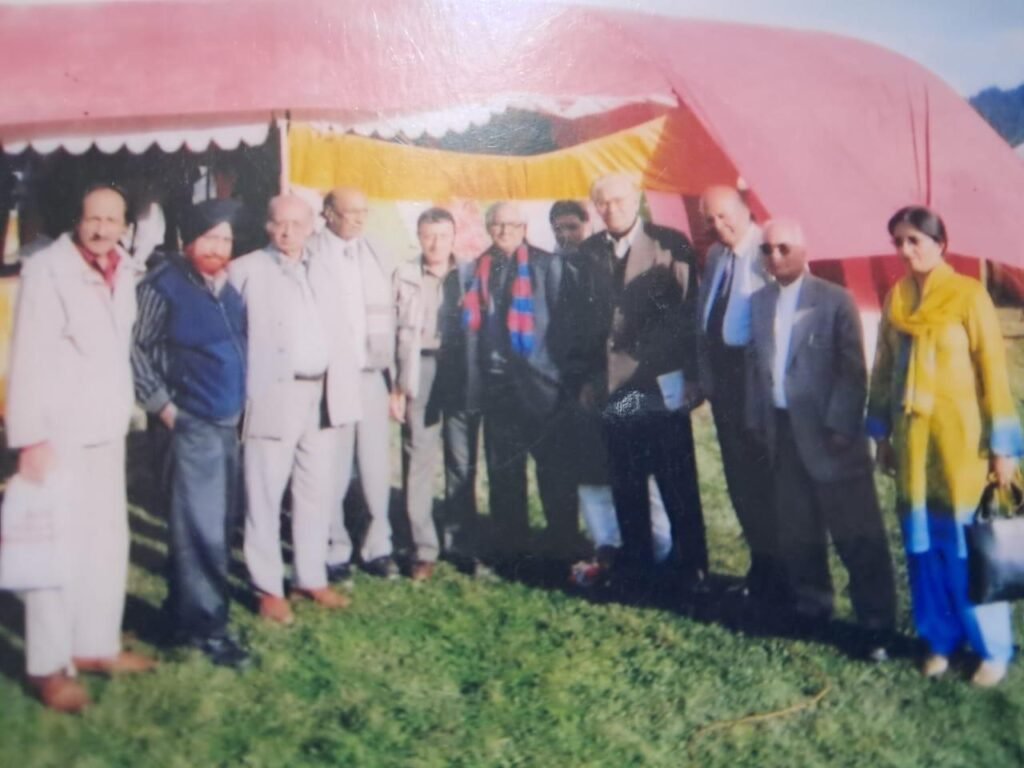
Around the same time, she was also selected as a teacher in the State Education Department. As his father learned about her getting a job at the Radio Kashmir Srinagar, he insisted herto join as a teacher. Her father was not comfortable with her job selection in Radio, precisely All India Radio, as it was a transferable job and she could be transferred to any Radio Station outside Kashmir.
“I lied to my family that female officers were not posted outside their home States. Thereupon my family relented, and I joined as a ProgrammeExecutive at All India Radio, posted at Radio Kashmir Srinagar,” says Rukhsana with a smile on her face.
In 1994, Rukhsana was transferred to Poonch Radio station close to the Line of Control where she served for three years. In 1999, she was promoted to Assistant Station Director (ASD).
Her tryst with creative literature has its own interesting story which began late during her university days. She was “lucky” enough to get noticed by a prominent Urdu poet and literary critic and the then head of the Urdu Department, Prof.Hamidi Kashmiri, for her writing capabilities, especially for poetry. Prof Hamidi Kashmiri encouraged her to write prose and poetry in Urdu. “I was thrilled when Hamidi Sahib refined my first Ghazal and got it published in the annual edition of his department’s magazine ‘Baazyaft’. Under his guardianship, I got to learn about modern sensibility and the post-modernist literary trends”, says Rukhsana.
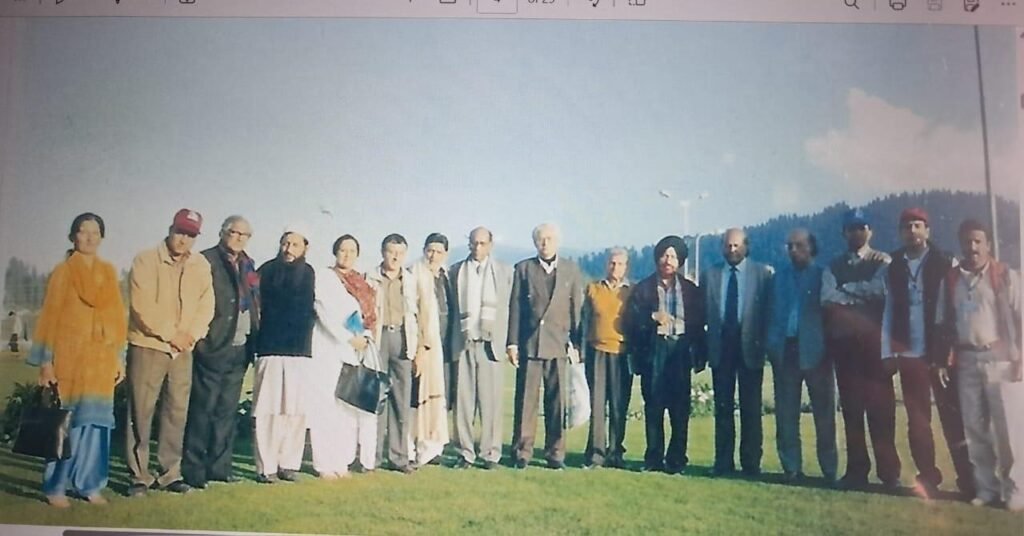
If Prof. Hamidi Kashmiri affectionately at the University of Kashmir handholds her to explore her talent in poetry and prose writing, Zubair Rizvi at Radio Kashmir Srinagar gave her wings through his guidance to hone her skills as a creative writer in the field of radio programming. It was Zubair Rizvi who, without the knowledge of Rukhsana, got five of her poems published together, alongside her profile, in Kumar Pashi’s journal ‘Satoor’ – a prestigious Urdu magazine. It was an incredible encouragement and a recognition of her as a poet. Thereafter, a number of her poems were published in the top representative journals like ‘Alfaaz’, ‘Shayir’, ‘Mafaheem’ and ‘Asri Agahi’.
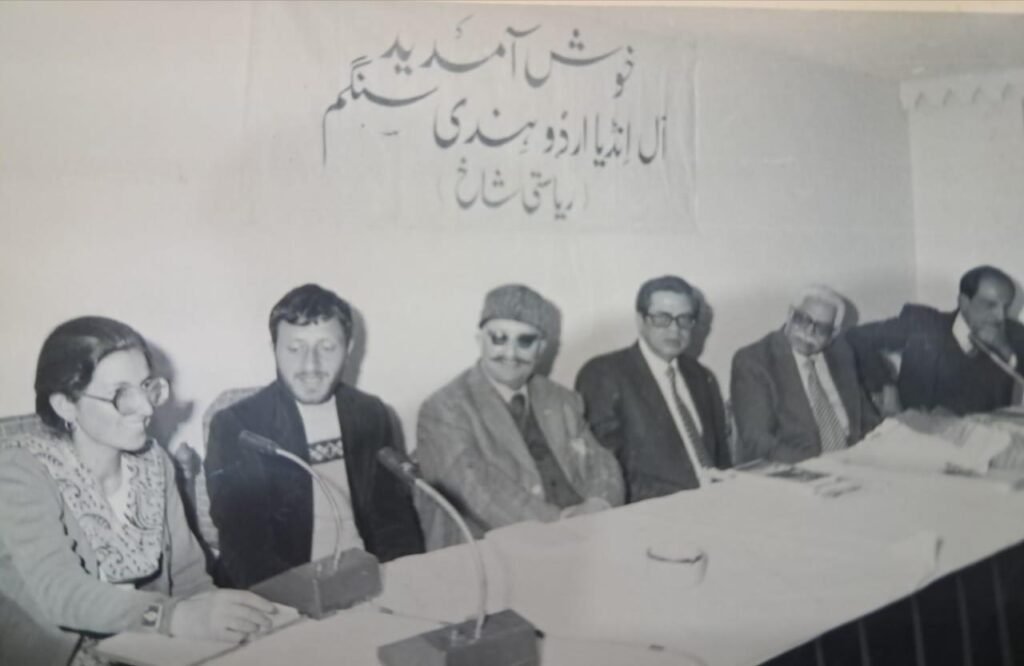
“Hamidi Sahab and Zubair Sahab steered me to the extensive studies of Shaharyar, Rajinder Manchanda Bani, Nasir Kazmi, and Mohammad Alvi. I am still deeply under the influence of Mohammad Alvi and a few others”, says Rukhsana.She was initially also influenced by female Urdu litterateurs like Rafia Shabnam Abidi, Aziz Bano Darab Wafa, and Sajida Zaidi and later shared the stage with them at All India Radio and all-India poetry symposiums. For over three decades, she was a regular guest poet at Delhi’s Red Fort and other literary rendezvous, integrating a sub-continental network of the intelligentsia.
One of the notable works of Rukhsana is that for several years, she translated poetry from 22 Indian languages into Kashmiri as a project of the Sahitya Akademi. She participated in many such all-India poetry symposiums at Varanasi and other Indian cities. She remained closely linked to top-notch Urdu poets like Shaharyar, Bashir Badr, Nida Fazli, Makhmoor Saeedi, Ali Sardar Jafri, Kaifi Azmi, Qateel Shifai, Ahmad Faraz besides literary critics like Shamsur Rahman Faruqi, Naiyer Masud and Malikzada Manzoor Ahmad.
Remarkably, many of them organized Mushairas in her honour at their homes. It was a unique recognition and hospitality as never before has anyone from Kashmir been entertained to such honours. She also used to invite many of these doyens of Urdu literature to various programmes at Radio Kashmir Srinagar.
In addition to volumes of the translation of short stories from different languages into Kashmiri and a translation of the collection of Hafiz Shirazi, which she accomplished with Dr. Syed Raza of Budgam, Rukhsana has three of her collections—two in Urdu and one in Kashmiri—ready to publish. But she calls herself lazy to get these books published.