


Zahoor Zahid
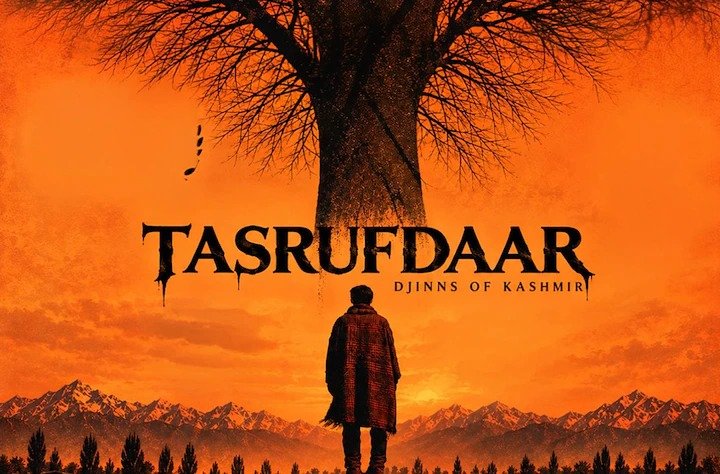
Among the Kashmiri films released this year was Tasrufdar, written, produced and directed by Kapil Mattoo, with the active support of our own Bollywood prodigy, Mir Sarwar. His contribution reflects a deep commitment to nurturing Kashmiri cinema and ensuring that our film industry continues to thrive. Without his dedicated support, a film like Tasrufdar might never have seen the light of day. Promoting Kashmiri cinema is not merely about making films; it is also about preserving our language, art and cultural identity.
Kapil Mattoo on the other hand has passion for storytelling and his courage to bring his perspective to the screen are commendable. It takes immense conviction, perseverance and creative courage to pursue filmmaking, especially in Kashmiri, when the industry faces so many challenges. His effort deserves appreciation and encouragement.
Kashmiri language faces a serious and imminent threat, ironically from its own people, as an increasing number seem to be distancing themselves from their mother tongue. In this context, films made in Kashmiri have a vital role to play in keeping our linguistic and cultural heritage alive for future generations.
Personally, I feel immensely happy and excited whenever a film is made in Kashmiri, reflecting our language, art, culture and way of life. Every such film is a ray of hope for our struggling film industry and a meaningful contribution towards preserving the soul of Kashmir. We need more people like Kapil Matto, Mir Sarwar and others who believe in the potential of Kashmiri cinema and are willing to support it with conviction and commitment.
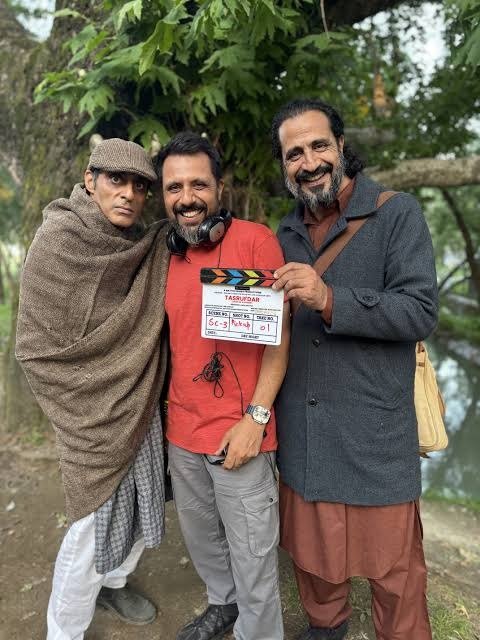
The significance of Tasrufdar is further underscored by the fact that it won the Best Feature Film award at the recently held first International Film Festival of Jammu and Kashmir, where films were selected around particular narratives. Yet, the biggest omission in the selection was Harmukh, directed by Ashok Cyshap in collaboration with the Kannada film industry. A brilliant film in every respect, it represents a commendable cultural and cinematic collaboration between Kashmir and Karnataka.
Equally disheartening was the almost negligible public response to Tasrufdar, despite its week-long screening at INOX. Mir Sarwar repeatedly appealed to people to watch the film, but his earnest pleas seemed to yield little response. This indifference raises a serious question: if we do not support films made in our own language, how can we expect Kashmiri cinema to survive and flourish? Preserving a language requires more than expressing concern about its decline; it demands that we embrace, promote and patronise the creative works that keep it alive.
With a runtime of 35 minutes, Tasrudar unfolds almost like a stage play. It explores the tragic migration of a Kashmiri Pandit family and the deep emotional scars left by the sudden turmoil that engulfed the Valley and continued for nearly two decades. At its heart lies a painful question of betrayal: why did the neighbours fail to protect a family with whom they had shared years of trust and coexistence?
The tragedy of turmoil and its aftermath have left deep and enduring scars on both communities. The Kashmiri Pandits were forced to leave their homes for the safety of their lives, while the majority community endured years of trauma whose magnitude is difficult to describe. Months of undeclared curfews, dawn-to-dusk crackdowns, the blaring sirens of Gypsy vehicles, sudden gunfire, bombs and grenades, the terrifying sound of rockets, humiliating searches at every nook and corner, the constant fear of being picked up, and the anguished cries emanating from interrogation centres became part of everyday life. For the local population, this was not an occasional ordeal but a relentless experience of fear and uncertainty, suffered hour after hour, day after day. The psychological impact of those traumatic years on the people of the Valley has been profound and cannot be overlooked. A truthful portrayal of Kashmir’s tragedy must acknowledge the suffering of both communities without diminishing the pain of either.
Ashwath Bhat, who plays Tasrufdar, in the film is phenomenal. He is an actor who has worked meticulously on his voice modulation and expressions, and it shows in every frame. With his transfixed gaze and deep, resonant voice, he seems to have lived the character rather than merely portrayed it. His performance is deeply moving, powerful and memorable.
The dialogues of the ghostly Pandit character Tasrufdar are deeply moving, emotionally charged and impressively crafted. They convey the anguish of displacement and the bitterness of betrayal with considerable force. However, the counter-narrative presented through the Muslim neighbour appears somewhat like an afterthought, seemingly introduced to balance the central narrative. His dialogues are sketchy, less convincing and lack the emotional depth and literary finesse evident in those of the Pandit character. A more nuanced and equally compelling treatment of both perspectives could have made the film more balanced and dramatically powerful.
Unfortunately, Bashir Lone, who plays his Muslim neighbour, is unable to match the intensity of Ashwat’s performance. However, this appears less a limitation of the actor than a weakness in the writing. His dialogues lack the necessary depth, timing and conviction, giving the impression that they were incorporated into the script without adequate development. I would have loved to see Bashir Dada in this role; his presence and acting prowess could have made it a real treat to watch.
The limited number of locations and sets further reinforces my feeling that Tasrufdar may originally have been conceived as a stage play. Among the other performers, Mir Sarwar does justice to his role, even though it is not the central character. His experience in Bollywood is evident in the maturity and restraint with which he portrays his character. Shafia Maqbool also leaves a lasting impression in her brief cameo. Her expressions and dialogue delivery are perfectly in sync, making her small but outstanding performance a delight to watch.
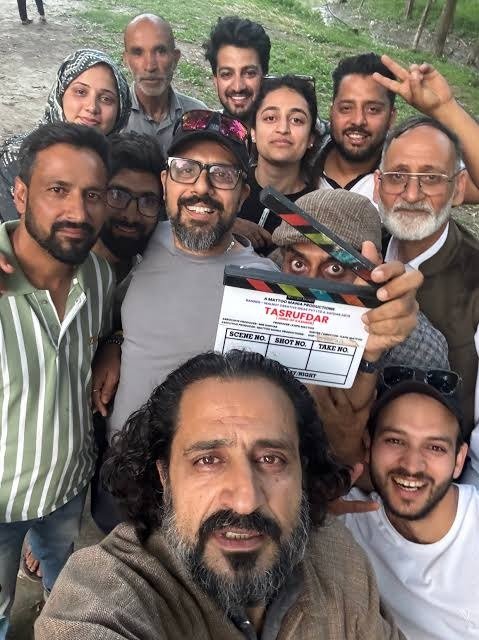
Syed Ali, the DOP of Tasrufdar, appears to be a versatile cinematographer with an exceptionally good sense of framing and composition. However, the film seems to lack the visual refinement that comes with a carefully planned colour-grading process. It is difficult to say with certainty whether it was shot in a Log format without examining the original footage, but the uneven midtones, shadow details and excessively bright backgrounds in several scenes suggest that the final images could have benefited considerably from more meticulous post-production.
Colour grading is an essential part of filmmaking, not merely a cosmetic enhancement. It helps balance exposure, refine contrast, recover and shape tonal details, control highlights and shadows, and establish a consistent visual mood throughout the film. It also gives the cinematographer’s images a cohesive cinematic identity. Without this finishing process, even well-composed shots can look flat, harsh or visually inconsistent. In my assessment, Tasrufdar feels closer to a video film than a fully polished cinematic production, not because of its subject or performances, but because its visual treatment appears to lack the finesse that professional colour grading could have brought to the screen.
The background score of Tasrufdar relies largely on stock music and, at times, sounds rather Bollywood-inspired. I believe that if we are serious about building a distinct Kashmiri film industry, we must draw more deeply from our own musical heritage. Kashmir possesses a rich repository of traditional instruments, melodies and musical forms, particularly Sufiyana Mausiqi, our classical musical tradition, which deserves far greater representation in cinema. Our music has a distinctive spiritual depth and emotional richness that could introduce Kashmir’s unique cultural identity to audiences across the world. Rather than borrowing familiar cinematic sounds, Kashmiri filmmakers should explore this treasure trove and develop an original musical vocabulary for our cinema.
The song penned by our own versatile poet, Peer Zahoor, is a particularly touching part of the film. Zahoor Sahib has a rare gift for weaving profound emotions into his lyrics, giving them a soulful quality that resonates deeply with the listener. His words remind us that our own poets and musical traditions possess immense creative potential, which Kashmiri cinema must recognise, nurture and celebrate.
Another aspect that invites attention is the film’s credit roll. Instead of formally acknowledging the concerned government department or the Government, it expresses gratitude to certain individuals. This is somewhat unusual, as films receiving institutional facilitation or support generally acknowledge the institution rather than individual functionaries. Such personalized acknowledgements can inadvertently create an impression of special patronage, whether or not any such support actually existed. More intriguing, however, is the journey of Tasrufdar itself – a stage drama adapted for the screen and ultimately emerging with the Best J&K Film award. Transforming theatre into cinema is certainly a legitimate creative exercise, but for such an adaptation to rise above competing cinematic works is an extraordinary outcome. Cinema, like life, occasionally produces moments when every piece unexpectedly falls into place; and the seemingly improbable becomes possible.
I earnestly hope that one day a truly sensitive and powerful film will emerge that gives voice to the collective agonies, shattered dreams and enduring wounds inflicted by the turmoil in Kashmir. The suffering of both communities runs so deep that no words can fully capture its anguish, nor can the passage of time erase the scars etched on countless hearts. One community was forced to abandon its ancestral homes, carrying the unbearable pain of separation from its roots, while the other endured years of fear, violence, uncertainty and untold misery in its own homeland. These are wounds that may never completely heal, but they must never become a reason for generations to inherit hatred and mistrust.
I long for a film that will bring these wounded hearts together, allowing each community to recognise the other’s pain, not through the prism of blame, but through the healing power of empathy and shared humanity. For, beneath our differences lie the same tears, the same longing for home, and the same yearning to live in peace and dignity. Perhaps this is the greatest message Kashmir can offer to the world: that the true spirit of Sufism and Kashmiriyat lies in compassion, brotherhood and the courage to embrace one another despite the bitterness of the past. Only when we learn to acknowledge each other’s suffering can we begin to heal our collective wounds and build a future where no one is forced to flee their home, no family lives in fear, and no child inherits the hatred of an earlier generation. Peace and brotherhood are not merely the way forward for Kashmir; they are the only hope for a fractured humanity.