


Zahoor Zahid
(Consulting Editor)
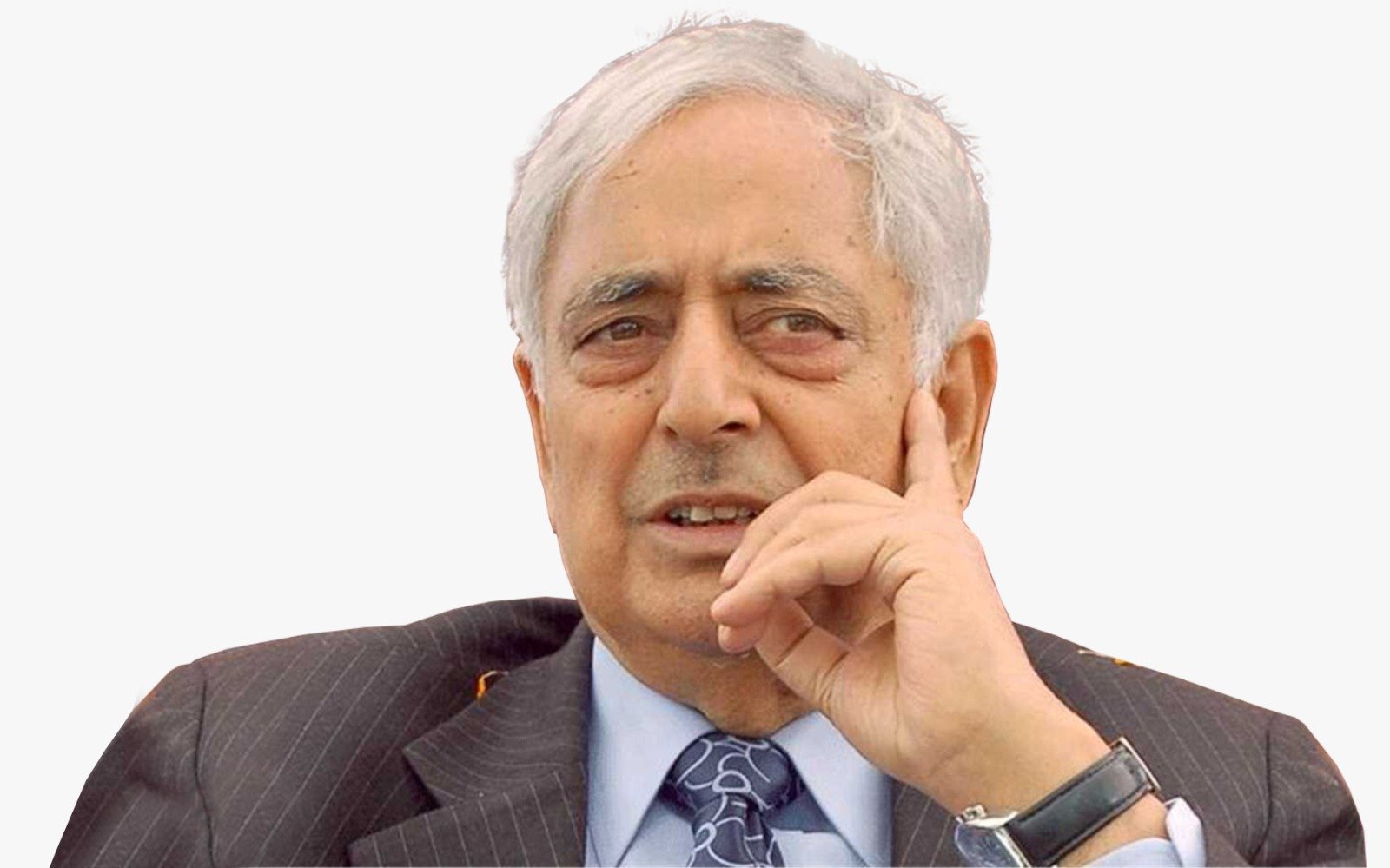
I have always regarded Mufti Mohammad Sayeed as a remarkably incisive and astute politician who understood the pulse of his people. His political acumen was evident in many of his decisions, particularly in his effort to create a political alternative and bring the people of Jammu and Kashmir back into the mainstream of democratic politics. His tenure, in many ways, reflects the difficult transition of J&K; from the darkest years of militancy and instability towards a period of popular government and democratic participation. Whatever one’s political assessment of him may be, there is little doubt that Mufti Mohammad Sayeed cared deeply about his people and possessed the political wisdom to respond to the changing realities of Jammu and Kashmir.
Born on January 12, 1936, in Bijbehara, Mufti Mohammad Sayeed was among the most highly educated Chief Ministers of Jammu and Kashmir. He held a postgraduate degree in Arabic, specialising in Arab History, along with a professional degree in Law. His academic grounding, coupled with his long political experience, reflected the intellectual depth and political maturity that characterized his public life. He entered public life in the late 1950s with the Democratic National Conference and, in the 1960s, joined the Indian National Congress, where he played an important role in expanding the party’s political base in the Valley. He won his first Assembly election from Bijbehara in 1962. His political journey later took him to the national stage, where he became India’s first Muslim Union Home Minister in 1989. In 1999, recognising the need for a strong regional political alternative, he founded the People’s Democratic Party, marking another significant chapter in his long and eventful political career.
By the late 1990s, there was a growing desire among the people of Jammu and Kashmir for a new political alternative. After years of conflict, uncertainty and political instability, people were looking for new ideas, a new approach and a governance model thatcould provide them relief and restore their confidence in democratic institutions. The emergence of the PDP under Mufti Mohammad Sayeed responded to this aspiration. It offered a different political narrative, giving people an alternative to the established political order and creating greater space for democratic competition. For many, it represented hope for a more responsive government—one that would listen to ordinary people, address their grievances and focus on development, dignity and peace.
As Chief Minister, Mufti Mohammad Sayeed brought a clear vision for development and a strong emphasis on tourism, which he regarded as one of the main pillars of Jammu and Kashmir’s economy. His first term from 2002 to 2005 was marked by efforts to restore confidence, improve connectivity and infrastructure, and revive tourism. He understood that peace, development and tourism were closely interconnected, and that a thriving tourism sector could generate employment and strengthen the wider economy. His second tenure, though brief, reflected the same political determination and vision for development.
One of Mufti Mohammad Sayeed’s most significant initiatives as Chief Minister was his “Healing Touch” policy, introduced when Jammu and Kashmir was emerging from years of intense militancy. He sought to give people a sense of relief from the fear and hardship associated with counter-insurgency operations. The Task Force had been created to combat terrorism, but allegations of excesses and harassment had deeply alienated sections of the population. Mufti Sayeed attempted to bridge that trust deficit by humanising governance and curbing the excesses of the security apparatus. His decision to disband the Task Force was widely perceived in the Valley as a gesture of reassurance and was welcomed by people, something which earlier Government had failed to do. The policy reflected his belief that lasting peace could not be achieved through force alone, but through restoring dignity, confidence and faith in democratic governance.
When India was embracing the mobile and internet revolution in the late 1990s, Jammu and Kashmir was kept out of this technological transformation on security grounds. Mufti Mohammad Sayeed recognised that denying connectivity would only deepen the developmental divide. He took up the issue with the Union Government and pressed for the introduction of mobile services. His efforts bore fruit in 2003, when mobile telephony finally came to Jammu and Kashmir; an important milestone in the state’s modern history.
What began as a development initiative also acquired a crucial security dimension. Mobile technology became an important tool for security agencies, while for ordinary people it opened a new world of communication, education, information and economic opportunity. It connected remote communities, facilitated business and employment and gradually integrated Jammu and Kashmir into the country’s digital revolution. Mufti’s intervention demonstrated his political foresight: technology was not merely a convenience, but an instrument of development, empowerment and security.
Among Mufti Mohammad Sayeed’s most farsighted initiatives was his determined effort to persuade Delhi to open the Srinagar – Muzaffarabad and Puch – Rawalkot Road. He had no power to open the LoC himself; what he possessed was political conviction and the ability to persuade. He first pursued the idea with Prime Minister Atal Bihari Vajpayee and later continued to press the case with Dr Manmohan Singh. He understood that reopening the historic route was not merely an infrastructure project but an act of human and political reconciliation; one that could reconnect families, revive trade and restore a vital link between two divided parts of Kashmir. His persistence finally resulted in the opening of the Srinagar–Muzaffarabad Road in 2005, followed by cross-LoC trade.
For decades, the National Conference had invoked the promise of opening the Uri–Muzaffarabad route, even turning symbols such as Pakistani pink salt and green handkerchiefs into election rhetoric. Mufti, however, sought to move the issue from electoral symbolism to political reality. He converted an old political promise into a tangible connection across the divide; demonstrating once again his belief that dialogue, engagement and people-to-people contact could achieve what confrontation could not.
I believe this was far more than the opening of a road. It was the opening of a door that had remained shut for generations. Families separated by the Line of Control for decades were suddenly given an opportunity to meet their brothers, sisters, parents and relatives again. The scenes at Uri were deeply moving. I witnessed people arriving from the other side, standing face to face with relatives they had not seen for years; sometimes unable even to recognise one another at first. There were tears, embraces, disbelief and an overwhelming sense of having found a part of themselves that they thought was lost forever.
For those families, the road was not merely a route of communication; it was a passage to their memories, their roots and their loved ones. Mufti Sayeed’s foresight lay in understanding that such human contact could do more for reconciliation than political rhetoric ever could. It also gave Jammu and Kashmir an opportunity to demonstrate its development and openness while creating new possibilities for trade, interaction and peace.
Unfortunately, this historic initiative was brought to an end after the abrogation of Article 370. For those who crossed over, the experience was deeply revealing. Many people from the other side were struck by the visible development and transformation in Jammu and Kashmir and openly spoke about the difficulties they continued to face there. What had been presented for decades through political rhetoric began to be judged against what people could actually see and experience for themselves. The opening of the road had created a rare window into the realities on both sides; demonstrating the power of connectivity, development and human contact. Its closure was therefore not merely the closure of a route; it was the shutting of a bridge that had reunited families and allowed people to see beyond the narratives that had separated them for generations.
Mufti Mohammad Sayeed was also instrumental in opening the Mughal Road, reviving an ancient route through which the Mughals entered the Valley. He understood its strategic and developmental importance as an alternative to the Banihal route, which was frequently disrupted by heavy snowfall and avalanches during winter and, at times, remained vulnerable to natural disruptions even in other seasons. Opening the Mughal Road created an important alternative connectivity corridor between the Jammu region and Kashmir, while also unlocking the immense tourism and economic potential of the areas along its route. It was another reflection of Mufti’s ability to look beyond immediate political considerations and recognise the value of geography, history and connectivity in shaping the future of Jammu and Kashmir.
Drawing from his experience as Union Tourism Minister, Mufti Mohammad Sayeed understood that tourism was not merely a source of revenue but the backbone of Jammu and Kashmir’s local economy. Years of militancy had severely damaged the tourism infrastructure and left hoteliers, houseboat owners, transporters and other tourism-dependent communities struggling to survive. As Chief Minister, he took important steps to revive the sector by strengthening tourist infrastructure and extending soft loans to houseboat owners, hoteliers and those associated with the transport industry. He also promoted decentralizedtourism development through authorities for destinations such as Gulmarg, Pahalgam and Sonamarg. His vision was to rebuild what had been lost, restore livelihoods and once again establish Jammu and Kashmir as a premier tourism destination.
Mufti Mohammad Sayeed believed that education and healthcare are the two essential foundations of a progressive and prosperous society. He understood that lasting development could not be achieved merely through roads and infrastructure; it had to be built around educated, skilled and healthy people. His contribution to higher education included the establishment of Islamic University of Science and Technology at Awantipora and Baba Ghulam Shah Badshah University at Rajouri, opening new avenues of advanced learning for the youth. He also took significant steps towards strengthening specialised healthcare, including the initiative for an AIIMS in Kashmir, for which 1,300 Kanals of land were allotted during his second tenure. These initiatives reflected his belief that investing in knowledge and health was an investment in the future of Jammu and Kashmir.
Mufti Mohammad Sayeed had a distinct vision for transforming Srinagar into a more beautiful, vibrant and welcoming city. The banks of the Jhelum, which were then in considerable disrepair, needed thoughtful development, while historic places such as Eidgah, Aali Masjid and BadamVaer required restoration and a fresh lease of life. His initiatives sought not merely to develop infrastructure but to create public spaces where people could relax, connect and enjoy their surroundings. Many of these places have today emerged as important hubs of public and tourist activity.
This vision was extended beyond Srinagar to other parts of the Valley. Anantnag (Islamabad) received a beautifully developed park, Pahalgam saw the creation of a popular children’s park that attracted large crowds, while Gulnar Park in Baramulla was dedicated to the public. These initiatives reflected more than a developmental agenda; they revealed Mufti’s appreciation of beauty, open spaces and the quality of life of ordinary people. He understood that a city or town is not merely a collection of buildings and roads; it must also offer spaces where people and visitors can experience beauty, leisure and a sense of belonging.
Mufti Mohammad Sayeed was a thinking politician who rarely took an initiative without examining its wider implications and listening to different perspectives. When he formed a government with the Congress in 2002, he worked out a Common Minimum Programme as a framework for governance. Again, after the fractured mandate of 2014, when the BJP emerged strongly in Jammu, he confronted a difficult political reality: the aspirations of both regions had to be accommodated. The alliance with the BJP was therefore built around a written Agenda of Alliance, drafted after more than two months of painstaking work by Dr Haseeb Drabu. Crucially, it sought to safeguard the state’s special constitutional position, including Articles 370 and 35-A, and provided for the return of power projects to the state among other things. Whatever happened subsequently; and the BJP ultimately abrogated Article 370, the historical record should not be rewritten to suggest that Mufti entered the alliance to surrender these safeguards. The National Conference, after all, had itself been part of the Vajpayee government, with Omar Abdullah serving as a Union minister.
Mufti’s political legacy also lives on through the PDP, with Mehbooba Mufti remaining its central political force and having managed much of the party’s grassroots affairs. Her daughter, Iltija Mufti, has emerged as a young, articulate and intellectually confident voice in J&K politics, making her presence felt through her sharp political interventions and engagement with the younger generation. The PDP continues to position itself around issues affecting ordinary people, engaging with youth and raising questions of governance and accountability. Political fortunes, however, are never permanent, and the present dispensation too faces growing public expectations and scrutiny over its promises and performance.
Whatever the political verdict of history, Mufti Mohammad Sayeed will be remembered by many for something more enduring than electoral calculations. He was a politician who thought before he acted, believed in dialogue when confrontation seemed easier, and remained committed to peace and reconciliation. His politics was rooted in the belief that Jammu and Kashmir could not be governed merely through power, but through engagement with its people. And perhaps one of the most significant aspects of his public life was that, despite decades in politics, he was never personally defined by allegations of corruption. For his admirers, that combination of political pragmatism, personal integrity and faith in dialogue remains the essence of his legacy.