

‘Building one healthcare ecosystem with common standards, accountability and patient rights’
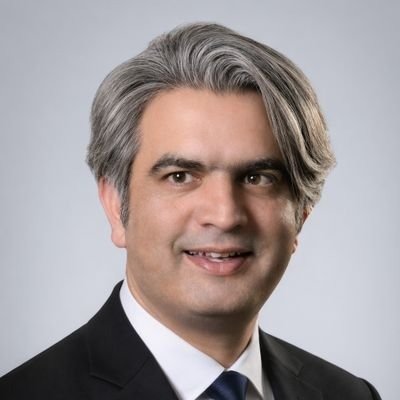
Nazir Ganaie
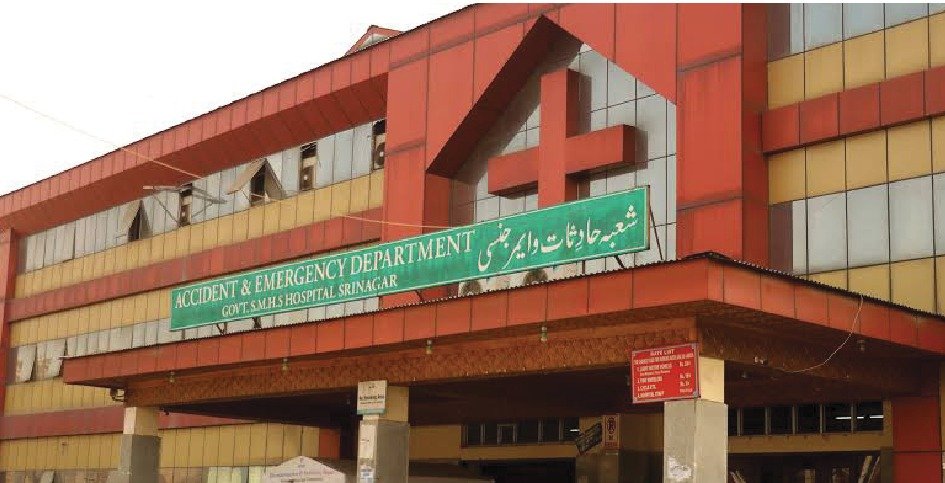
Jammu and Kashmir’s healthcare landscape is changing rapidly. New hospitals, advanced diagnostic facilities, super-speciality services and private investments are expanding the choices available to patients. At the same time, the public health system and the government-run hospitals including SMHS and SKIMS, continue to remain the backbone of healthcare delivery across the region.
The question before Jammu and Kashmir, therefore, is no longer whether the public and private sectors should work together. The more important question is: How can the two systems be brought under a common framework of quality, accountability, affordability and patient safety? This becomes particularly important as J&K seeks to strengthen its position as a healthcare destination for the region. The erstwhile stated and now a Union Territory has witnessed substantial expansion of healthcare infrastructure in recent years. J&K has now two AIIMS, 12 medical colleges, 17 critical care blocks and 3,166 Ayushman Arogya Mandirs/Wellness Centres, reflecting a significant expansion from tertiary care to grassroots services.
Yet infrastructure alone cannot standardise healthcare. A hospital building, sophisticated equipment or a celebrated specialist does not automatically translate into quality healthcare. Standardisation has to be built around clinical outcomes, patient safety, transparent pricing, trained manpower, infection control, ethical practices, emergency preparedness and measurable accountability.
A public system that remains indispensable
J&K’s public healthcare infrastructure remains central to healthcare delivery, particularly for people living in rural, remote and economically vulnerable areas. Government hospitals and medical colleges provide a large share of secondary and tertiary care and remain critical referral centres. The government’s Regional Digest for 2024-25 also recognises that most people in J&K continue to depend on public health facilities, while pointing to persistent regional and social disparities.
The private sector, however, is increasingly filling important gaps—particularly in specialised procedures, diagnostics, emergency care, renal services, oncology, cardiac sciences and other high-end specialties. This means that the future cannot be a contest between public and private healthcare. It has to be a partnership in which both systems complement each other.
Private healthcare is already changing the equation
The emergence of organised private healthcare providers has altered the healthcare ecosystem in J&K. Paras Health, for instance, has established a tertiary-care presence in Srinagar, with services spanning areas including cardiac sciences, oncology, neurosciences, gastro sciences, orthopaedics and renal sciences and now becoming J&K’s first private hospital to get Kidney Transplant License. The group describes its network as providing tertiary and quaternary care across North India, with Srinagar among its facilities. In May 2026, Paras Health Srinagar received a kidney transplant programme licence, becoming the first private-sector facility in the region to receive such a licence. The development is significant not merely as a milestone for one hospital, but because it demonstrates how specialised private infrastructure can potentially reduce the need for patients to travel outside J&K for advanced treatment.
The hospital has also expanded emergency-response capabilities, focusing on rapid intervention and critical-care response.
Similarly, Ujala Cygnus Hospital has developed a presence in Jammu and Kashmir. Its JK Medicity facility in Jammu offers a broad range of specialties and emergency services. More significantly, Ujala Cygnus announced in February 2026 that its emergency departments across eight hospitals had received NABH certification, with JK Medicity among them. Hospitals like Khyber, New City, Shifa, Noora, Medlyn, Amal, Kawsoosa among others are adding further to the patient-care.
The significance of accreditation here is important. NABH certification involves assessment of areas such as infrastructure, clinical protocols, patient safety, emergency response, trained manpower, equipment readiness, infection control and quality monitoring. In other words, it moves the conversation from “How big is the hospital?” to “How reliably does the hospital deliver care?”
Another important model exists at Shri Mata Vaishno Devi Narayana Superspeciality Hospital at Kakryal. The 467-bed hospital operates through a distinctive partnership involving the Shri Mata Vaishno Devi Shrine Board and Narayana Health, combining public institutional support with private-sector clinical and operational expertise. The hospital is NABH-accredited and provides more than 20 specialties. This is perhaps one of the most important examples for J&K: public-private partnership does not necessarily mean government versus private sector; it can mean public assets, public purpose and private expertise working within a defined accountability framework.
The real challenge: Standardisation
J&K already has private hospitals participating in government-funded healthcare programmes. The official Ayushman Bharat J&K portal lists numerous private healthcare providers empanelled under the scheme. But empanelment alone should not be confused with standardisation. A hospital may be eligible to provide a particular package under a government scheme, but the larger question is whether the patient receives a consistent standard of care regardless of whether treatment happens in a government hospital or a private facility. That requires J&K to develop a common healthcare quality framework.
One minimum clinical standard for every hospital
Every hospital—public or private, should meet clearly defined minimum standards for:
Emergency care, ICU and critical care, Infection prevention and control, operation theatres, nursing ratios, laboratory services, radiology, blood storage and transfusion
Pharmacy, Biomedical waste management, fire and disaster preparedness, patient records, clinical documentation, referral and transfer protocols, the objective should not be to make every hospital identical. A district hospital, a secondary-care hospital and a quaternary-care centre will naturally have different capabilities. Instead, each category should have a defined minimum standard.
Make accreditation a culture, not a certificate
NABH and other recognised quality frameworks can become the foundation of standardisation. But accreditation should not become a box-ticking exercise.
J&K could progressively introduce a system where hospitals publicly disclose their accreditation status, clinical capabilities, emergency preparedness and key quality indicators. The patient should be able to know: Is this hospital accredited?
How many ICU beds does it have? What specialties are available round the clock?
Does it have blood-bank access? What emergency services are actually functional?
What are its infection-control protocols? What is its grievance-redress mechanism?
Healthcare transparency should become a patient’s right
Affordability remains one of the most sensitive issues in private healthcare. J&K could develop a transparent system of indicative or regulated package rates for commonly performed procedures, particularly where public funds or government insurance schemes are involved. Hospitals should be required to provide patients with estimated cost, package inclusions, exclusions, likely additional expenses before elective procedures wherever medically feasible.
The objective should not be to artificially suppress private healthcare prices. Hospitals need financially sustainable reimbursement to maintain quality. The objective should be transparency and predictability.
Fix the insurance-payment cycle
The recent dispute surrounding Ayushman Bharat–SEHAT provides an important lesson. In June 2026, private hospitals and dialysis centres in J&K threatened to withdraw from the scheme, citing delays in reimbursement, deductions and claim-related concerns. Subsequently, reports indicated that the government sanctioned ₹175 crore towards pending payments, helping avert an immediate withdrawal. This episode illustrates a fundamental principle:
A public healthcare programme cannot be sustainable if either the patient or the provider loses confidence in it. For private hospitals, timely reimbursement is not a luxury. It is necessary for maintaining staff, medicines, equipment and infrastructure. For government, every claim must be audited rigorously to prevent fraud, overbilling and unnecessary procedures. The answer is therefore not merely higher reimbursement. It is faster, transparent and technology-enabled claim settlement with an independent review mechanism.
Create a J&K Healthcare Quality Authority
J&K could consider establishing a dedicated, professionally managed healthcare quality and standards authority or strengthening an existing regulatory mechanism with a clear mandate. Its job should be to monitor both public and private healthcare—not merely inspect private hospitals. It should maintain a digital registry of hospitals, their specialties, beds, critical-care capacity, accreditation, emergency services and compliance status. Inspections should be risk-based rather than purely periodic.
Hospitals demonstrating consistently high performance could receive greater autonomy, while repeated violations should invite proportionate penalties.
Measure outcomes – not just infrastructure. The number of beds is easy to count.
The quality of treatment is harder. J&K should gradually develop a system of outcome-based healthcare reporting. Hospitals could be encouraged or eventually required to report indicators such as:
Infection rates, surgical-site infections, ICU outcomes, readmission rates, emergency response times, maternal and neonatal outcomes, mortality indicators, patient complaints, medication errors, blood-transfusion reactions, average length of stay.
The information need not initially be used to rank hospitals publicly. But it should be available to regulators and progressively made more transparent.
Healthcare quality must become measurable: Build referral networks instead of isolated hospitals. One of J&K’s biggest opportunities is to create a connected healthcare ecosystem. A patient in Kupwara, Kishtwar, Rajouri, Poonch, Gurez or Kargil should not have to independently navigate the system when advanced care is required. Primary centres should be linked with district hospitals. District hospitals should be connected to tertiary centres. Public and private tertiary hospitals should have defined referral protocols. Telemedicine should support the network. Ambulance systems should be integrated. Electronic medical records should accompany the patient wherever possible.
The result would be a continuum of care rather than a collection of disconnected hospitals. Public-private partnership should be designed around public purpose. PPPs should not mean simply handing over a government facility to a private operator.
A successful PPP needs clearly defined responsibilities
The government should specify: What infrastructure it provides, what services are expected, minimum staffing requirements, quality standards, pricing obligations, free or subsidised treatment obligations, performance indicators, audit mechanisms, exit clauses, patient grievance mechanisms. The private partner should bring investment, technology, management systems, clinical expertise and operational efficiency.
The public partner should protect the public interest.
India’s own framework for private hospital investment under PM-JAY has envisaged such a division of responsibilities, including quality standards for private operators and timely government payments.
Don’t forget smaller private hospitals: Standardisation cannot be designed only for large corporate hospitals. J&K has a large ecosystem of nursing homes, diagnostic centres, maternity hospitals, dialysis centres and specialty clinics. The regulatory framework must therefore be tiered. A 25-bed hospital cannot be expected to maintain the infrastructure of a 500-bed tertiary-care centre. But it must meet appropriate standards for the services it offers. The principle should be simple: If you provide a service, you must meet the minimum standard for that service.
Make patient rights central to the system: The most important stakeholder in public-private healthcare is not the government or the hospital. It is the patient. A standardised healthcare system should guarantee patients basic rights:
Clear information about diagnosis and treatment, Informed consent, transparent billing
-Access to medical records, Privacy and confidentiality, Respectful treatment, Second-opinion rights. A functional grievance mechanism, Information about available government schemes, Protection from unnecessary investigations and procedures
Technology can make much of this easier: A unified J&K health portal could allow citizens to verify registered hospitals, accreditation, available specialties, government-scheme empanelment and basic patient rights.
The Kashmir and Jammu models can complement each other. J&K should also recognise that healthcare needs differ geographically.
Kashmir has its own concentration of tertiary-care institutions and private hospitals, while Jammu has emerged as another important medical hub. Remote districts face entirely different challenges. The answer is therefore not to build identical healthcare infrastructure everywhere. Instead, J&K needs a hub-and-spoke model. A few advanced centres can provide highly specialised treatment. District hospitals can provide secondary and emergency care.
Smaller facilities can handle primary and preventive healthcare. Private hospitals can complement government capacity wherever gaps exist. This approach can also reduce unnecessary duplication of expensive infrastructure.
The opportunity before J&K
The World Health Organization’s assessment of J&K’s health financing system has highlighted the need to harmonise purchasing arrangements and strengthen monitoring and evidence generation as part of the journey towards universal health coverage. That is precisely where public-private healthcare can become transformative.
J&K does not need two parallel healthcare systems. It needs one healthcare ecosystem with different providers. The government can remain the principal guarantor of universal access. Public hospitals can remain the backbone. Private hospitals can provide additional capacity, technology and specialised expertise. Medical colleges can become centres of research and innovation. Insurance schemes can become strategic purchasing mechanisms rather than merely payment systems. And patients can become active participants rather than passive recipients.
A possible J&K Healthcare Compact
The Union Territory could consider developing a “J&K Healthcare Quality Compact” bringing together the Health and Medical Education Department, public hospitals, private hospitals, medical colleges, insurers, professional bodies and patient representatives. The compact could commit all participating institutions to five principles including quality, affordability, accessibility, transparency, accountability; performance could then be monitored against measurable indicators. Such a framework would allow competition between hospitals—but competition on quality and outcomes, rather than merely on infrastructure, advertising or volume.
Beyond public versus private
The debate around healthcare in Jammu and Kashmir must move beyond the old public-versus-private binary. The public sector has reach, responsibility and a universal mandate. The private sector can bring capital, technology, specialised manpower, operational systems and innovation. There are already examples of the two approaches intersecting—from specialised private hospitals in Srinagar and Jammu to the distinctive public-private model of SMVD Narayana Superspeciality Hospital. The next step is to create a system in which these strengths are connected rather than operating in silos.
For Jammu and Kashmir, standardisation should not mean standardising hospitals.
It should mean standardising the promise made to every patient.
Whether a patient enters a government medical college, a district hospital, a charitable institution or a corporate hospital, the expectations should remain the same: safe treatment, qualified professionals, ethical practice, transparent costs, timely care and dignity. That is the real test of a modern healthcare system. And if Jammu and Kashmir can build that bridge between public purpose and private capability, it can move from simply expanding healthcare infrastructure to building a healthcare ecosystem that is trusted, accountable and genuinely patient-centred.
(The author is a senior journalist based in Srinagar. He reports on health, art and culture.)