


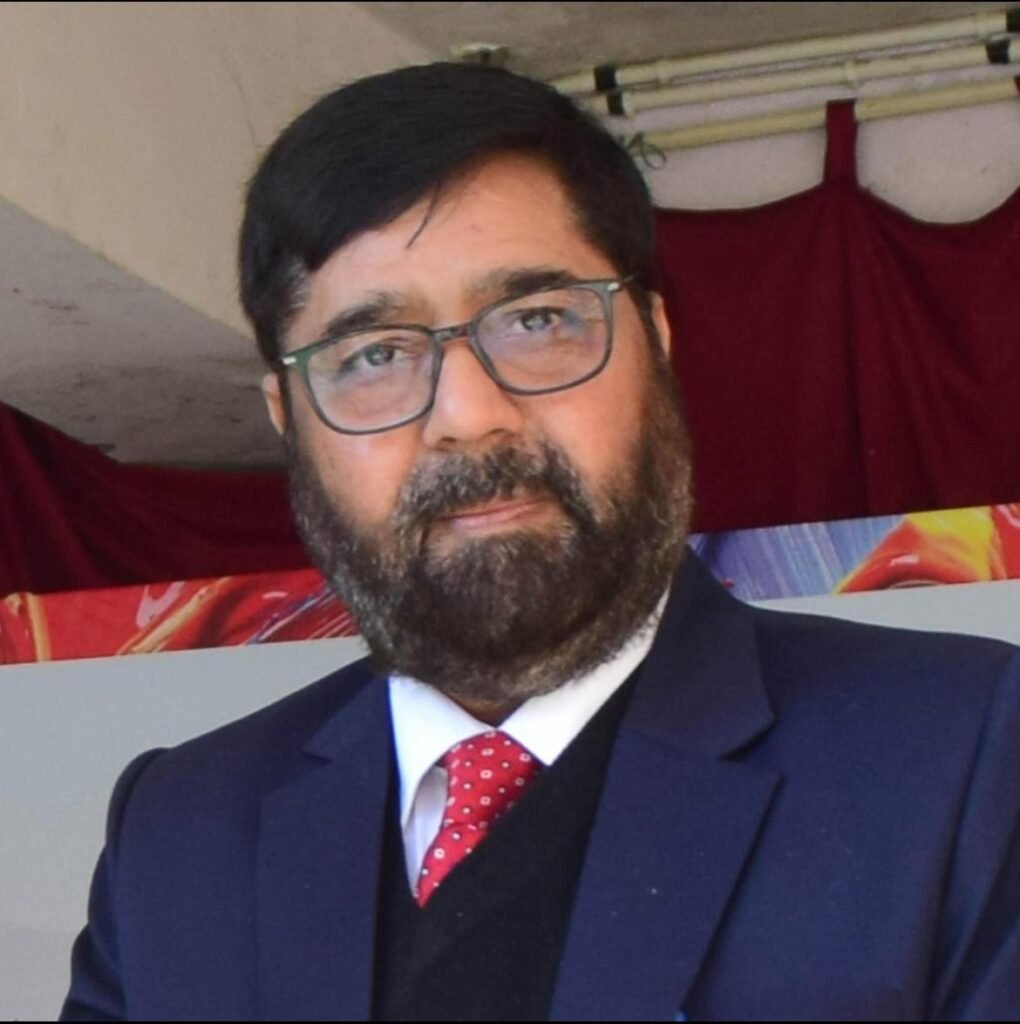
Arun Joshi
Since 1990, winter in Jammu and Kashmir has been considered a period of incubation for fresh troubles from across the border—more geographically and realistically termed the Line of Control (LoC), which divides this geopolitically hot region between India and Pakistan. This time, however, winter has thrown new challenges – political temperature is up , battle of narratives and the very idea of saving the region from anticipated and surprise assaults from across the border has turned inward as well .
The core unity and integrity of Jammu and Kashmir have come under strain, while the Valley remains embroiled in its traditional political troubles and has invented new ways to showcase its political and religious domination. It is a winter of discontent, and no bold rhetoric from any side can mask this troublesome reality.
Some of these recent events have not merely added to the dilemma of J&K being at a crossroads; they are now questioning its very existence. Although there is no threat to its position on the map of India as an integral part—regardless of what Pakistan says or advocates—internal narratives continue to vacillate between never-ending devotion to the Indian nation and actions that completely undermine that same narrative. This is a politics of inherent contradictions, creating a vacuum that vested interests readily exploit.
The October 27 ministerial reshuffle and expansion by Chief Minister Omar Abdullah should have been a routine affair, but it turned out to be much more. While it is essentially the prerogative of the Chief Minister in any State or Union Territory to choose their ministers—a choice based on political will, often tempered by necessity and compulsion—there are varied explanations for Omar Abdullah’s actions, matched by an equal number of counterarguments.
In this case, the prerogative clashed sharply with public perception. Despite taking every possible risk and opportunity into account, the Chief Minister perhaps did not expect the severe backlash that ultimately embarrassed both the government and his personal image. This has thrown up a new challenge: bringing simmering, angry MLAs back on board.
The channels of communication have been re-opened and widened to hear personal and political grievances to defuse the crisis within National Conference with the twin objectives to set its own house in order for it is clear that this resentment would not reach boiling point because of the political theatre in which they are uncertain what future holds for them . The prospects of President’s rule and the mid-term polls are quite scary . They also don’t have any leader of consequence who could lead them at the moment . This dissent will not reach defection level.
The NC leadership is aware that if things move beyond what has been seen, heard and witnessed so far- the dissenters having held closed door meetings – it will be exploited by the Centre and the BJP . The BJP’s “Operation Lotus” is becoming a more realistic -looking prospect . The objective of the operation is different from Maharashtra style where parties were split and BJP entered into power . The plan is to fan the dissent and lead to the President’s rule . Thereafter, it will take its own time to hold elections – the 2024 polls were held on the directives of the Supreme Court . This time resentment and frustration has given a handle to the saffron party to claim that the regional political party has failed them mid-way .
This simmering discontent did not arise after the reshuffle alone; spoken and unspoken rumblings existed long before. Many MLAs were unhappy with the bureaucratic system, and even the materialization of long-sought projects failed to satisfy them. Naturally, individual ambitions played a role, with many hoping to be chosen as ministers.
It would be a mistake to read this display of dissension as some kind of pursuit of anideological goal , everything they are saying is simply a result of being denied ministerial berths. The status quo would have been the same had they been accommodated in the ministry. Three or four of them would have joined the ranks of the angry crowd. Their call for the changes in the structure and bring improvement in the party and the governance is not that genuine as they are making it seem.
The Chief Minister’s faith in Delhi’s promise that statehood would be restored kept him under the illusion that such a development would help him set a new political tone.He believed it would allow him to execute a reshuffle that would satisfy the ambitions of his MLAs and reduce ground-level discontent. Delhi, however, had different plans. Statehood at an “appropriate time” is a mantra for delaying the process. In the interim, new narratives were manufactured, particularly after the Pahalgam incident of April 22, 2025, in which 26 civilians – 25 of them Hindu tourists from various parts of the country- were killed.
This tragic incident was used as a permanent argument that the situation required a free hand for security agencies. The underlying implication was that restoring statehood, along with the powers that accompany it, would undermine national security. Consequently, Kashmir’s image in the rest of the country—among the masses, think tanks, and political discourses—was besmirched as a land defined by terror that could slip out of control at any moment. The Pahalgam incident helped these commentators reinforce that negative image, completely ignoring the mass protests of Kashmiris against the terrorists and their backers. The public outcry was a unique expression by a Kashmiri population that felt the moment had come to say “no” to terrorism. It was a clear statement of where Kashmir stood, declaring: “not in my name.”
While the hangover of Pahalgam is over for ordinary Kashmiris and tourists, many continue to cling to it to keep Kashmir isolated from the nation’s unified thinking. In doing so, they are defeating the idea of the complete integration of Kashmir into India post the abrogation of Article 370. They are also undermining the Modi government’s own claim that Kashmir has changed and that subversives have been side-lined. Furthermore, critics have found a new handle in the recent reshuffle, arguing that there are eight Muslims in a total ministry of nine. This critique is stretched further by pointing out that eight out of the ten districts in the Jammu region went unrepresented.
This omission is telling. Perhaps for the first time, the plains of Jammu and its hills—the Chenab Valley—are on the same page, deepening the public perception that the National Conference (NC) does not care for the people of Jammu, whether they are Hindus, Muslims, or Pahari. This resentment has opened up a vulnerable fault line, making it incredibly difficult to dispel the negative impression that has settled into the public consciousness—an impression that is being pressed hard by the BJP and other political groups.
The counterargument might be that ministerial representation is not the only metric of regional equality. However, that theory is now being tested, not just for the Omar Abdullah government, but for the entire leadership of the National Conference. It is true that Jammu did not give many seats to the NC, but the party did register an effective presence in the Chenab Valley and the Pir Panjal region. Unfortunately, Jammu was ultimately viewed through a narrow lens: as a region that did not heavily favour the NC due to traditional political hostility. The prevailing, short-sighted political logic became: why care for a region that did not vote for the party, when the Valley yielded handsome results?
This is a dangerous miscalculation. Jammu represents not only 43 Assembly seats and a Hindu-majority character, but it also acts as a strategic safety valve for the entirety of Jammu and Kashmir, particularly the Valley. This region demands a perspective that looks beyond the fact that it has hosted refugees from PoK, Pakistan, and Kashmiri Pandits for decades. Jammu wrote the script for saving Kashmir from the very start of independence in the post-October 26, 1947 era. It is the only region that has consistently kept alive the concept of reclaiming territories under the illegal control of Pakistan. Recognizing this could help the NC and other Kashmir-centric parties shift their narrative, showing that their current realistic demands enjoy wide regional support.
The traditional Kashmir narrative has built a defensive firewall around itself, and it needs to be demolished. The National Conference and other Valley-oriented parties need to learn from the BJP—a party that was delivered zero seats in the Valley polls but continues its efforts to carve out a niche for itself there. The BJP operates with full awareness that it is not traditionally welcome within the majority community’s political, social, and economic discourse. Yet, it attempts to dilute deep-seated doubts over its ideology and policies. This persistence occurs even though it is widely perceived as the party that stripped Kashmir of its political identity and dignity by dismantling Article 370, Article 35A, and bifurcating the erstwhile state into the two Union Territories of Ladakh and J&K. This approach demonstrates a deliberate bid to involve Kashmir in its broader policy-making, because the BJP knows the Valley cannot be ignored in the wider political spectrum. It has kept channels of communication open. Though it needs to enhance its outreach far beyond its current scope, the BJP’s efforts to maintain a presence in Kashmir underscore the strategic importance of the land and its people.
Meanwhile, Aga Syed Ruhullah Mehdi’s resignation on November 3 has opened the public’s eyes to a fracturing political narrative. His platform revives the original core promises of the National Conference: the restoration of Article 370, the return of full statehood, and the release of political prisoners who have languished in jail for years without hope. By choosing to advocate for these issues from the outside, Ruhullah has framed the current NC government not only as “incompetent” but also as” corrupt”. This rhetoric resonates deeply in a Valley where people are desperately longing for peace with dignity, even as an atmosphere of helplessness and hopelessness sweeps through the population.
The Chief Minister is aware of this shift, but he is not having effective narrators to effectively communicate his government’s achievements. Those who previously took it upon themselves to publicize his successes – and who aligned the fulfilment of manifesto promises with the restoration of statehood – have been systematically side-lined. They are now demoralized. . As they retreat into the background, the field is left open for Ruhullah.
The NC helped by BJP’s National Vice President Ram Madhav ‘s remarks that “it was blessing of our people that Ruhullah could hold the rally today ( November 3) has spotlighted the presumed or real connect with the saffron party . This narrative will be in the air for quite sometime , but the NC will have to up its own narrative for the restoration of the Article 370 and other allied promises made in the manifesto . The problem is that resolutions alone have not convinced the masses that it is serious about the issues. It needs effective thinkers and narrators and rebuild people’s trust in its political and governance style .
Ruhullah must be aware that the task he has chosen for himself is difficult, to put it mildly. He will attempt to construct a powerful alternative narrative that will pose a direct challenge to the establishment. The government and the NC will have to both compete with and subdue his rhetoric. That will be a monumental task.
This winter will be absolutely crucial in shaping the political landscape leading into the spring of 2027. Anything can happen. Those dreaming of the imposition of President’s Rule have been given wings. Whether Omar Abdullah will be able to clip those wings remains the ultimate test of his leadership.