

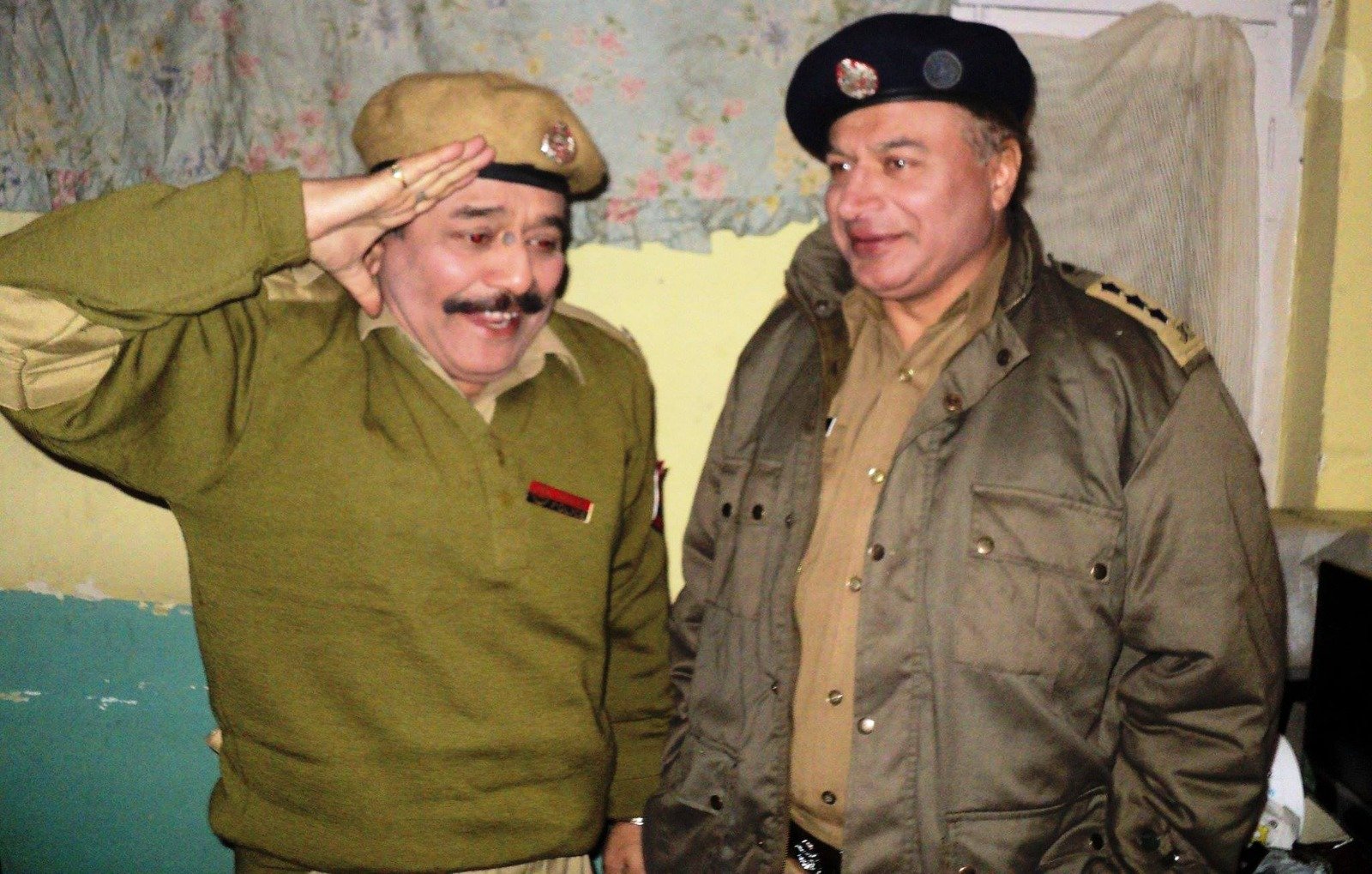

Zahoor Zahid
There is something remarkably endearing about Ayash Arif as a person. Calm, considerate and deeply humane, he is a friend in the truest sense of the word. His sincerity, commitment and devotion to whatever he undertakes are qualities that very few people possess. Rarely does one see him lose his composure or get carried away by anger. He remains quietly absorbed in his own world, a world of creativity, ideas and an unending desire to learn, explore and improve. There is a certain humility about him that beautifully complements his extraordinary creative accomplishments. Perhaps this is what makes Ayash special: beneath the accomplished artist, producer, director, writer and scholar is a gentle human being who has never stopped nurturing the creative spirit within him
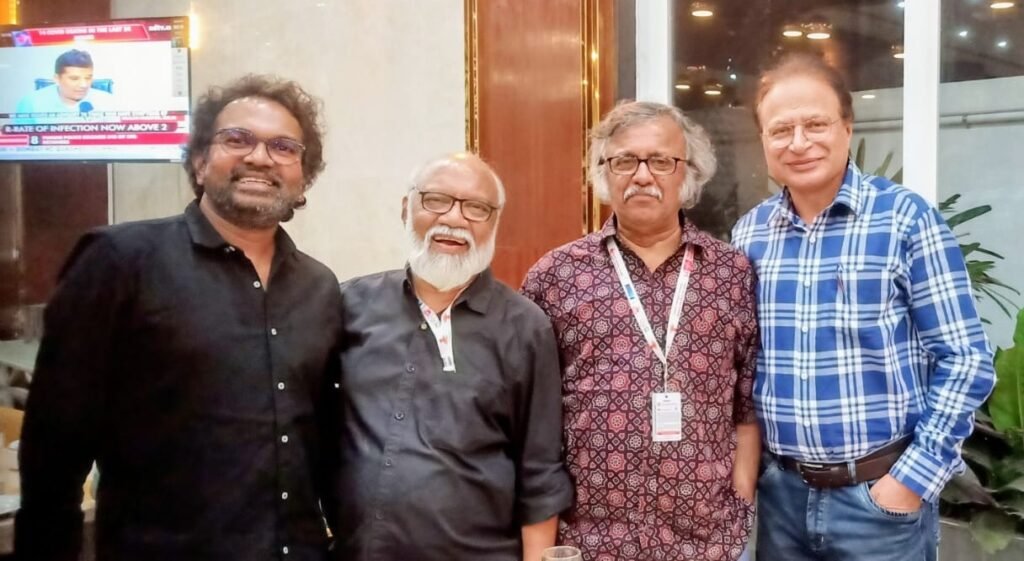
The Yuva Vani service of Radio Kashmir, which began in Srinagar in the late 1970s, became much more than a broadcasting platform. It emerged as a remarkable nursery of talent, nurturing generations of young people and giving them an opportunity to discover their creative potential. Many of us, including Ayash Arif and myself, began our journey in the performing arts here. It was a place where raw talent was recognised, young and inexperienced voices were given confidence, and ordinary youngsters were gradually moulded into accomplished artists and performers.
It was here that I first met Ayash. We had both just joined college. I remember him as a shy, handsome young man, perhaps unaware of the immense artistic journey that lay ahead of him. Radio played a defining role in shaping our personalities, sharpening our creative instincts and developing our taste for the performing arts. Looking back, I feel fortunate that we were part of that wonderful period when Radio Kashmir was not merely a medium of communication but an institution that shaped creative lives.
However, Ayash’s association with theatre had begun much earlier. At the tender age of ten, he joined Sangam Theatre, where he had the privilege of being groomed under the guidance of stalwarts like Virender Razdan, Pran Chandra and Fayaz Dilber. Their experience, discipline and commitment to theatre provided the young Ayash with his first lessons in the art of performance. He subsequently moved to Kamveshwar Kendra Theatre, where distinguished theatre personalities like Rattan Lal Mistri, Arvind Koul and others further nurtured his talent.
It was during this phase that he met his lifelong friend and fellow artist, Shadi Lal, one of the most iconic comedy actors Kashmir has produced. Their friendship blossomed into a creative partnership, and together they founded Kalidas Theatre. It was a significant step in Ayash’s artistic journey, reflecting not only his passion for theatre but also his determination to create a space for meaningful theatrical expression.
Ayash’s talent announced itself remarkably early. At just nineteen, he won his first Best Director Award for the play Tasrufdar. This was no ordinary achievement. Competing against some of the finest theatre directors of that time and earning such recognition at an age when most youngsters were still finding their feet was an extraordinary accomplishment. It was a powerful statement of his artistic maturity, understanding of theatre and directorial vision. In many ways, this award marked the arrival of a promising new force on the Kashmiri theatre scene. He had already attended a repertory course in 1972, further strengthening his understanding of the craft.
His first Best Acting Award came in 1981 for Biagur Bane, written by the versatile playwright Shams-ud-Din Shameem. Ayash portrayed a mentally disturbed character, and I vividly remember the extraordinary seriousness with which he prepared for the role. He would visit people suffering from mental illness, quietly observe their behaviour, mannerisms and expressions, and absorb those little details that could bring authenticity to his performance. His eyes were always searching, observing and registering things around him. Such was his involvement in the character that even after the performance, it took him some time to emerge from its psychological grip. We would affectionately tease him and sometimes call him Pagal, recalling that unforgettable role. It remains one of those performances that stays alive in the memory of those who witnessed it.
Ayash’s theatrical journey also took him beyond Kashmir. He participated in an international drama festival organized by the National School of Drama in New Delhi with Shaitan Ka Istifa, written by the celebrated writer Krishan Chander. The production received widespread appreciation at the festival, bringing recognition to the talent and creative potential of Kashmiri theatre.
In 2013, he received the Best Director Award for theatre production “RATH VANDIE MALENO” in the Annual Drama Competition organised by the J&K Academy of Art, Culture and Languages.

What makes Ayash’s journey particularly inspiring is that it was not built overnight. It was a journey of early initiation, dedicated learning, observation, experimentation and an enduring passion for the stage. From a shy college-going youngster at Radio Kashmir to a young award-winning director, and eventually a recognised theatre personality, his evolution is a testament to what passion, discipline and the right mentorship can achieve.
Ayash Arif’s association with Radio Kashmir began at a very young age, and it did not take him long to prove his immense talent and establish himself as one of the most accomplished performers of his time. His remarkable acting ability, natural screen and microphone presence, and extraordinary versatility made him an obvious choice for some of the finest drama producers of the station. He had that rare quality which every director looks for in an actor: the ability to understand a character, breathe life into it and make it unforgettable.
One of the most distinguished names associated with excellence in radio drama was Pran Kishore, whose reputation extended far beyond the boundaries of Jammu and Kashmir. His productions were known for their exceptional standards, creative brilliance and artistic finesse. Working with him was a coveted opportunity for any artist, and performers would eagerly look forward to being cast in his productions. Ayash Arif not only earned that opportunity but also made a lasting impression through some extraordinary performances. His characters in “Lalajoo and Sons”, “Vaital Pacheesi” and “Akh Oos Pohla” remain among the memorable milestones in the history of Radio drama. These productions were nothing short of chartbusters in their time. Their popularity transcended generations, and even today, older listeners recall them with immense affection, remembering the magic, the artistry and the unforgettable performances that made these dramas so special.
To be recognized as a leading drama artist with A Top, in the highly competitive world of radio is an achievement in itself, but Ayash Arif went a step further. He established himself as an actor of exceptional caliber, with a range and command that very few performers manage to achieve.
His popularity was equally remarkable on television. He became a household name through his performance in the immensely popular serial “Imaandaar”, written by Bashir Dada and directed by Shabir Mujahid. The serial captured the imagination of viewers and attained extraordinary popularity. People would eagerly wait for its telecast, and Ayash’s performance became one of its strongest attractions. He followed this success with memorable roles in “Kuniar”, “Zaal” and “Insaaf”, further consolidating his position as one of the most sought-after actors of the time.
These were the years when Ayash Arif was truly at the peak of his popularity. What distinguished him was not merely his ability to perform different roles, but the remarkable emotional depth and authenticity he brought to each character. Whether portraying humour, pathos, conflict or intense human emotions, he had an instinctive understanding of the character’s inner world. He never appeared to be merely delivering lines; he made the audience feel the emotions, understand the conflicts and connect with the person he was portraying.
Ayash Arif was not simply an actor who enjoyed popularity; he was a performer who created an emotional bond with his audience. His voice, expressions, timing and ability to transform himself into entirely different characters made him a rare artistic personality. The affection with which audiences remember his performances is perhaps the greatest testimony to his brilliance.

Some artists perform roles, some entertain audiences, but a select few leave behind characters that continue to live in people’s memories long after the curtain falls. Ayash Arif undoubtedly belongs to that distinguished category.
Doordarshan had started commissioning television programmes in 1984, but for Srinagar, the commissioning process began in 1988. This opened an entirely new chapter for the creative fraternity of Jammu and Kashmir, offering talented writers, producers and directors an opportunity to tell their stories through the powerful medium of television.
Ayash Arif was among those who seized this opportunity with remarkable vision. He was commissioned to produce a telefilm titled Shehjar, written by the eminent writer Bashir Dada. The film was warmly received by audiences and marked an important milestone in Ayash’s creative journey. More importantly, it introduced him to the possibilities of independent television production. For Ayash, this was the beginning of another remarkable innings, this time as a producer-director. And once he embarked on this journey, there was simply no looking back.
He followed Shehjar with Floating Gardens, a beautifully crafted production that earned considerable appreciation for its quality and presentation. The film was even sold in the international television market, a significant achievement for a producer from Kashmir at a time when the regional television industry was still finding its feet.
His next ambitious venture was the opera Gashe Tarukh, written by the celebrated poet Moti Lal Saqi, with music conducted by the legendary Santoor maestro Bhajan Sopori. It was an aesthetically rich and well-produced work, reflecting Ayash’s commitment to bringing literature, music and dramatic expression together. However, the circumstances surrounding its telecast were deeply disturbing. With militancy having changed the security landscape of Kashmir, Ayash reportedly received death threats following the broadcast. It was an extremely difficult period for people associated with the performing arts, who suddenly found themselves working under fear and uncertainty. Ayash, too, was eventually forced to leave the Valley to save his life. It was a painful interruption in the life of an artist whose only ambition was to create and contribute to the cultural heritage of his homeland.
But adversity could not extinguish his creative spirit. Ayash returned with another remarkable production, Farmaan, a series based on Quranic verses conveying the message of Islam, particularly its emphasis on safeguarding humanity. The series reflected his sensitivity towards religious and spiritual themes and his ability to translate profound ideas into meaningful television narratives.
It was also during this period that Ayash introduced audiences to the literary and creative talent of Showkat Shehri, one of the prolific writers who went on to contribute several memorable dramas and serials. Ayash had an instinct for recognising talent and providing creative people with the platform they deserved.
His association with the legendary comedian Shaadi Koul opened another delightful chapter. The two appeared together in several comedy serials that became immensely popular. Their screen chemistry, impeccable timing and effortless understanding of comedy made them a treat to watch. There was a natural rhythm in their performances, and their ability to complement each other brought a special charm to the productions. Their comedy was not dependent merely on jokes or exaggerated expressions; it emerged from the characters, situations and the extraordinary understanding between two accomplished performers.
And then came one of the most ambitious and memorable productions of Ayash Arif’s career: the television serial on the life of Kashmir’s iconic poetess, Habba Khatoon.

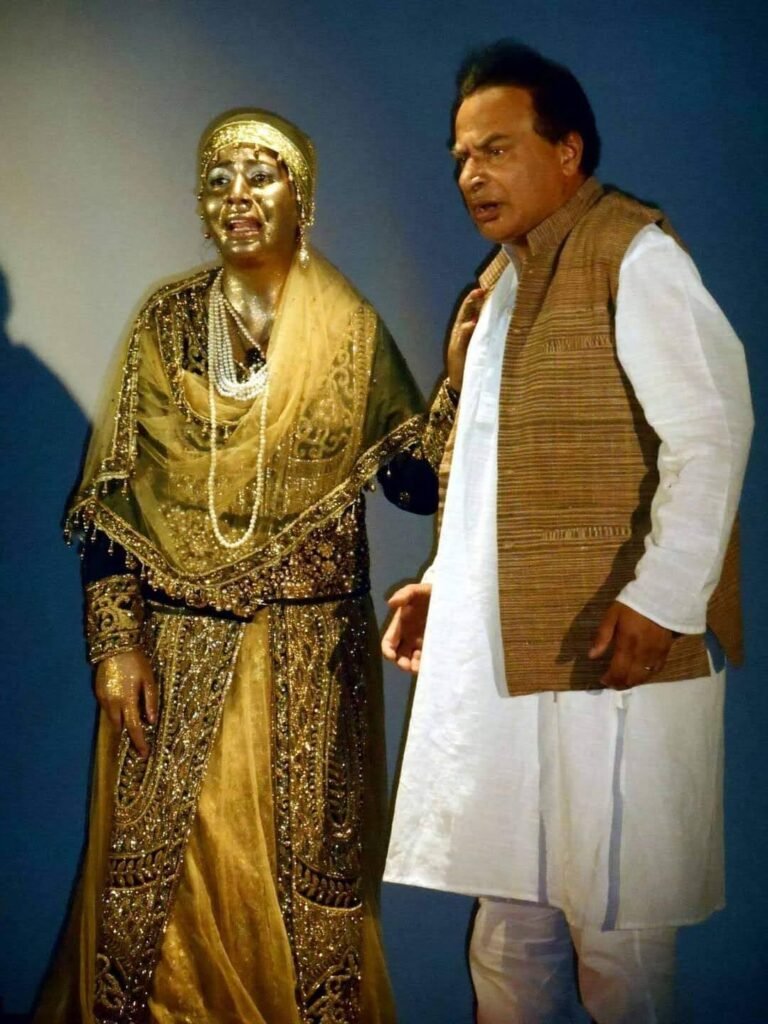
Bringing the life and times of this legendary woman to the television screen was an enormous creative undertaking. Habba Khatoon was not merely a historical personality; she was an enduring symbol of Kashmiri poetry, love, separation and feminine sensitivity. Recreating her world demanded considerable research, imagination and an extraordinary understanding of the historical and cultural milieu.
Unfortunately, the situation in Kashmir had deteriorated considerably by then. Shooting in the Valley was extremely difficult, and Ayash had to undertake the challenging task of constructing an elaborate set near the Line of Control in Jammu to recreate the period. The production required painstaking attention to historical details, particularly the costumes, locations, sets and overall visual treatment. Recreating the grandeur and atmosphere of a bygone era under such difficult circumstances was nothing short of a herculean task.
Yet Ayash rose to the challenge. His vision, determination and production capabilities brought the legendary poetess alive on the television screen. The serial received an overwhelming response and became immensely popular not only in Kashmir but across the country.
The music, composed by Bhajan Sopori, added another dimension to the production. The deeply evocative songs associated with Habba Khatoon touched an emotional chord with audiences. Their melody and lyrical beauty complemented the narrative and helped recreate the emotional world of Kashmir’s celebrated poetess.
It is a matter of pride that this remarkable serial continues to remain accessible to audiences on Doordarshan’s OTT platform, Waves, allowing a new generation to discover the life and poetry of Habba Khatoon.
His production Habba Khatoon was adjudged Best Production in the film competition organized by the J&K Academy of Art, Culture and Languages in 2010, where he was also honoured with the Best Director Award for the same production.
One of his most notable professional achievements was producing Gulistan Bostaan, based on the celebrated literary work of Sheikh Saadi Shirazi. The proposal was selected by Doordarshan Urdu and ranked Number One in the national-level selection list, a significant recognition of his creative vision and professional merit.
What makes Ayash Arif’s journey particularly remarkable is that he never confined himself to one creative identity. He was an accomplished actor, an imaginative producer, a sensitive director and a promoter of literary and cultural talent. He explored comedy, mythology, religious themes, historical narratives and literary adaptations with equal enthusiasm.
His productions were not merely television programmes; they were contributions to the cultural memory of Kashmir. At a time when the Valley was passing through one of its most difficult phases, Ayash continued to create, experiment and tell stories. His journey is a reminder of the resilience of our artists and their extraordinary determination to keep the creative flame alive even in the darkest of times.
Ayash Arif’s creative pursuits were never confined to acting, production or direction. Beneath the accomplished performer was a keen researcher and an individual with a deep intellectual curiosity about the history, evolution and traditions of performing arts. His association with theatre and television had given him practical experience, but he also felt a strong need to explore the academic and historical foundations of the art forms to which he had devoted his life.
This intellectual inclination found an important expression when Ayash Arif was selected for the prestigious Tagore National Scholarship by Ministry of Culture Government of India through National School of Drama (NSD). His research topic, Elements of Theatre in Dastaan Goyee, was particularly significant in the context of Kashmir’s rich performing arts heritage.
The tradition of performing arts in Kashmir goes back centuries, and Dastaan Goyee, with its fascinating combination of storytelling, dramatic narration, characterisation and performance, occupies an important place in this cultural legacy. Ayash undertook an extensive exploration of its history and theatrical elements, examining a traditional art form that deserves much greater recognition and documentation. His research was a commendable effort to understand, preserve and bring scholarly attention to an important dimension of our performing arts heritage.

But Ayash had another long-cherished dream: to earn a doctorate. Despite his demanding professional commitments and the many challenges that life had placed before him, he never abandoned this aspiration. Eventually, he fulfilled this ambition through his doctoral research at Rajasthan University, where he worked on his thesis titled “Indigenous Folk Theatre of Kashmir and Electronic Media.
The subject itself reflects the breadth of his experience and his understanding of the performing arts. Having worked extensively in radio, television and theatre, Ayash was uniquely positioned to examine the relationship between traditional folk performance and modern electronic media. His research brings together two worlds that are often discussed separately but are deeply interconnected.
It is particularly encouraging that his doctoral thesis is now being prepared for publication as a book and is expected to be available shortly. This will be a valuable addition to the existing literature on folk theatre and electronic media, especially for students, researchers, theatre practitioners and the younger generation interested in the performing arts.
What makes Ayash’s academic journey special is that his scholarship has emerged from a lifetime of practical engagement with the arts. He is not merely writing about performance from an academic distance; he has lived it, practised it and contributed to its evolution.
Ayash Arif’s journey from a young radio artist to an accomplished actor, producer, director and researcher is truly inspiring. He has demonstrated that an artist’s pursuit of excellence need not end with applause and popularity. The desire to learn, explore, document and pass on knowledge is equally important.
His forthcoming book, therefore, is not simply the publication of a doctoral thesis; it is an opportunity to preserve valuable knowledge and pass on a legacy to generations of aspiring performers and researchers.
Ayash Arif’s creative personality extends far beyond acting, theatre, television production and academic research. He is also a poet and a short-story writer, with yet another dimension to his literary personality. Some of his poems have been set to music and sung by prominent singers, finding their way into the hearts of music lovers. His literary journey continues, and a collection of twenty short stories authored by him is expected to hit the stands shortly. It is yet another expression of his creative versatility and his deep understanding of human emotions, relationships and society.
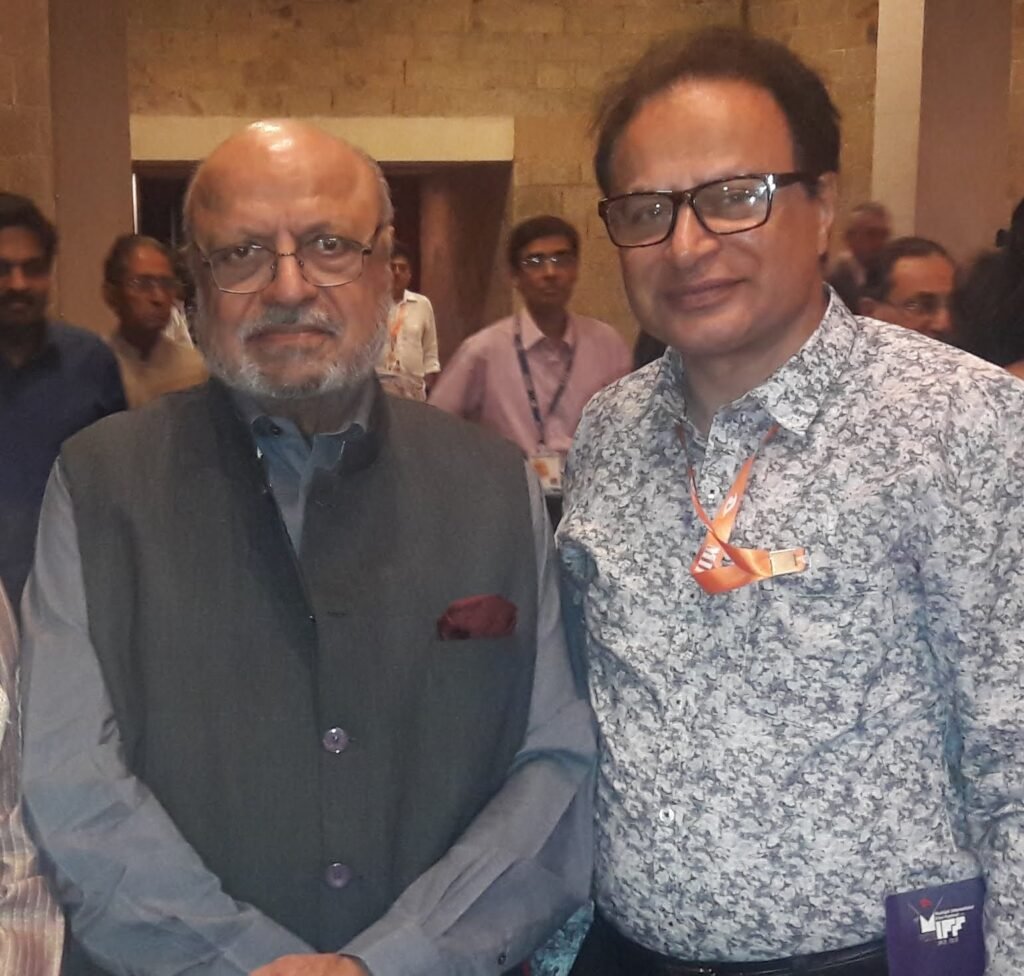
Ayash Arif’s commitment to cinema and his passion for bringing people and cultures together found yet another expression in Harmukh, which he co-produced along with his friends Mushtaq Wani, Ashok Cashyap and Masarat Kanji. The film is a significant milestone in the cinematic journey of Jammu and Kashmir, bringing together the technical expertise of the Karnataka film industry and the creative talent of Kashmir. Shot in Kashmiri and Kannada, Harmukh represents a meaningful attempt to build bridges between two distinct film cultures and, more importantly, to lay a foundation for a stronger regional film industry in Kashmir. The project brought together distinguished names from Indian cinema, including the celebrated filmmaker and actor T. Nagabharana, recipient of 16 National and State awards, and internationally reputed cinematographer Ashok Cashyap. For Ayash, Harmukh was not just another film production; it was an extension of his belief that cinema can transcend linguistic and geographical boundaries while creating new opportunities for Kashmiri talent.
Ayash also served on the juries of the International Film Festival of Bangalore and the International Film Festival of Goa, reflecting his close association with the wider Indian film fraternity. In recognition of his contribution to the performing arts, he was also honoured with a prestigious State Award.
It is perhaps this extraordinary range of experience that made Ayash Arif such a natural and deserving choice for the coveted position of Secretary, J&K Academy of Art, Culture and Languages. Here is a person who had spent a lifetime immersed in the very disciplines that the Academy was established to promote and preserve. He had worked in theatre, radio, television, literature and music; he had produced and directed landmark programmes, researched traditional performing arts, earned a doctorate and remained closely associated with the cultural fraternity.
In every sense, Ayash Arif possessed the credentials, experience and artistic understanding that one would expect from someone entrusted with the responsibility of leading a premier cultural institution.
His candidature represented an opportunity to bring a practising artist’s perspective into an institution that carries the enormous responsibility of safeguarding centuries of linguistic, literary and cultural heritage. He understood the challenges faced by artists because he had experienced them himself. He knew the value of our folk traditions because he had researched them. He understood the power of literature because he was a writer himself. And, above all, he knew that culture cannot survive merely through official functions, seminars and ceremonial celebrations. It needs vision, commitment, institutional dynamism and an intimate understanding of the people who create it.
Unfortunately, that opportunity never materialised.
The circumstances surrounding the handling of his candidature, particularly the role attributed to the then Cultural Minister, Haseeb Drabu, remain a deeply disappointing chapter. There was a widespread sense among those who believed in Ayash’s suitability that considerations other than artistic merit and professional credentials had come into play. His candidature was, in effect, thwarted, and the cultural fraternity lost an opportunity to see a highly experienced and accomplished practitioner take responsibility for an institution that needed precisely such leadership.
This was not merely a personal setback for Ayash Arif. It was a loss for the cultural establishment itself.
One cannot help wondering what direction the Academy might have taken had someone with his experience, understanding and creative vision been entrusted with its leadership. Perhaps the institution would have developed a stronger relationship with practising artists, given greater importance to the documentation of vanishing folk traditions, created meaningful opportunities for young writers and performers, and evolved a more dynamic approach towards preserving our languages and cultural heritage.

An Academy should be a living institution, not merely an administrative establishment. It must become a meeting ground for ideas, creativity, scholarship and artistic expression. It must recognise talent, encourage experimentation and provide a voice to those who are working tirelessly to keep our cultural traditions alive.
Ayash Arif had the potential to bring precisely that kind of perspective and energy.
What makes the episode particularly unfortunate is that a person who had devoted his entire life to the performing arts and cultural expression was denied an opportunity to contribute at an institutional level. When personal preferences or political considerations are perceived to take precedence over professional merit, the damage goes beyond the individual. It undermines confidence in the very institutions meant to serve society.
Culture should never become a casualty of political preferences, nor should institutions meant to preserve our collective heritage become instruments of individual discretion.
Ayash Arif’s journey remains a testimony to his talent, perseverance and commitment to the arts. The position he could not occupy does not diminish his stature. If anything, it raises a larger question about how we select people to lead our cultural institutions. Do we look for individuals with genuine experience, knowledge and vision, or do we allow considerations unrelated to cultural contribution to determine such appointments?
The cultural fraternity deserves an answer to that question.
It is one thing to overlook an individual, but quite another to lose an opportunity to transform an institution. In the case of Ayash Arif, I believe we lost both.